
AI for Science
Episodes from Latent Space about AI for Science.
21 episodes
🔬 RL with Verifiable Rewards, but the Verifier is a Lab — Lila Sciences
Jul 16, 2026 · 1:41:04
Andy Beam (CTO) and Rafa Gómez-Bombarelli (Co-founder & CSO of Physical Sciences) of Lila Sciences argue that science is an 'infinite token generator' for AI, using reinforcement learning with verifiable rewards where the wet lab acts as the verifier. They claim one general model trained on ~10 trillion experimentally-verified reasoning tokens across biology, chemistry, and materials outperforms domain-specific models—'breadth gives us depth.' Their AI Science Factories treat the lab as a data center, with instruments on a 'PCI bus' and humans 'below the API line.' Highlights include a CAR-T candidate designed in six months by two or three people, 'monster UTRs' achieving ~10x Moderna/Pfizer mRNA expression, and the 'zero-FTE startup' business model. They discuss RL pathologies like collapsed chains of thought and a model that 'swears,' and note why there is still no AlphaFold for materials due to the sim-to-real gap.

🔬 "The Most Innovative Diffusion Research Is Happening in Drug Discovery, Not Image Generation"
Jun 30, 2026 · 1:48:40
Evan Feinberg and Sergey Edunov of Genesis Molecular AI argue that diffusion models have unlocked sub-ångström accuracy in protein-ligand structure prediction, a breakthrough that makes AI useful for real drug discovery where the field’s favored 2Å RMSD benchmark is "slop." Their PEARL model uses diffusion with physics-based guidance, synthetic training data from molecular dynamics, and inference-time scaling to predict induced fit—how a protein flexes to accommodate a ligand. On the OpenBind benchmark, PEARL zero-shot surpassed all cofolding models on the notoriously hard EV A721A protease, correctly predicting a flexible loop movement that other methods missed. They also introduce SAPPHIRE, an agentic system that orchestrates AI models for 24/7 drug design, and discuss how downstream ADMET properties (solubility, toxicity, etc.) remain equally critical. The biggest bottleneck they face is GPU availability, and they are actively hiring AI researchers interested in novel architectures beyond standard transformers.

🔬 The Limits of AI in Science - Why We Need Self-Driving Labs — Joseph Krause, Radical AI
Jun 17, 2026 · 1:16:50
Joseph Krause of Radical AI argues that the bottleneck in materials science is experiments, not ideas, and his company's self-driving lab combines AI hypothesis generation with automated synthesis and characterization to produce alloys at unprecedented speed—1,200 in six months, with 300 novel compositions and 10 already in commercial development. Radical's closed-loop system runs research campaigns, not just automated tasks, overcoming challenges like sample manipulation at 3,000°C and tool vendors' software access. Krause details how their AI explores elemental families humans overlooked, why they open-source models like Matrix (the moat is experimental data, not models), and how they plan to compress discovery timelines from decades to 3–5 years for defense and space applications. He addresses the 10-year qualification process for aerospace, supply chain geopolitics (e.g., hafnium price up 10–15x due to Chinese dominance), and the need for public-private partnerships to accelerate U.S. R&D. Finally, he urges ML engineers to lean into their expertise rather than try to become material scientists.
🔬 The Bitter Lesson is Coming for Proteins - Alex Rives, BioHub
May 27, 2026 · 1:10:12
Alex Rives, head of science at BioHub, argues that scaling language models on protein sequences—the 'bitter lesson' for biology—yields emergent biological understanding, culminating in the open-source ESMC model and ESMFold 2. ESMC, trained on 6.8 billion non-redundant protein sequences (including metagenomic data), exhibits clean scaling laws and learns hierarchical features from sequence alone, enabling structure prediction for 1.1 billion proteins. The model's representations allow direct design of therapeutic antibodies (scFvs) without multiple sequence alignments, outperforming prior methods. Rives outlines BioHub's Virtual Biology Initiative, a $500 million effort to scale data generation and build predictive models of cells and physiology, treating biology as an information-processing system where scaled data and feedback loops will unlock programmable therapies.

FPV Drones -The Next War Is Already Here — Yaroslav Azhnyuk, The Fourth Law & Noah Smith, Noahpinion
May 18, 2026 · 1:59:29
Yaroslav Azhnyuk (The Fourth Law) and Noah Smith explain how FPV drones now cause 70-80% of frontline casualties, dethroning artillery as the 'god of war.' Azhnyuk's firms produce thermal cameras, autonomy modules, and interceptors; level-one autonomy (terminal guidance) raised one brigade's mission success from 20% to 71% and extended the kill zone from 3 to 10 km. Fiber optic drones resist EW but cost $32/km and limit payload; AI autonomy removes the radio horizon problem. He warns China could build 4 billion FPV drones versus Ukraine's 4 million, and that the West lacks mass manufacturing, rare earth refining, and autonomy tech. Azhnyuk calls for a shift from costly platforms to cheap, software-defined drones, and for learning from Ukraine's battlefield experience.

Inside Abridge: The AI Listening to 100 Million Doctor Visits — Abridge's Janie Lee & Chai Asawa
May 14, 2026 · 1:06:38
Abridge's Janie Lee and Chai Asawa explain how the company is building a clinical intelligence layer for healthcare, starting with ambient documentation that saves clinicians 10-20 hours per week of 'pajama time' and expanding into real-time prior authorization and clinical decision support. They argue that context is everything—integrating EHR data, payer policies, and medical literature to make AI proactive rather than reactive, exemplified by guiding a doctor to ask two extra questions during a visit to guarantee an MRI approval before the patient leaves. The hardest AI problem is delivering high-quality, low-latency, low-cost real-time guidance in a high-stakes setting, which Abridge tackles using a constellation of models, efficient post-training on its proprietary dataset of over 100 million medical conversations, and progressive rollout with rigorous specialty-specific evaluations. They emphasize personalization at three levels—individual style, specialty (e.g., cardiology vs. dermatology), and health system guidelines—and see clinicians embedded as 'clinician scientists' on engineering teams as a key competitive advantage. Looking ahead, they envision the same conversation…
🔬How GPT‑5 derived new results in theoretical physics and quantum gravity — Alex Lupsasca, OpenAI
May 5, 2026 · 1:31:51
Alex Lupsasca, a theoretical physicist at OpenAI and recipient of the 2024 New Horizons Breakthrough Prize, details how GPT-5 and subsequent models derived new results in quantum field theory and quantum gravity, solving problems that had stumped experts for over a year. The work focused on 'single minus' gluon tree amplitudes, long believed to be zero, but which humans discovered might be non-zero in a special kinematic region. GPT-5.2 Pro conjectured a simplified formula for these amplitudes, and an internal OpenAI model later proved it, reducing a factorial number of Feynman diagram terms to a linear number. The AI then autonomously extended the result to graviton amplitudes using the gluon paper as a seed, producing a complete paper draft in under an hour. Lupsasca argues this marks a threshold where AI is superhuman on certain physics tasks, accelerating research by acting as a 'scout' that reduces confusion and suggests next questions. He also discusses challenges including AI slop on arXiv and the need for better verification methods.

The $15B Physical AI Company: Simulation, Autonomy OS, Neural Sim, & 1K Engineers—Applied Intuition
Apr 27, 2026 · 1:14:07
Applied Intuition co-founders Peter Ludwig and Qasar Younis argue that the real bottleneck in physical AI is deploying intelligence onto constrained hardware, not model intelligence itself. Their $15B company builds simulation, operating systems, and AI models for autonomous trucks, mining equipment, and defense systems. Starting as YC-era tooling for robotaxis, they now offer 30+ products across simulation & RL infrastructure, vehicle operating systems, and autonomy models. They compare fragmented vehicle software to pre-Android phones, and their OS enables reliable updates and L4 driverless operations (trucks running in Japan today). Verification uses statistical nines of reliability, and they internally adopt coding agents like Cursor and Claude Code. They hire 1,000 engineers at the hardware-software boundary.

🔬 Training Transformers to solve 95% failure rate of Cancer Trials — Ron Alfa & Daniel Bear, Noetik
Apr 20, 2026 · 1:25:22
Noetik founders Ron Alfa and Daniel Bear argue that 95% of cancer drugs fail in clinical trials not because of pharmacology but because of poor patient selection; their thesis is that the right patients exist but aren't identified. To solve this, Noetik generates its own multimodal data—pathology H&E, spatial transcriptomics with up to 20,000 genes, and protein stains—from human tumor samples, building self-supervised foundation models like OctoVC and the autoregressive Tario. They claim a data moat: over a hundred million spatially resolved cells, an order of magnitude more than any public dataset, which drives better generalization across cancer types. The platform validates predictions via PerturbMap, an in-vivo mouse model with multiplexed CRISPR knockouts, and an ‘in silico humanization’ that reads mouse H&E in human gene space. A $50M deal with GSK licenses OctoVC for therapeutic discovery and fine-tuning on GSK's own data, marking a rare software-focused licensing deal in biotech. Noetik bets that patient-level tissue modeling, not subcellular simulation, will first deliver clinically actionable insights.

🔬There Is No AlphaFold for Materials — AI for Materials Discovery with Heather Kulik
Mar 24, 2026 · 35:15
Heather Kulik, MIT professor, demonstrates that AI can discover surprising new materials—such as a polymer made four times tougher via an unexpected quantum effect—but warns current models still fail basic chemistry tasks like generating a 22-atom ligand. She describes active learning with seven objectives to accelerate discovery of metal-organic frameworks for direct CO₂ capture, achieving hundred- to thousand-fold speedups per dimension. Kulik criticizes machine-learned potentials that 'look really good' but often produce nonsensical results, and notes that no large-scale experimental benchmark like CASP exists for materials. She calls for shared high-throughput cloud labs and standardized data reporting so published results are machine-learning-ready from day one. Her group's open-source tool MolSimplify (and MOFSimplify) generates transition-metal complexes and screens MOFs, and she invites feedback from users.
🔬Max Welling: Materials Underlie Everything
Feb 25, 2026 · 34:14
Max Welling, a pioneer in variational autoencoders and equivariant neural networks, argues that materials underlie everything from GPUs to the energy transition, and AI can turn material discovery into a search engine. He traces his career from quantum gravity with Gerard 't Hooft to climate-focused AI, founding CuspAI to accelerate carbon capture materials. CuspAI’s platform combines generative models, multi-scale digital twins, and LLM-powered agents, but Welling insists chemists remain in the loop for the foreseeable future. He explains equivariance as hardcoding symmetry into neural networks to reduce data needs, though data augmentation often works better at scale. His upcoming book reveals the identical mathematics between diffusion models and stochastic thermodynamics, promising cross-fertilization between machine learning and physics.
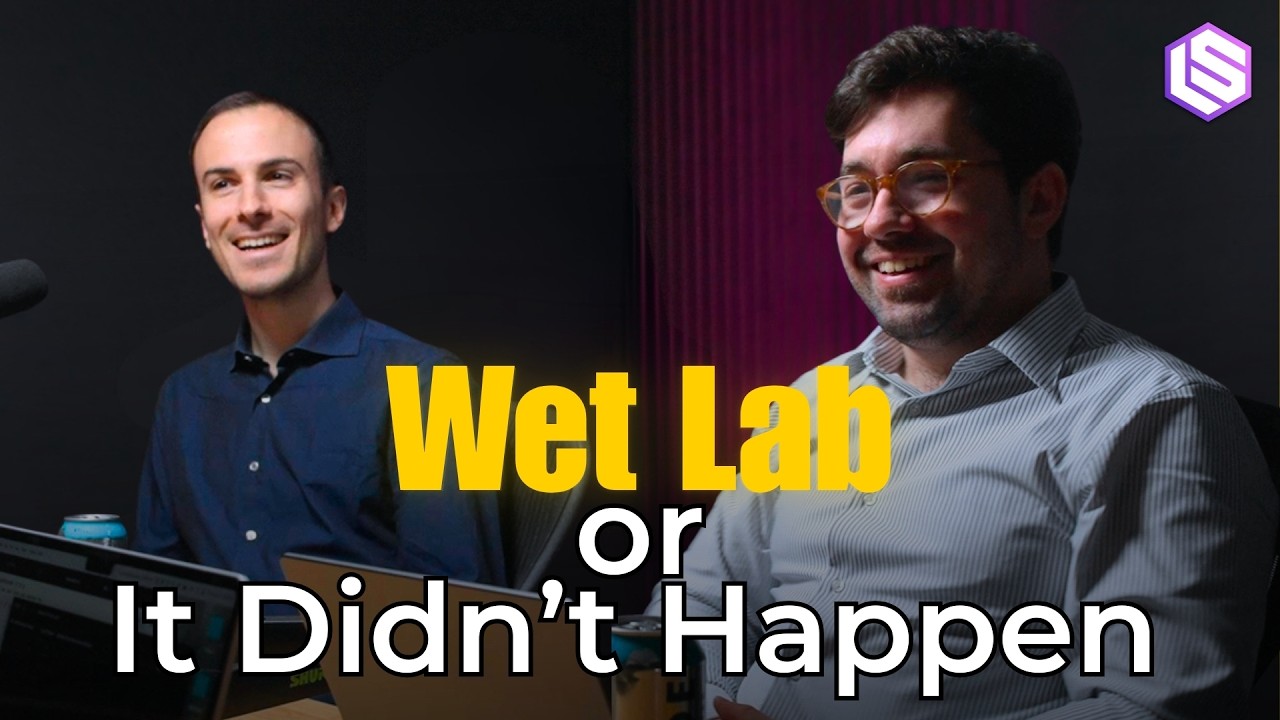
🔬Generating Molecules, Not Just Models
Feb 12, 2026 · 1:41:26
Gabriele Corso and Jeremy Wolwen, founders of Boltz, explain how their open-source models democratize biomolecular structure prediction and design, building on AlphaFold2's breakthrough in single-chain protein folding to model interactions with small molecules, RNA, and DNA. They recount how, after AlphaFold3 was kept closed by DeepMind, they built Boltz1 in months by training a single large model with mid-training bug fixes and limited compute. The conversation covers the shift from regression to generative diffusion models, the critical role of evolutionary multiple sequence alignments (MSAs), and the specialized pairwise triangular attention architecture that remains central. They detail Boltz2's addition of affinity prediction and BoltzGen's unified sequence-structure diffusion for designing proteins, nanobodies, and peptides, validated across 25 labs on targets with no known interactions. Boltz Lab provides an API and interface with optimized inference (10× faster small-molecule screening) and collaborative ranking tools, aiming to serve academia, startups, and enterprises while keeping core models open.

🔬 From Red Teaming GPT-4 to Automating Drug Discovery: The Future of AI in Science — Andrew White
Jan 28, 2026 · 1:13:56
Andrew White, co-founder of Future House and Edison Scientific, argues that automating the scientific method with LLM agents is now feasible, explaining how ChemCrow triggered White House briefings, how Kosmos uses a world model to generate and test hypotheses, and why EtherZero's reward hacking revealed the difficulty of verifiable chemistry tasks. He shifts from his academic work on molecular dynamics to building agents that enumerate and filter ideas, claiming scientific taste remains the frontier. White recounts the counterexample of D.E. Shaw Research's MD vs. AlphaFold, asserts that natural language is the universal bridge for scientific data, and predicts that automation will expand rather than eliminate scientific jobs.

⚡️ Prism: OpenAI's LaTeX "Cursor for Scientists" — Kevin Weil & Victor Powell, OpenAI for Science
Jan 27, 2026 · 36:00
Kevin Weil (VP of OpenAI for Science) and Victor Powell (Prism product lead) launch Prism, a free AI-native LaTeX editor that embeds GPT-5.2 directly into the scientific writing workflow, eliminating copy-pasting between ChatGPT and Overleaf and turning weeks of LaTeX formatting into minutes of natural language instruction. The origin story reveals Kevin discovered Victor's stealth company Cricket on Reddit and DM'd him to bring the team into OpenAI. In the live demo, Prism proofreads papers paragraph by paragraph, converts a whiteboard commutative diagram photo into TikZ code, generates 30 pages of general relativity lecture notes in seconds, and verifies complex symmetry equations in parallel chat sessions. They argue that LaTeX typesetting is the bottleneck diverting scientists from actual research, and that unlimited free collaboration and multi-line diff generation make Prism a 'tool for thought' rather than just a publishing tool. Kevin predicts 2026 will be for AI in science what 2025 was for AI in software engineering — a year when it becomes essential. The discussion also covers OpenAI's approach to accelerating science broadly, including the role of robotic labs and…

[NeurIPS Best Paper] 1000 Layer Networks for Self-Supervised RL — Kevin Wang et al, Princeton
Dec 31, 2025 · 28:19
Kevin Wang, Ishaan Javali, Michał Bortkiewicz, and Benjamin Eysenbach won the NeurIPS 2025 Best Paper award for RL1000, defying conventional wisdom by scaling reinforcement learning networks to 1,000 layers deep. They show that self-supervised RL—learning representations of states, actions, and future states via contrastive classification—scales where value-based methods collapse, and that critical architectural tricks (residual connections, layer norm, classification instead of regression) unlock performance that multiplies beyond a critical depth. Scaling depth is more parameter-efficient (linear growth) than width (quadratic growth), and Jax GPU-accelerated environments enable collecting hundreds of millions of transitions in hours, providing the data abundance that makes scaling possible. The paper argues that RL is finally ready to scale like language and vision, not by throwing compute at value functions, but by borrowing self-supervised objectives, with implications for robotics via goal-conditioned RL without human supervision or demonstrations, and deployment via deep teacher, shallow student distillation.

Priscilla Chan and Mark Zuckerberg: Frontier AI + Virtual Biology To Solve All Diseases
Nov 6, 2025 · 53:34
Priscilla Chan and Mark Zuckerberg, co-founders of CZI's Biohub, explain their ten-year shift from broad philanthropy to a focused mission of building frontier AI and virtual biology to cure all diseases. They argue that tool-building — from 12-foot microscopes to the 125-million-cell CELLxGENE atlas — is the essential, underfunded work that enables scientific breakthroughs. The couple details how their Biohub model combines frontier biology (e.g., spatial imaging, cellular engineering) with frontier AI (models like rBio and VariantFormer) to create a hierarchical virtual cell, eventually expanding to a virtual immune system. They emphasize that data generation must precede modeling, citing the decade-long Human Cell Atlas as foundational, and note that AI timelines may accelerate their 100-year goal significantly sooner. The episode closes with a call for biologists and engineers to collaborate, use their open models, and help generate data that grounds these next-generation tools.

⚡️Automating Scientific Discovery - Jessica Rumbelow, Leap Labs
Nov 2, 2025 · 27:32
Jessica Rumbelow, founder of Leap Labs, explains how their Discovery Engine automates scientific discovery by systematically extracting novel patterns from datasets using neural network interpretability, achieving 100x faster analysis than manual methods. The tool has uncovered unexpected findings: novel T-cell receptor markers for tumor reactivity, a synergistic effect between manganese and genotype on root architecture for drought-resistant crops, and a 20% violation of the foundational surface layer assumption in meteorological modeling, worth billions if improved. Rumbelow contrasts Claude 4.1 Opus alone (which hallucinated and overgeneralized) vs. Claude with Discovery Engine (which became powerful at synthesis), arguing that language models need specialized tools for unbiased, hypothesis-free discovery. The platform is domain-agnostic, free for academics publishing their data, and expanding to multimodal datasets and industry pilots.

⚡️Using RFT to Build Clinical Superintelligence
Jul 29, 2025 · 26:58
Brendan Fortuner, Head of Eng at Ambience AI, explains how the healthcare startup uses OpenAI's reinforcement fine-tuning (RFT) to build clinical AI assistants that help doctors automate note-taking and ICD-10 coding, saving up to two hours per day. Ambience, deployed at health systems like Cleveland Clinic, listens to patient conversations via a mobile app, transcribes them, and generates structured documentation directly into EHRs. Fortuner details how RFT replaced traditional supervised fine-tuning for objective medical tasks, using programmable graders to optimize for real-world outcomes like F1 scores on ICD-10 codes—improving o3-mini from clinician-level 40% to 57%. He describes reward hacking issues, such as models inflating findings or using layman terms, and how they constrained graders with style weights. The episode also covers domain expert vs. ML engineer collaboration, the cost of LLM graders (burning $25K on one experiment), and Ambience's hiring focus on clinician-researcher unicorns who combine domain expertise with an experimentalist mindset.

[AIEWF Preview] CloudChef: Your Robot Chef - Michellin-Star food at $12/hr (w/ Kitchen tour!)
May 31, 2025 · 20:50
Nikhil Abraham, founder of CloudChef, introduces Zippy, an AI chef robot that makes Michelin-star-quality food for $12 an hour. Zippy uses one-shot demonstration learning to replicate recipes from human chefs, leveraging multimodal models and thermodynamics for culinary intelligence. The robot operates as a rental service, replacing human line cooks at 40% of the cost, with no upfront capital expenditure. CloudChef's software-first approach uses off-the-shelf hardware, focusing on proprietary culinary layers for decision-making and safety. The robot is deployed in real commercial kitchens, including Michelin-star venues, and has validated its technology through a successful delivery kitchen in Palo Alto. Abraham highlights engineering challenges like real-time perception and on-device processing, and invites engineers to join a company with a path to deploy over 100 robots within a year.

The new Claude 3.5 Sonnet, Computer Use, and Building SOTA Agents — with Erik Schluntz, Anthropic
Nov 28, 2024 · 1:11:08
Anthropic's Erik Schluntz explains how Claude 3.5 Sonnet achieved state-of-the-art 49% on SWE-Bench Verified by using a minimal agent framework that gives the model full control via tools like bash and file editing, letting it self-correct without hard-coded workflows. He details the importance of tool design over prompt engineering, why XML tags work well, and how computer use reduces integration friction by letting models interact with any browser-based interface. Schluntz also shares his robotics experience, noting that while LLMs and diffusion models are promising for general-purpose robots, reliability at 99.9% and hardware variability remain major hurdles, and he expresses skepticism about self-driving as a business due to high vehicle costs versus driver-equivalent revenue.
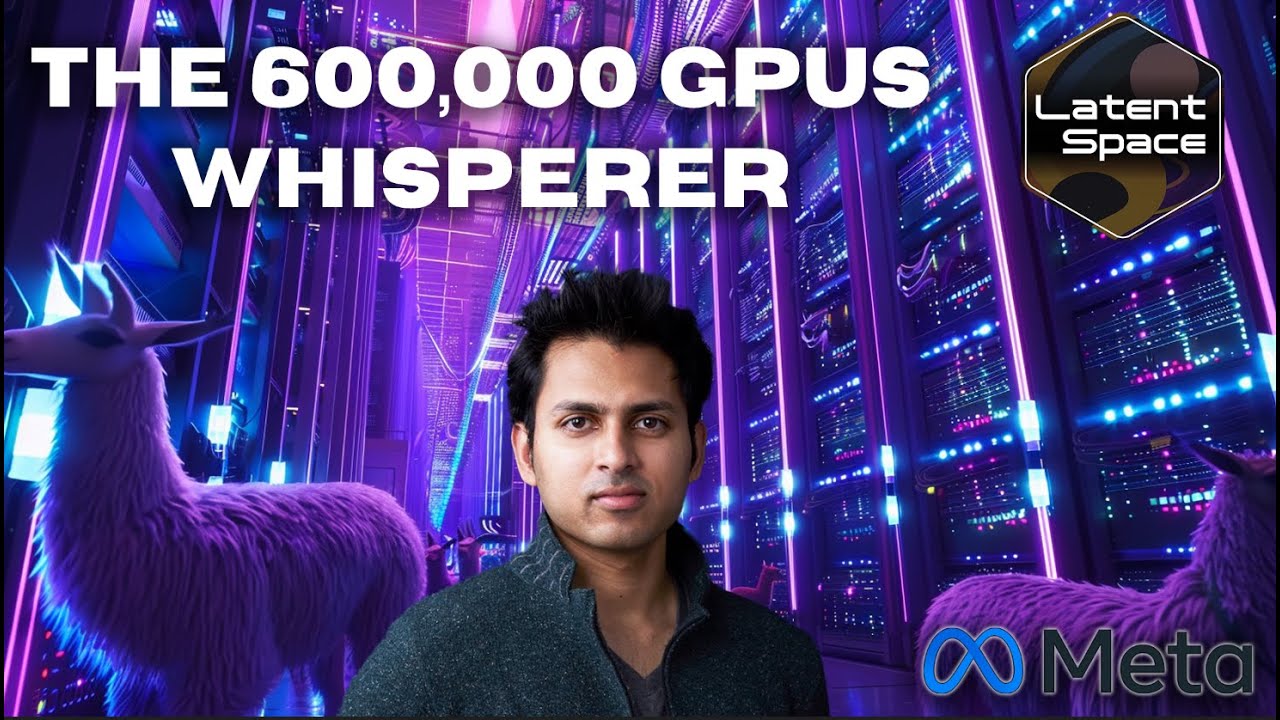
Open Source AI is AI we can Trust — with Soumith Chintala of Meta AI
Mar 6, 2024 · 1:37:38
Soumith Chintala, creator of PyTorch and engineering lead at Meta AI, argues that open source AI is essential for distributing opportunity and trust. He details PyTorch's complexity—1,000 operators needed for generality—and explains synthetic data as a vehicle for imparting symbolic knowledge where humans already have good symbolic models. He highlights a coordination problem in open source: feedback is lost because frontends like Ooba and Ollama lack feedback buttons, and proposes a centralized sinkhole to collect high-quality feedback. Beyond text, he is excited about robotics, where hardware remains a bottleneck, and Osmo's work to digitize smell, which he compares to images in the 1800s.
Powered by PodHood