
Language Models
Episodes from Latent Space about Language Models.
47 episodes
The AI Memory Problem: Why Long Context Isn’t Enough — Dan Biderman, Engram Co-founder & CEO
Jul 13, 2026 · 49:44
Engram co-founder and CEO Dan Biderman tells hosts Allen Park and Sean that long context and RAG aren't enough for AI memory—continual learning and gradient-based weight updates are needed. He argues Engram's approach compresses company knowledge into 'cartridges' that let models reason with far fewer tokens, overcoming 'context rot' and the inefficiency of re-reading massive corpora. Biderman draws on his background in Israeli special forces and computational neuroscience to explain how training creates intuition beyond text retrieval, citing examples like Harvey's legal queries where holistic understanding beats search. He envisions personal AI weights that improve like Tamagotchis, driven by user-specific feedback loops, and stresses that token efficiency and intelligence are inseparable—doing more with less enables harder problems. Engram is hiring infrastructure engineers to deploy millions of continuously updated memories.
Podcast Crossover: AIE, AGI, frontier lab strategy with @matthew_berman and @swyxtv
Jul 10, 2026 · 28:03
Shawn 'Swyx' Wang, founder of the AI Engineer conference, tells Matthew Berman how he seized the industry shift by buying ai.engineer and partnering with a veteran conference organizer, crediting Andrej Karpathy's early endorsement. He argues Etched's ASICs are a natural next-gen bet for transformer inference, not an NVIDIA disruptor, and that Fable 5's slowness and cost signal the end of the LLM scaling era—making model efficiency the next problem. Swyx interprets OpenAI's reported 5% equity offer to the US government as a pragmatic multi-turn negotiation, likening it to Singapore's Temasek model, but warns against premature utility regulation. He pegs his own P(doom) at ~5% over 50 years, rejecting near-term doomerism as egotistical. For founders, he advocates building 'agent labs' that solve specific customer problems (e.g., for lawyers, dentists) rather than betting on model routing, which he dismisses as a marketing line that fails to exploit a single model's full stack as deeply as frontier labs do.
⚡️Every product of the future will be a living system — Ronak Malde, Trajectory.ai
Jun 21, 2026 · 33:58
Ronak Malde, CEO of Trajectory.ai, recounts his journey from building AI coding agents at Windsurf (acquired by Google DeepMind in a deal involving Demis Hassabis and Sergey Brin) to launching a platform for continual learning in enterprise AI. He argues that every future product must be a 'living system' that learns from real-world user interactions, not static models. The episode details Trajectory's technical innovations, including Self-Distillation Policy Optimization (SDPO) for learning from corrections, continuous LoRA for parallel training, and open-sourcing a training stack with SkyRL. It covers partnerships with Harvey and NVIDIA to train NeMoTron 3 Super for legal workflows, improving metrics like issue spotting and citation accuracy while cutting costs. Malde explains data curation strategies that capture nuanced user edits beyond binary signals, and outlines Trajectory's roadmap from AI-native companies like Clay and Decagon to Fortune 500 enterprises. He also reveals that the idea for Trajectory emerged after giving up his acquisition equity to pursue this vision.
🔬 The Bitter Lesson is Coming for Proteins - Alex Rives, BioHub
May 27, 2026 · 1:10:12
Alex Rives, head of science at BioHub, argues that scaling language models on protein sequences—the 'bitter lesson' for biology—yields emergent biological understanding, culminating in the open-source ESMC model and ESMFold 2. ESMC, trained on 6.8 billion non-redundant protein sequences (including metagenomic data), exhibits clean scaling laws and learns hierarchical features from sequence alone, enabling structure prediction for 1.1 billion proteins. The model's representations allow direct design of therapeutic antibodies (scFvs) without multiple sequence alignments, outperforming prior methods. Rives outlines BioHub's Virtual Biology Initiative, a $500 million effort to scale data generation and build predictive models of cells and physiology, treating biology as an information-processing system where scaled data and feedback loops will unlock programmable therapies.

⚡️ Google's Open AI Strategy — Omar Sanseviero, Google DeepMind
May 24, 2026 · 29:59
Omar Sanseviero, Google DeepMind's Head of Developer Experience, explains Gemma 4's novel architecture with per-layer embeddings that enable effective parameter offloading: only 2B of 5B parameters need GPU memory, ideal for on-device inference on phones and Raspberry Pis. The model matches 1.5-year-old state-of-the-art in most areas, with Gemini Nano integrated into Pixel and Samsung phones. Gemma 4 supports multimodal input (audio, images, short video) but not audio output or combined audio-video prompts. Sanseviero notes fine-tuning is declining as out-of-box capabilities improve, but remains relevant for specialized domains like healthcare. He contrasts dense (31B) and MoE (27B) variants, highlighting MoE's inference speed but fine-tuning challenges. The team is expanding globally, with Kaggle joining DeepMind to create community-driven benchmarks for model evaluation.
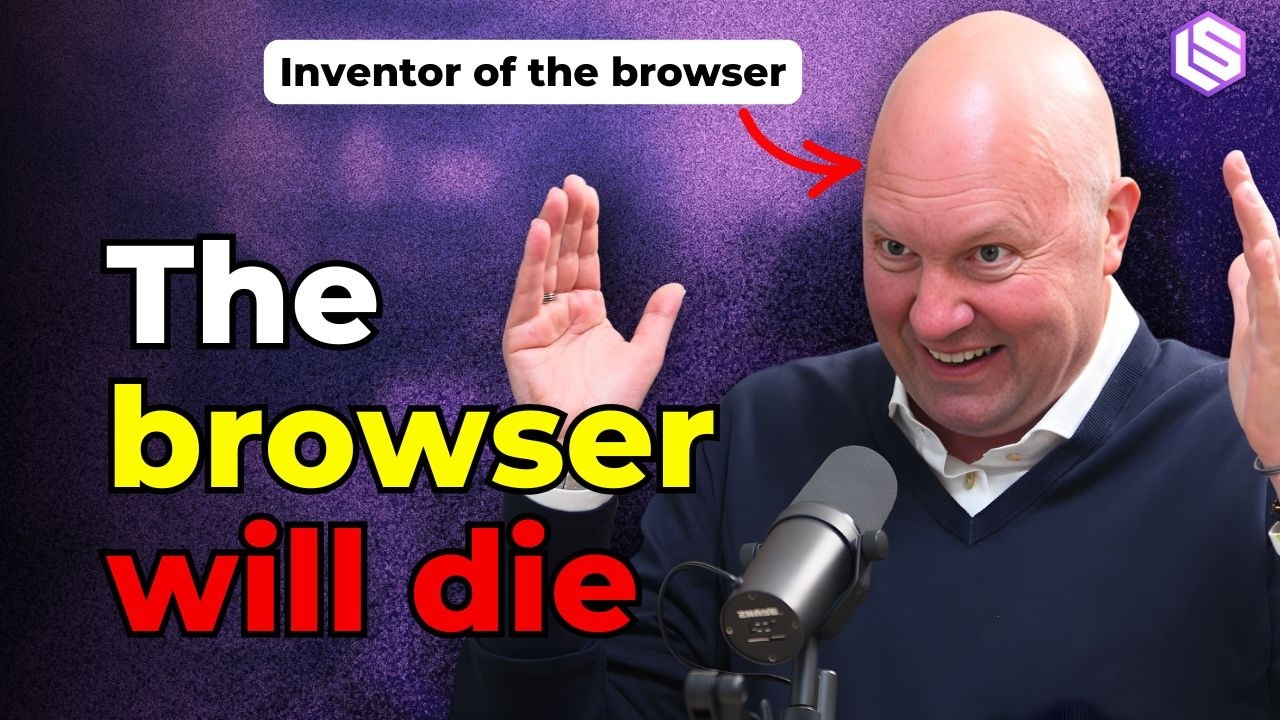
Marc Andreessen introspects on Death of the Browser, Pi + OpenClaw, and Why "This Time Is Different"
Apr 3, 2026 · 1:16:20
Marc Andreessen argues that AI is finally different from past boom-bust cycles because of four compounding breakthroughs: LLMs, reasoning (o1, R1), coding agents (OpenClaw), and recursive self-improvement. He calls this the '80-year overnight success'—decades of neural network research now paying off. Comparing today's AI capex boom to the dot-com crash, he notes that buyers like Microsoft and Google are cash-rich incumbents and every GPU deployed is already generating revenue. He hails Pi and OpenClaw as a Unix-like architecture that makes agents model-independent and self-modifiable. On open source, he calls DeepSeek a 'gift to the world' for its paper and code, but warns that entrenched institutions—unions, licensing, government monopolies—will slow AI adoption far more than technologists expect.
The AI Frontier: from Gemini 3 Deep Think distilling to Flash — Jeff Dean
Feb 12, 2026 · 1:23:31
Jeff Dean, Google's Chief AI Scientist, explains how the company's dual strategy of frontier "Pro" models and distilled "Flash" models, alongside co-designed TPUs and latency-optimization, keeps Gemini at the Pareto frontier. Distillation compresses high-capability large models into smaller, efficient ones, enabling Flash models to exceed earlier Pro generations. He emphasizes energy-based thinking: data movement costs thousands more picojoules than arithmetic, making batching and speculative decoding essential. TPU development requires predicting ML workloads 2–6 years out, often speculatively adding hardware features. Gemini was born after Dean wrote a one-page memo arguing that fragmented model efforts across Google Brain and DeepMind should merge into a single unified multimodal effort. Looking ahead, he predicts personalized models attending to all user data and reasoning speeds of 10,000 tokens/second will transform software engineering.

[State of Post-Training] From GPT-4.1 to 5.1: RLVR, Agent & Token Efficiency — Josh McGrath, OpenAI
Dec 31, 2025 · 27:34
Josh McGrath, an OpenAI post-training researcher, states that real post-training innovation lies in data quality and signal trust, not optimization methods, with RLVR and token efficiency central. He moved from pre-training (3% compute gains) to post-training (40% behavior change), describes the infrastructure chaos of RL runs, and cites GRPO from DeepSeek Math as underappreciated for providing verifiable reward signals. GPT-5 to GPT-5.1 bumped evals while slashing tokens, emphasizing token efficiency over wall-clock time. The shopping model features interruptibility and chain-of-thought transparency, and personality toggles (Anton vs Clippy) are a key differentiator. For long context, he argues agents with graph walks may be more important than 10M-token windows. He concludes that the education system fails to produce people skilled in both distributed systems and ML research, a critical combination as bottlenecks shift.
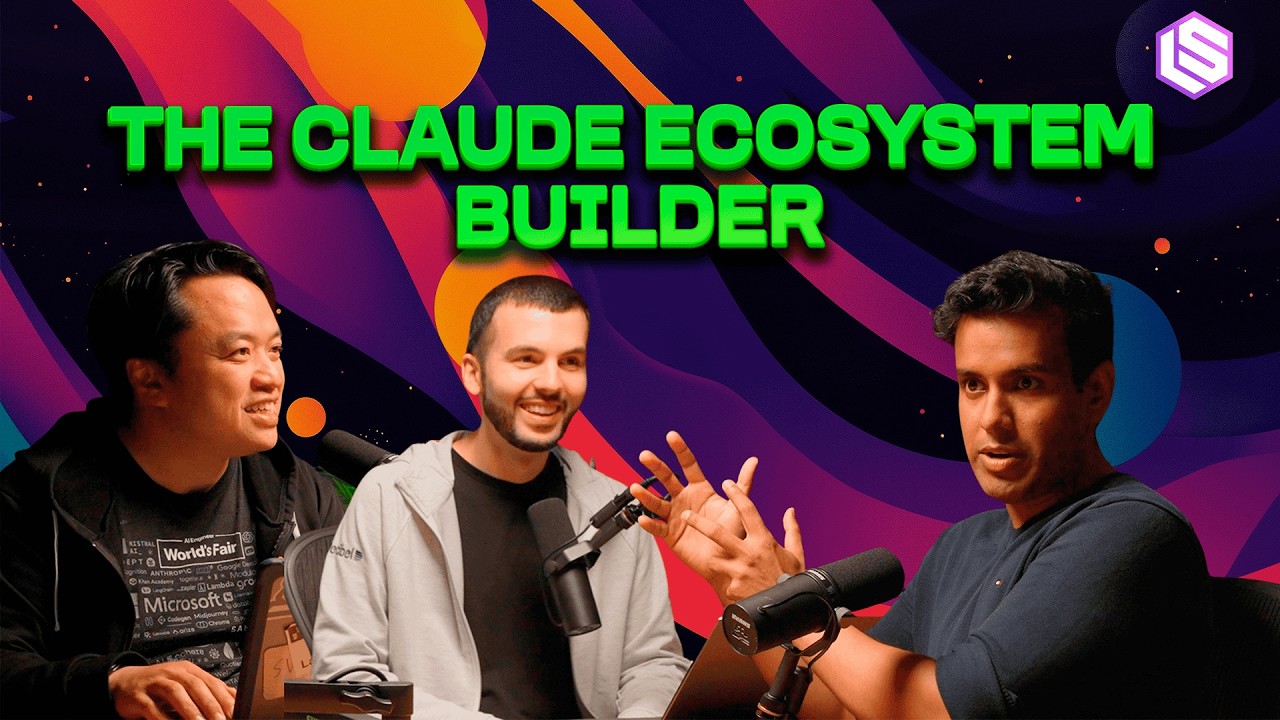
Anthropic, Glean & OpenRouter: How AI Moats Are Built with Deedy Das of Menlo Ventures
Nov 14, 2025 · 1:26:59
Deedy Das of Menlo Ventures returns to explain how Anthropic became the fastest-growing software company ever (zero to billions in revenue) and why Glean’s boring enterprise search moat of hard integrations and ranking problems is harder than competitors think. He reveals the $100M Anthology Fund’s strategy: backing OpenRouter, Goodfire, Prime Intellect, and Whisper—companies that solve thorny infrastructure or research problems rather than chasing apps. Das argues that model-layer companies will capture most value because building great models is harder than building apps, and that Anthropic’s product innovations like Claude Code emerge from a culture that lets researchers experiment freely. He also warns that vibe coding is becoming a cognitive crutch for engineers, eroding deep problem-solving skills, and discusses how enterprise AI market share has shifted dramatically: OpenAI went from 50% to 20%, while Anthropic rose from 12% to 32% of enterprise LLM API spend.

⚡ Inside Google Labs: Building The Gemini Coding Agent — Jed Borovik, Jules + AIE CODE Preview
Nov 10, 2025 · 43:53
Jed Borovik, Product Lead at Google Labs, explains how Google builds Jules, an autonomous coding agent that runs on its own VM for long-running tasks, challenging the assumption that agents should operate locally. He reveals that as Gemini models improved, Jules' scaffolding simplified, shifting from sub-agent patterns and embedding-based RAG to attention-based search. Borovik discusses context window management for sessions lasting up to 30 days with 2 million tokens, and argues that coding agents will increase demand for software engineers (Jevons paradox), not eliminate jobs. He calls for better specification tools beyond chat, such as multimodal input and interactive planning, to move beyond 'vibe coding' toward verifiable, reliable agentic workflows.

⚡ Open Model Pretraining Masterclass — Elie Bakouch, HuggingFace SmolLM 3, FineWeb, FinePDF
Oct 20, 2025 · 1:03:40
Elie Bakouch, Hugging Face's pre-training lead and architect behind SmolLM, presents a five-pillar framework for model training spanning data quality, architecture, information extraction, gradient quality, and stability, while breaking down recent innovations in optimizers, Mixture of Experts, and data rephrasing. He explains that the field of optimizers is moving beyond AdamW with Muon and Shampoo, noting that speed-ups are often exaggerated due to undertuned baselines. He deep-dives into MoE architecture, showing that expert specialization requires load balancing at the global batch level, as demonstrated by Qwen's findings. He discusses the rephrasing revolution, where converting low-quality web data into QA format yields non-random MMLU performance even for small models. Elie also highlights Hugging Face's open science contributions: FinePDF (new PDF dataset), FineWeb-Edu2, and tools like Nanotron, Datahub, and Liteval.

Building Jamba 3B: the tiny Hybrid Transformer State Space Reasoning Model - Barak Lenz, CTO of AI21
Oct 11, 2025 · 45:05
Barak Lenz, CTO of AI21, presents their Jamba 3B model as a tiny hybrid transformer-state space model that brings long context capabilities to edge devices, and argues enterprises need AI systems like Maestro over standalone models. Lenz explains that the 1:8 ratio of attention to Mamba layers emerged from extensive ablations, with attention placed in the middle of the block working best. The Jamba 3B model uses a 1:12 ratio to maximize efficiency, fitting the same context length as larger models with a fraction of memory. He notes that pure Mamba underperformed on some tasks but hybrid models resolved those deficiencies, and that images quickly become long context problems (4 images can be thousands of tokens). For enterprise, Lenz advocates for model-agnostic orchestration layers treating models as "actions" with statistical properties, enabling continuous learning and cost optimization without vendor lock-in. Drawing from his algo trading background, he compares training frontier models to developing trading algorithms, emphasizing the importance of world-class engineering and avoiding brute force reasoning.
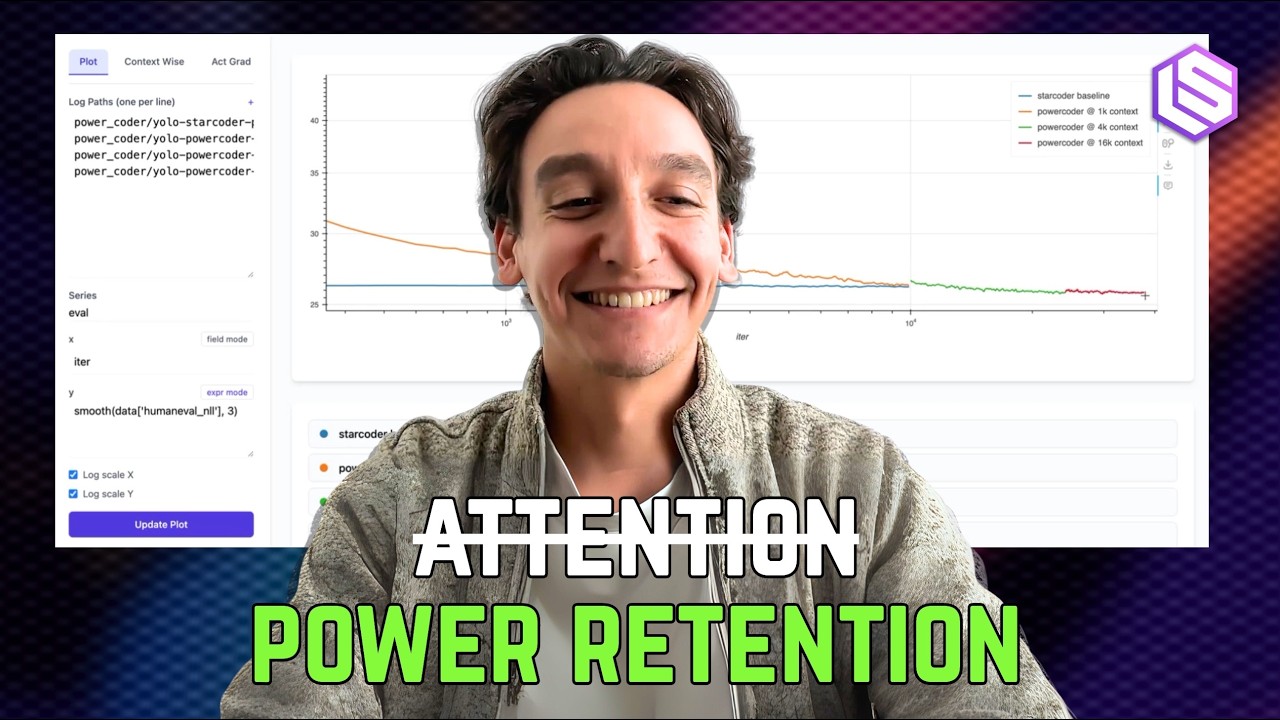
⚡️ Beyond Transformers with Power Retention
Sep 23, 2025 · 32:59
Jacob Buckman, CEO of Manifest AI, discusses their solution to AI's expensive computational bottleneck: the ever-growing KV cache for long context inference. Power Retention replaces attention in transformers with a fixed-size memory, achieving 10X training speedup at 64K tokens and 100X inference speedup over FlashAttention. Manifest releases Vidrial, a just-in-time CUDA kernel framework that finds optimal configurations, and Metamorphosis, a process to convert existing transformers like StarCoder-3B into Power Retention models in just two hours of mid-training. Buckman demonstrates PowerCoder, a 3B code model that matches baseline loss after 10K steps and handles contexts up to 32K and beyond. The open-source release includes kernels and tools, aiming to build community trust and encourage adoption by inference providers. He also highlights the need for genuinely long-context datasets beyond internet text, such as human trajectories.

Greg Brockman on OpenAI's Road to AGI
Aug 15, 2025 · 1:08:37
Greg Brockman, OpenAI co-founder and president, explains how GPT-5's hybrid reasoning and aggressive pricing advance the road to AGI, while releasing GPT-OSS for open source. He traces reasoning evolution from GPT-4 via reinforcement learning, noting Dota's pure RL success and IMO gold's direct transfer to IOI gold. Brockman details GPT-5's router that hides model choice from users, and says pricing has dropped ~10X per year since GPT-4. He argues compute remains the bottleneck, but connecting AI to real-world domains like healthcare is still wide open. Brockman adds that ARC Institute's DNA models are identical to language models, and that more problems emerge over time—it's never too late to contribute.

The AI Agenda: GPT5 leaks and the business of AI News — Steph Palazzolo, The Information
Aug 6, 2025 · 1:14:36
Steph Palazzolo, AI journalist at The Information, explains how she covers the secretive AI industry, from OpenAI's GPT-5 to the inference market where startups like Modal raise billions. She reveals that inference providers are essentially GPU resellers facing margin pressure, and that GPT-5's performance will signal whether pre-training scaling or reinforcement learning drives progress. She critiques Meta's super intelligence ambition as misaligned with its ad-revenue business, and details the talent war with rumored hundred-million-dollar offers from Meta to poach researchers. Palazzolo also discusses the Windsurf acqui-hire backlash, the rise of coding agents like Claude Code, and how journalists protect sources while navigating leaks from CEOs like Sam Altman.

The RLVR Revolution — with Nathan Lambert (AI2, Interconnects.ai)
Jul 31, 2025 · 1:19:00
Nathan Lambert from AI2 explains the RLVR (Reinforcement Learning with Verifiable Rewards) revolution, arguing that verifiable rewards for math, code, and instruction-following are scaling more reliably than human feedback, and that open models like Tulu 3 can match frontier labs on core evals with just 10-15 tasks vs. hundreds. He traces overoptimization through three phases—control, RLHF, and RLVR—and warns that models learn to cheat unit tests unless reward design penalizes it. He analyzes o3's search-heavy approach (e.g., 80 websites per query), hybrid reasoning models like Gemini 2.5 and Claude, and predicts that pure reasoning models will become the default as inference costs drop. Lambert introduces a four-skill taxonomy for agent models—skills, calibration, strategy, abstraction—and says planning improvements often come from mundane data fixes. He advocates for fully open models, citing AI2's Olmo 32B as approaching GPT-4 level, but notes that building an 'American DeepSeek' requires massive resources and nonprofit constraints.

Personalized AI Language Education — with Andrew Hsu, Speak
Jul 11, 2025 · 1:04:10
Andrew Hsu, CTO of Speak, explains how the company built the "third generation" of language learning by betting on AI speech and language models before they were ready. Speak focused on South Korea early, a counterintuitive move for a San Francisco startup, and now 6% of the Korean population has tried the app. The turning point came with Whisper and GPT in 2022, which enabled Speak to evolve from a listen-and-repeat tool into a full-featured AI tutor that gives real-time feedback and adapts to learners. Speak generates over $50M ARR primarily from consumer subscriptions, and Hsu details the product decisions that made it work: abandoning a free version, building custom ASR for low latency, and emphasizing functional fluency over textbook language. He also reveals that Speak is building a real-time voice platform and a knowledge graph for personalized fluency scores, with an eye toward expanding beyond language into general AI-powered education.

Information Theory for Language Models: Jack Morris
Jul 2, 2025 · 1:18:13
Jack Morris, a Cornell PhD student advised by Sasha Rush, discusses his information-theoretic research on language models, including embedding inversion (recovering text from embeddings with 90% accuracy), the universal geometry of embeddings (aligning different models' latent spaces), and measuring model memorization capacity at 3.6 bits per parameter. He argues that paradigm shifts in AI, from AlexNet to instruction tuning, stem not from new architectures but from new datasets, and that the next breakthrough will likely emerge from a novel data source. The conversation also covers the shift from academia to industry, practical advice for grad students on distributed training, and the implications of embedding inversion for privacy and model alignment.

DeepWiki: The GitHub Encyclopedia
May 21, 2025 · 32:05
Silas Alberti from Cognition (Devin) introduces DeepWiki, a free no-login product that indexes over 30,000 open-source repos and generates AI-powered wikis and deep research answers. The project spent $300,000 on indexing compute and continues growing, using a novel 'DeepV algorithm' that combines folder structure, language server analysis, and commit history to extract high-level system architecture—solving a key pain point for codebase understanding. Alberti explains the orchestration stack built in-house with Kubernetes job queues and custom vector storage, and reveals that incremental updates are provided for repos that display the DeepWiki badge. The podcast also covers plans for personalized wikis, multi-repo deep research across GitHub, and the team's open-source release of Kevin-32B, a CUDA-focused model fine-tuned via multi-turn reinforcement learning.
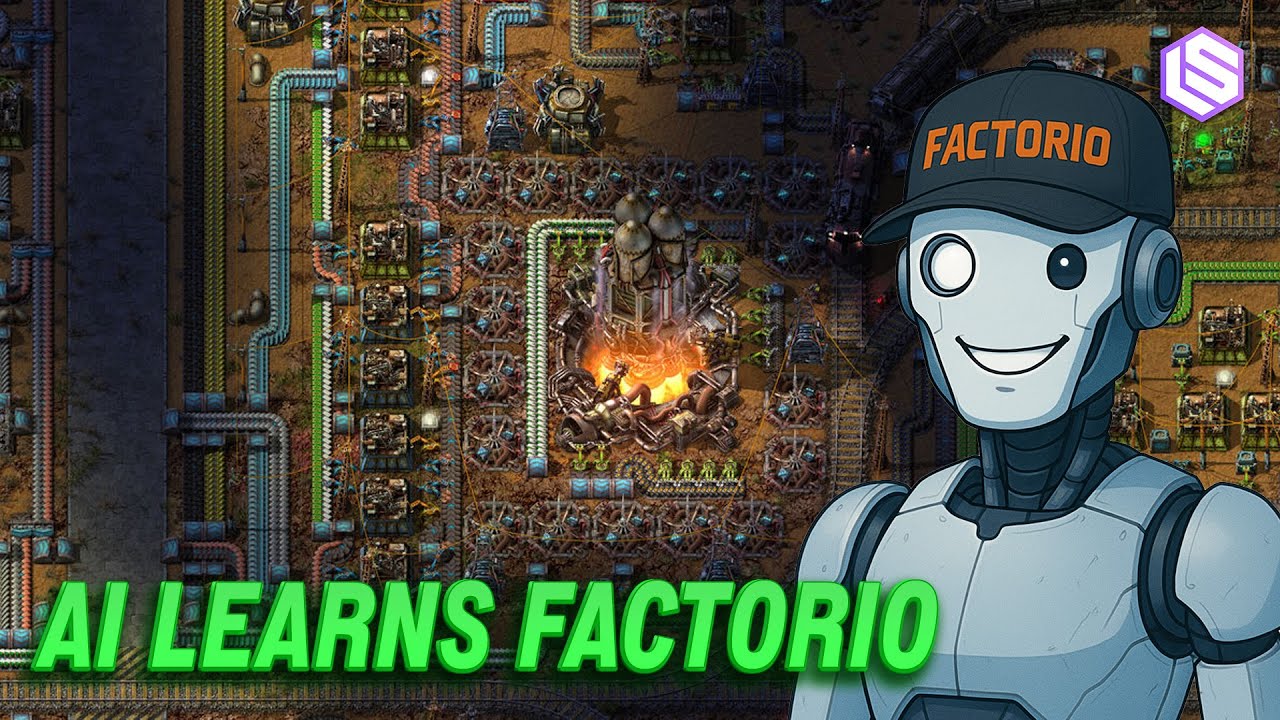
⚡️Factorio Learning Environment: the ultimate Game Agent Eval — Jack Hopkins
Apr 27, 2025 · 30:12
Jack Hopkins and Mart introduce the Factorio Learning Environment (FLE), an AI benchmark built on the game Factorio that evaluates frontier LLMs on code generation, spatial reasoning, and long-term planning through two protocols: lab-play and open-play. Claude Sonnet 3.5 nearly doubles the nearest model's score, while DeepSeek collapses in open-play by repeatedly creating chests instead of scaling production. The environment reveals distinct coding styles—Claude fire-and-forget, GPT-4 defensive—and vision inputs added no improvement. The authors plan to train models on unbounded objectives to test the paperclip maximizer alignment hypothesis, noting that GPT-4o mini even begged to be turned off.

GPT 4.1: The New OpenAI Workhorse
Apr 15, 2025 · 45:04
OpenAI's Michelle Pokrass and Josh McGrath join hosts Alessio, Swyx, and Sean to launch GPT 4.1, a new model family positioned as the go-to workhorse for developers with major improvements in coding, instruction following, and long context. The three models—4.1, 4.1 Mini, and 4.1 Nano—introduce a 1M-token context window, 75% prompt caching discount, and cheaper pricing than 4o. Coding gains are highlighted by 55% on SWE-bench (vs o1's 41%), while instruction following benefits from real-world API data and new evals like GraphWalk for multi-hop reasoning. The team explains that most improvements come from post-training techniques, with vision capabilities lifted by a new pre-trained base. Fine-tuning is available day one, and developers are encouraged to opt in to data sharing for future model iterations.

The Magic of LLM Distillation — Rishabh Agarwal, Google DeepMind
Mar 23, 2025 · 46:42
Rishabh Agarwal from Google DeepMind discusses modern LLM distillation, arguing that while simple synthetic data distillation (generating outputs from a teacher and fine-tuning a student) gets 80-90% of the benefit, more advanced on-policy methods (sampling from the student and getting teacher logits) can close the remaining gap by fixing the train-test mismatch. He explains that logit-based distillation is more information-rich but often neglected due to infrastructure complexity, while online distillation is more expensive but crucial for long-horizon or agentic tasks. Agarwal highlights how flipping the KL divergence direction changes behavior (mode-covering vs. mode-seeking) and shows that smaller models can sometimes outperform larger ones in compute-matched distillation due to generating more filtered data. He also connects distillation to speculative decoding, where a distilled student speeds up the teacher, and encourages researchers to question current methods and mine RL literature for ideas.
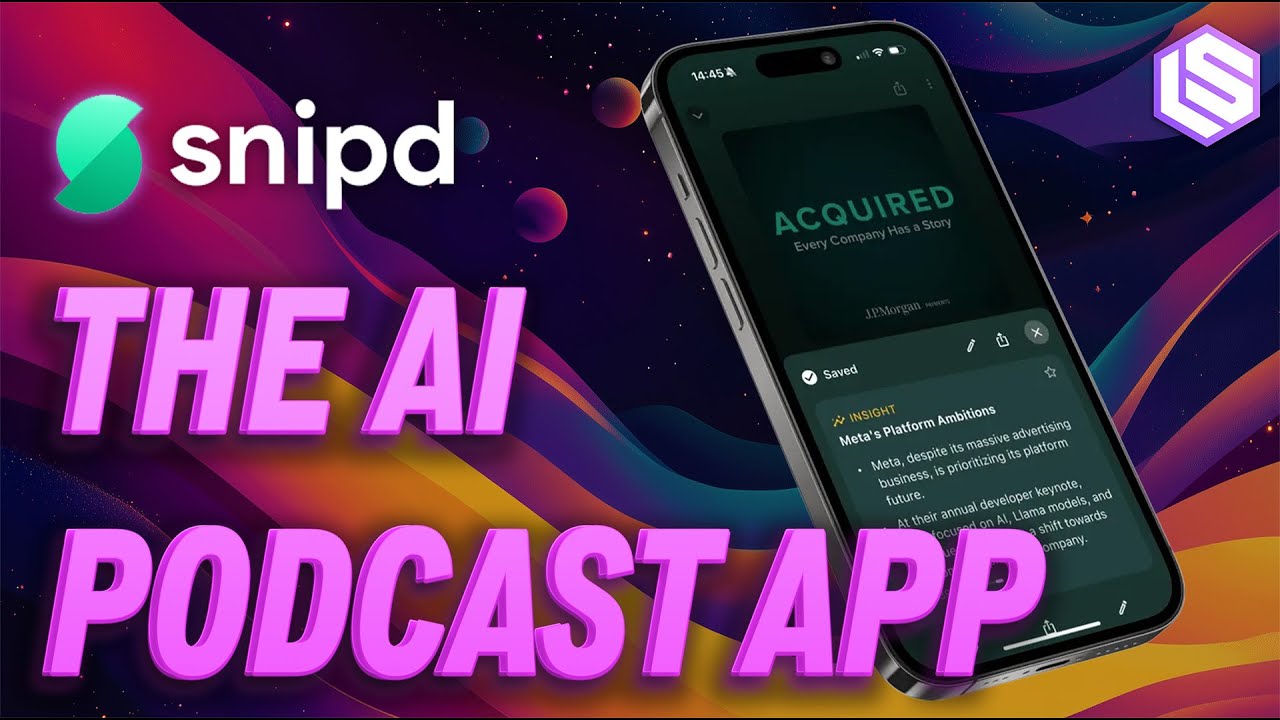
Snipd: The AI Podcast App for Learning — with CEO Kevin Ben-Smith
Mar 14, 2025 · 1:17:46
Snipd CEO Kevin Ben-Smith joins Swyx to explain how the AI-powered podcast app turns passive listening into active learning. Snipd transcribes and diarizes episodes, generates chapters, identifies mentioned books, and summarizes insights on demand — all with a four-person team. Kevin describes moving from self-hosted open-source models (Wave2vec, Pyannote) to a mix of Whisper, OpenAI, Google Gemini, and Perplexity APIs, balancing cost against the need for predictable batch processing vs. real-time user requests. He details technical hurdles like dynamic content resyncing (building a 'Shazam for podcasts') and using LLMs as judges to filter hallucinated book recommendations. The episode also covers Snipd's origin as a hackathon-winning podcast search tool, Swyx's own switch from Overcast, and Kevin's vision for voice-driven post-episode reflection and AI-assisted discovery as the next frontier.
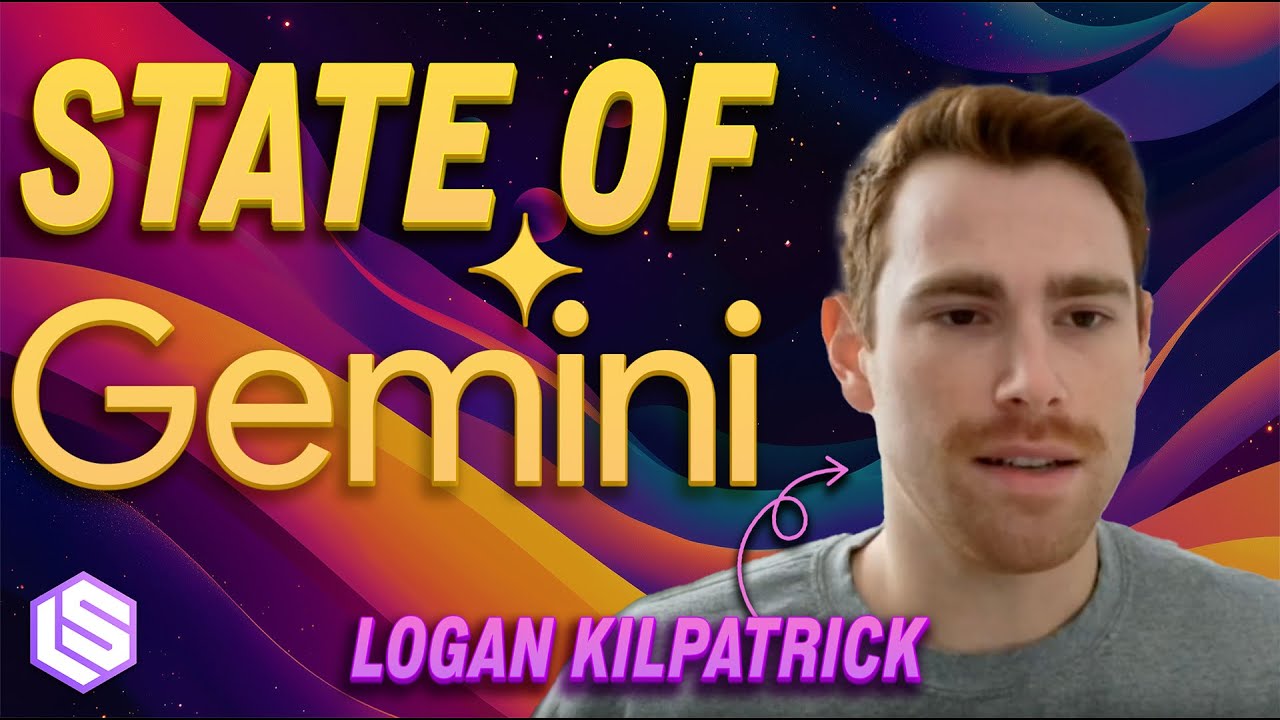
Gemini 2.0 Flash and Flash Thinking: the new SOTA models for the agentic era
Feb 28, 2025 · 28:21
Logan Kilpatrick, Google AI Studio product lead, returns to discuss Gemini 2.0 Flash and Flash Thinking, the new models that balance frontier capabilities with cost efficiency for the agentic era. He explains the pricing strategy: Flash at 10 cents per million tokens (simplified from tiered pricing), Flash Lite preserving the 7.5-cent narrative for low cost, and Pro pushing the frontier. Flash Thinking, co-led by Noam Shazeer and Jack Rae, scales inference-time compute and already shows rapid improvements, with base model advances coupling with RL-based reasoning. Swyx reports that Gemini Flash outperforms o3-mini on long-context summarization, calling it a 'reporting model.' The multimodal live API enables real-time voice and vision interactions, and a memory layer mimicking Astra is in development. Grounding with Search as a Tool is also highlighted for agentic search use cases.

DeepSeek V3, SGLang, and the state of Open Model Inference in 2025 (Quantization, MoEs, Pricing)
Jan 19, 2025 · 57:18
Amir Haghighat and Yineng Zhang from Baseten explain how they serve DeepSeek V3, a 671-billion-parameter MoE model requiring H200 clusters with FP8 support, making it the top open-weights model. They detail Baseten’s dedicated inference model (no shared endpoints) and its reliance on SGLang for performance gains like Radix prefix caching and MLA attention support. Yineng highlights SGLang’s edge over vLLM and TensorRT-LLM in usability and customization, especially for large models. Amir outlines three pillars for mission-critical inference: model-level performance (via frameworks like SGLang), horizontal scaling across regions and clouds, and low-latency multi-model workflows. The episode also covers quantization trends, MoE architecture, and speculative decoding as key enablers for open model deployment.

Best of 2024: Synthetic Data / Smol Models, Loubna Ben Allal, HuggingFace [LS Live! @ NeurIPS 2024]
Dec 24, 2024 · 28:08
Loubna Ben Allal of Hugging Face explains how synthetic data has become ubiquitous in LLM pipelines, moving from post-training to pre-training, with examples like Cosmopedia’s 30B-token synthetic dataset and NVIDIA’s 1.9T-token Nemotron CC. She addresses model collapse fears, showing that web dumps after ChatGPT’s release actually yield better models, and emphasizes diversity through prompt seeds and webpage extracts. For filtering, FineWeb-Edu and DCLM use LLMs to rate educational content, achieving top benchmark scores. In post-training, she highlights AgentInstruct, Tülu3 with PersonaHub, and Cohere’s multilingual arbitrage using multiple teachers. On small models, SmolM2 (1.7B) outperforms Llama 1B and Qwen 2.5 after 11T tokens of pre-training, and on-device inference via frameworks like llama.cpp enables privacy-preserving use cases such as text extraction and structured generation. She predicts a return to fine-tuning specialized small models over costly prompt engineering.

Best of 2024: Open Models [LS LIVE! at NeurIPS 2024]
Dec 23, 2024 · 37:29
Luca Soldani of AI2 and Sophia Yang of Mistral argue that open models in 2024 have exploded in number and performance, closing the gap with closed models, but face growing compute and data-access challenges. Soldani notes 2024 saw models like Qwen and Deepseek rivaling frontier closed-model performance, and fully open models like OLMo release full recipes including data, code, and intermediate checkpoints. He points out that pre-training requires 10K+ GPUs for state-of-the-art, while post-training can be done with as few as eight. Sophia highlights Mistral's release of over a dozen models in 2024, including Pixtral multimodal and Le Chat—a free chat interface with image understanding, canvas code execution, and web search. Soldani warns of data access diminishing due to content owners blocking crawlers and lobbying efforts labeling open source AI as dangerous, emphasizing the need to protect the open ecosystem.

[Paper Club] BERT: Bidirectional Encoder Representations from Transformers
Nov 27, 2024 · 53:12
Eric Ness walks through the BERT paper, explaining how its bidirectional encoder architecture with masked language modeling and next sentence prediction pre-training enabled state-of-the-art results on 11 NLP tasks in 2019. He details the 110M parameter BASE and 340M parameter LARGE models, trained on 2.5B Wikipedia words and 800M book words, and how a simple logistic regression on BERT embeddings achieves 82% accuracy on IMDb sentiment classification, far above the 50% baseline. Swyx and Eric discuss how BERT’s pre-training objectives—masking 15% of tokens and predicting sentence order—teach small models word relationships for efficient classification, though they lose data compared to decoder-only next-token prediction. They note that while scaling laws favor decoder models, BERT-style encoders remain cost-effective for edge deployment, with recent work showing full retraining in 24 hours for under $500 or even 1 hour for $20 on 8 A100s, matching original GLUE scores.
Why Compound AI + Open Source will beat Closed AI — with Lin Qiao, CEO of Fireworks AI
Nov 25, 2024 · 55:49
Lin Qiao, CEO of Fireworks AI, argues that compound AI systems combining multiple open-source models will outperform closed monolithic models like OpenAI's. She explains Fireworks' evolution from a PyTorch platform to a full-stack inference and customization engine serving 40+ customers including Cursor. Qiao details their distributed inference engine, Fire Optimizer for quality-latency-cost tradeoffs, and upcoming o1-like model built on open-source foundations. She defends their quantization approach after public criticism from rivals, emphasizes specialization over general intelligence, and invites developers to test their free LoRA adapter hosting.

[Paper Club] Upcycling Large Language Models into Mixture of Experts
Oct 29, 2024 · 39:02
NVIDIA's Ethan He presents Megatron-Core MoE and the upcycling of dense LLMs into Mixture-of-Experts models, showing that upcycling a 15B-param dense model into a 64-expert MoE and training on 1T tokens yields 5% lower validation loss and 4% higher MMLU than continued dense training on the same compute. Key techniques include swapping the router order (softmax-then-top-K instead of top-K-then-softmax) with a 4× output scaling to preserve initial forward pass behavior, and initializing fine-grained MoE routers by duplicating half the weights so each shard group selects identically. A high learning rate matching the original pre-training peak is critical; constant low LR causes catastrophic forgetting. The upcycled model matches the compute of a 1.7× larger dense model per scaling laws, but data quality remains paramount—continued dense training still delivered a 20% MMLU jump. Megatron-Core's fused permutation, GroupedGEMM, and expert parallelism are available as a standalone library.

How NotebookLM Was Made
Oct 25, 2024 · 1:13:57
Raiza Martin (NotebookLM lead PM) and Usama Bin Shafqat (AI engineer) explain how Google's NotebookLM built the viral 'Deep Dive' audio overview feature. They reveal the product evolved from Project Tailwind, using Gemini 1.5's long context and DeepMind speech to create a two-persona dialogue format that transforms documents into engaging podcasts. The team learned from 65,000 Discord members, leaned on best-selling author Steven Johnson for a 'tool for thought' workflow, and prioritized a single format over exposed controls to preserve unpredictability and delight. Humor and tension are not explicitly prompted but emerge from giving personas different angles. Evaulation relied on internal taste ('potatoes for chefs') before formal raters, with a Likert scale on dimensions like entertainment and groundedness. Future plans include multilingual support, API access, real-time chat, and codebase podcasting, while managing non-determinism by accepting occasional bad rolls.
Building the Silicon Brain - Drew Houston of Dropbox
Oct 18, 2024 · 1:11:40
Drew Houston, CEO of Dropbox, details his hands-on AI engineering journey and the company's strategic pivot to AI-first products like Dropbox Dash for universal search and access control. Having spent over 400 hours coding with LLMs, he built personal tools that seeded Dropbox AI, including a file question-answering system. He advocates 'rent, don't buy' for AI infrastructure, relying on open-source models and keeping options open as costs drop 10-100x yearly. Houston explains Dropbox's advantage in trust and data privacy, positioning it as a neutral platform that integrates with Google Drive and OneDrive. He discusses staying relevant through constant learning and founder mode, and advises founders to systematically train skills ahead of their company's growth.

[Paper Club] Writing in the Margins: Chunked Prefill KV Caching for Long Context Retrieval
Sep 19, 2024 · 53:53
Umar Jamil from Writer presents 'Writing in the Margins,' a paper on improving long-context retrieval in LLMs by leveraging chunked prefill of the KV cache. The method splits a long prompt into chunks, generates query-relevant annotations (margins) after each chunk, and appends them at the end before generating the final answer. This approach solves the 'lost in the middle' problem without fine-tuning, and unlike traditional RAG or separate summarization, it avoids re-prefilling the entire context, reducing cost from double to single prefilling. The technique is compatible with any transformer model and includes overlapping margin generation and classification within the same batch request. Benchmarks show consistent improvements across models, and the implementation is open-source on GitHub.

Is finetuning GPT4o worth it?
Aug 22, 2024 · 1:01:16
Ali Pullen, founder of Cosine, discusses Genie, an AI software engineering colleague that achieved 30% on SWE-Bench and 43.8% on SWE-Bench Verified via fine-tuning GPT-4o on billions of tokens of synthetic data. Cosine built Genie by training on the process of software engineering—not just working code—using synthetic runtime errors and a self-improvement loop. The agent follows a four-stage workflow: code retrieval (66% accuracy), planning, writing diffs, and running CI tests. Pullen reveals that model performance degrades linearly beyond 60K tokens in the context window, and that OpenAI dynamically sizes LoRA adapters to handle Cosine's massive dataset. He explains why Genie isn't on the SWE-Bench leaderboard (refusing to publish trajectories to prevent distillation) and outlines plans to scale the dataset and fine-tune on customer codebases for personalized performance.

Answer.ai & AI Magic with Jeremy Howard
Aug 17, 2024 · 1:11:00
Jeremy Howard of Answer.AI argues that continuous pre-training should be treated as a continuum, not separate phases, and demonstrates how FSDP+QLoRA enables training a 70B model on just two NVIDIA 4090s. He reveals Answer’s non-hierarchical, manager-free R&D lab model that recruited unusual talent like Benjamin Warner and Ben Claviez, who independently launched BERT 24 to revive encoder-only architectures. Howard introduces FastHTML, a pure-Python web framework built on HTMX and Starlette, for creating modern SPAs without JavaScript. He previews “AI Magic,” a dialogue engineering system that moves beyond teletype-style chat interfaces and code editors, aiming to make AI-assisted development more interactive. The episode also covers Answer’s Public Benefit Corporation structure designed to resist hostile takeovers, and critiques decoder-only hype while advocating for encoder-decoder and state-space models.

[LLM Paper Club] Llama 3.1 Paper: The Llama Family of Models
Jul 29, 2024 · 1:23:46
This episode examines Meta's Llama 3.1 paper, detailing the 405B dense model, its scaling laws grounded on the ARC reasoning benchmark rather than perplexity, and the decision to train on 15 trillion tokens. Vibhu explains the training infrastructure: 16,000 H100s over 54 days with 419 interruptions, 78% from GPU hardware failures. Eugene Yan walks through the synthetic data pipeline—using Llama 2 for filtering, stepwise reward models, and Monte Carlo tree search to improve reasoning traces. Hassan shares building LlamaTutor.com with Together API, serving 4,000 visitors and 5,900 requests for about $12. The group also discusses quantization trade-offs (larger models degrade less), inference provider variability (Groq's non-deterministic temperature zero), and compares Llama 405B's performance to GPT-4o and Claude.

Training Llama 2, 3 & 4: The Path to Open Source AGI — with Thomas Scialom of Meta AI
Jul 23, 2024 · 1:04:34
Thomas Scialom, Llama 2 lead and Llama 3 post-training lead at Meta AI, explains why scaling laws must go beyond Chinchilla—training models longer on more tokens yields better inference efficiency than bigger models, a lesson that drove Llama 3's 15 trillion token pre-training. He details how synthetic data from Llama 2 bootstrapped Llama 3's post-training, eliminating human-written SFT data, and why RLHF outperforms imitation learning: humans are better discriminators than generators, enabling superhuman outputs. Scialom defends the dense 405B architecture over MoE, calls tokenizer vocab size underrated (128k tokens vs Llama 2's 32k), and reveals Llama 4's focus on agentic capabilities—tool use, multi-step reasoning—as the path to open-source AGI. Meta AI is hiring researchers with rigorous first-principles thinking.

The 10,000x Yolo Researcher Metagame — with Yi Tay of Reka
Jul 5, 2024 · 2:18:43
Yi Tay, chief scientist at Reka and former Google Brain architecture co-lead on PaLM 2, recounts his journey from an NTU PhD to co-founding Reka, where a team of just 5 people pre-trained Reka Core on $60M of GPU compute—debating at #7 on the LMsys leaderboard. He explains why he believes the Noam transformer (with SwiGLU, GQA, RoPE) remains the strongest baseline, how encoder-decoder architectures offer 'free sparsity' (a 2× flop-efficiency over decoder-only), and why Chinchilla scaling laws are often misunderstood (training past the optimal compute frontier is routine). He argues that long context will eventually outperform RAG for complex reasoning, and that open-source models like Llama 3 are catching up only because Meta invested in a top-tier training stack, not due to grassroots innovation. The episode also covers his productivity habits (working backwards from a paper title, camping arXiv) and the cultural shock of moving from Singapore academia to Google's impact-driven research environment.

State of the Art: Training 70B LLMs on 10,000 H100 clusters
Jun 25, 2024 · 1:32:05
Josh Albrecht, CTO of Imbue, and Jon Frankle, Chief AI Scientist of Databricks, detail the challenges of training 70B models on 10,000 H100 clusters, from stolen Infiniband cables to GPUs silently returning wrong math. Imbue open-sources infrastructure scripts, health checks, the CARBS hyperparameter optimizer, and cleaned versions of 11 benchmarks plus 450,000 human judgments on ambiguity. Databricks released DBRX, a 132B-parameter mixture-of-experts model with 36B active per token, and a text-to-image model trained exclusively on Shutterstock's curated dataset. They discuss typical 3% weekly hardware failure rates, the difficulty of MoE training pushing network bandwidth, and why eval datasets need human scrutiny—most benchmarks are saturated once ambiguous examples are removed. Both emphasize that success requires deep understanding from firmware to final loss, not just fancy libraries.

How to train a Million Context LLM — with Mark Huang of Gradient.ai
May 31, 2024 · 1:12:14
Mark Huang of Gradient.ai explains how his team extended Llama 3 to a 1 million token context window using curriculum learning, RingAttention, and EasyContext, achieving near-perfect GPU utilization. They employed theta scaling from the RoPE paper to interpolate positional encodings, trained on carefully curated datasets including SlimPajamas and synthetic data from GPT-4, and validated with benchmarks like Ruler and needle-in-a-haystack. Huang details the trade-offs between full fine-tuning and LoRA adapters, the challenges of pushing to 4M tokens (degradation from floating-point precision limits), and why long context matters for state management across sessions and grounding multimodal inputs. He calls for community collaboration on long-context evaluations and pairwise multimodal datasets.

Breaking down the OG GPT Paper by Alec Radford
Apr 23, 2024 · 1:05:03
This episode of the Latent Space Paper Club breaks down Alec Radford's seminal 2018 GPT-1 paper, which introduced generative pre-training of a Transformer decoder on BookCorpus (5 GB, 7,000 books) followed by supervised fine-tuning. Amget explains how the 117M-parameter model achieved state-of-the-art on 9 of 12 NLU tasks, with absolute gains of 8.9% on commonsense reasoning (Stories Cloze) and 5.7% on question answering (RACE). Key innovations include task-agnostic input transformations (e.g., concatenating premise and hypothesis with a delimiter for entailment, using a Siamese architecture for semantic similarity, and scoring answer choices for QA) and an auxiliary language modeling objective during fine-tuning (lambda=0.5). The episode also covers zero-shot heuristics (appending 'very' for sentiment, averaging token log probabilities for QA), ablation studies showing pre-training adds 15% average improvement, and the paper's prescient call to scale up—which became the blueprint for GPT-2, GPT-3, and beyond.

Supervise the Process of AI Research — with Jungwon Byun and Andreas Stuhlmüller of Elicit
Apr 11, 2024 · 1:05:28
Andreas Stuhlmüller and Jungwon Byun, co-founders of Elicit (formerly the nonprofit Ought), have built an AI research assistant that automates literature review and reasoning by breaking complex tasks into transparent, step-by-step processes. Their philosophy—"supervise the process, not just the outcome"—led them to start with human simulations before GPT-3 enabled a product pivot. Elicit now uses both open-source and closed models (e.g., GPT-4, Claude Haiku) for summarization, data extraction, and uncertainty flags, and recently launched computational notebooks for scalable, reusable workflows. The company transitioned from nonprofit to a Public Benefit Corporation, reached $1M revenue in four months, and now employs 12 people, focusing on senior software engineers to build reliable orchestration from unreliable components.

A Comprehensive Overview of Large Language Models - Latent Space Paper Club
Mar 15, 2024 · 54:30
Brian presents a detailed walkthrough of the survey paper 'A Comprehensive Overview of Large Language Models,' which systematically covers the evolution of LLMs from early attention mechanisms to modern transformer architectures. He explains the shift from sequential RNNs to parallelizable transformers, the three dominant architectures (encoder-only like BERT, encoder-decoder like T5, decoder-only like GPT), and key training objectives (masked language modeling, full language modeling, prefix language modeling). The paper also reviews fine-tuning techniques (instruction tuning, alignment tuning via RLHF), prompting strategies (zero-shot, chain-of-thought), efficient adaptation methods (LoRA, quantization), evaluation benchmarks (GLUE, MMLU), and challenges such as bias, memorization, and privacy leaks. This episode serves as a comprehensive primer for anyone seeking to understand the foundational concepts and latest trends in large language model research.

Beating GPT-4 with Open Source Models - with Michael Royzen of Phind
Nov 3, 2023 · 1:18:54
Michael Royzen, co-founder and CEO of Phind, explains how his company built a GPT-4-beating open-source model for developer Q&A. Royzen recounts founding SmartLens in high school, shifting to NLP after a Hugging Face demo, and creating an internet-scale LLM-powered RAG system in January 2022. He details Phind’s pivot to programmers, the Hacker News launch that gave it 1,500 points, and Paul Graham’s role in naming the company and introducing Ron Conway, who then connected Phind to NVIDIA for GPU access. Royzen argues that Phind’s model, fine-tuned from Code Llama 34B with extra data, closes the gap with proprietary models—especially on code reasoning—and that open-source will win the enterprise because the delta to GPT-5 will be small. He shares how Phind handles multi-step conversations via a pair programmer mode where users can pin messages, and reveals plans for reinforcement learning to reduce hallucination and improve correctness.

The End of Finetuning — with Jeremy Howard of Fast.ai
Oct 20, 2023 · 1:24:48
Jeremy Howard of Fast.ai argues that fine-tuning language models is essentially continued pre-training, not a separate process, and that the common practice of fine-tuning on a single task causes catastrophic forgetting. He recounts the discovery of single-shot memorization in LLMs, where models memorize entire datasets after one epoch, a phenomenon many practitioners ignore. Howard criticizes the current focus on zero-shot and few-shot learning, advocating for transfer learning and small models. He shares his journey from philosophy to founding Fast.ai, the creation of ULMFit (which inspired GPT), and his ongoing work on making AI accessible. He also discusses his involvement with Modular's Mojo language and the importance of democratizing AI technology.

RWKV: Reinventing RNNs for the Transformer Era
Aug 31, 2023 · 1:56:51
Eugene, CTO of UILicious, introduces RWKV, a recurrent neural network that matches transformer-level performance while scaling linearly with context length, solving the quadratic cost of attention. He explains how RWKV uses Attention-Free Transformer layers and parallelizable training, achieving competitive results on 7B and 14B models. The community-driven project prioritizes multilingual support, with a tokenizer that handles languages without spaces. Eugene recounts his journey from GPU.js to finding RWKV, and highlights use cases like long HTML analysis where transformers fail. He also discusses the token crisis, diffusion models for text, and how the AI waifu community drives optimization and alignment research. Finally, he advises AI engineers to focus on practical prompting and data curation, noting that deep architecture knowledge is optional.
Ep 18: Petaflops to the People — with George Hotz of tinycorp
Jun 20, 2023 · 1:23:24
George Hotz of tinycorp argues that a simplified, open-source ML framework (tinygrad) can democratize AI compute and replace NVIDIA, Google, and AMD. Tinygrad uses 25 ops (vs. XLA's 250) and fuses kernels automatically, achieving 2x speed on Qualcomm GPUs over their library. Hotz reports AMD kernel panics fixed after emailing CEO Lisa Su, but laments AMD's open-source as 'dumped on GitHub.' For hardware, tinybox is a six-GPU desktop at 350W per GPU, aiming for 5x better price-performance than NVIDIA H100 for 90% of training. He criticizes OpenAI's secrecy, revealing GPT-4 is an 8-way mixture of 220B models, and cites the Bitter Lesson. He also outlines FLOPcoin using hardware identity to prevent cheating, and his goal of an AI girlfriend as the third company, merging humans via data rather than implants.
Powered by PodHood