
Healthcare
Episodes from Latent Space about Healthcare.
4 episodes

Inside Abridge: The AI Listening to 100 Million Doctor Visits — Abridge's Janie Lee & Chai Asawa
May 14, 2026 · 1:06:38
Abridge's Janie Lee and Chai Asawa explain how the company is building a clinical intelligence layer for healthcare, starting with ambient documentation that saves clinicians 10-20 hours per week of 'pajama time' and expanding into real-time prior authorization and clinical decision support. They argue that context is everything—integrating EHR data, payer policies, and medical literature to make AI proactive rather than reactive, exemplified by guiding a doctor to ask two extra questions during a visit to guarantee an MRI approval before the patient leaves. The hardest AI problem is delivering high-quality, low-latency, low-cost real-time guidance in a high-stakes setting, which Abridge tackles using a constellation of models, efficient post-training on its proprietary dataset of over 100 million medical conversations, and progressive rollout with rigorous specialty-specific evaluations. They emphasize personalization at three levels—individual style, specialty (e.g., cardiology vs. dermatology), and health system guidelines—and see clinicians embedded as 'clinician scientists' on engineering teams as a key competitive advantage. Looking ahead, they envision the same conversation…
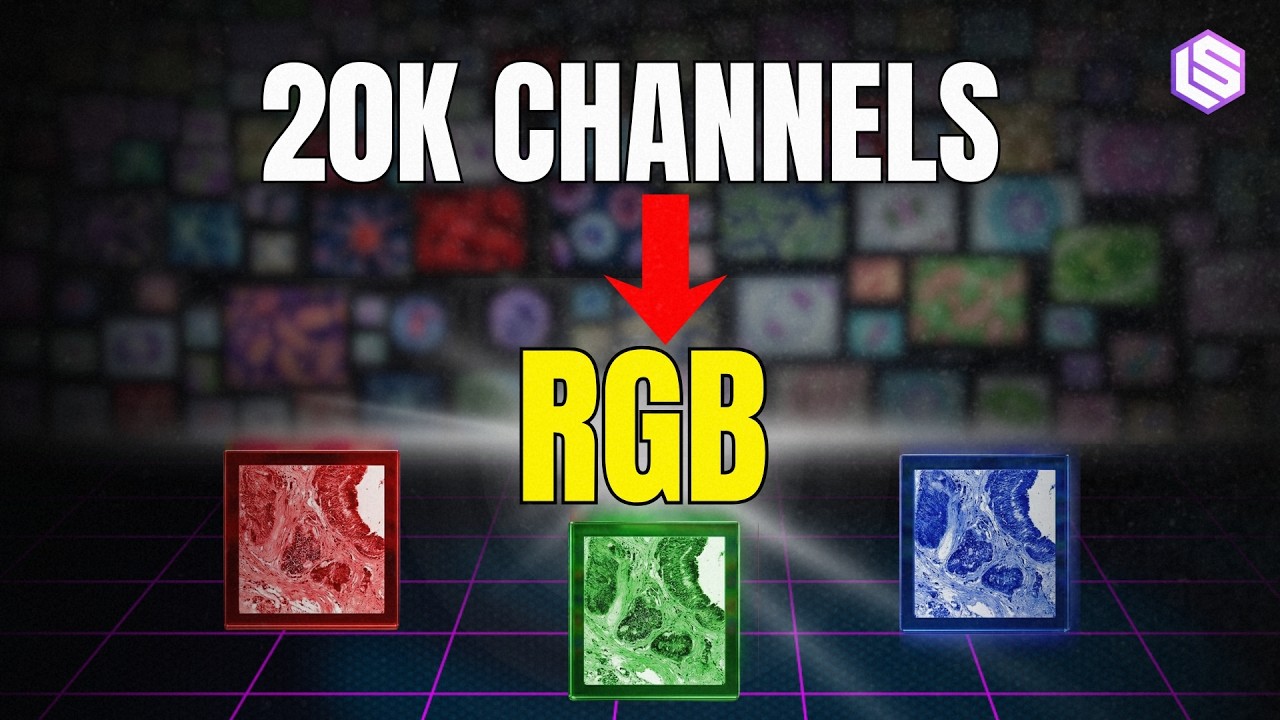
🔬 Training Transformers to solve 95% failure rate of Cancer Trials — Ron Alfa & Daniel Bear, Noetik
Apr 20, 2026 · 1:25:22
Noetik founders Ron Alfa and Daniel Bear argue that 95% of cancer drugs fail in clinical trials not because of pharmacology but because of poor patient selection; their thesis is that the right patients exist but aren't identified. To solve this, Noetik generates its own multimodal data—pathology H&E, spatial transcriptomics with up to 20,000 genes, and protein stains—from human tumor samples, building self-supervised foundation models like OctoVC and the autoregressive Tario. They claim a data moat: over a hundred million spatially resolved cells, an order of magnitude more than any public dataset, which drives better generalization across cancer types. The platform validates predictions via PerturbMap, an in-vivo mouse model with multiplexed CRISPR knockouts, and an ‘in silico humanization’ that reads mouse H&E in human gene space. A $50M deal with GSK licenses OctoVC for therapeutic discovery and fine-tuning on GSK's own data, marking a rare software-focused licensing deal in biotech. Noetik bets that patient-level tissue modeling, not subcellular simulation, will first deliver clinically actionable insights.

Priscilla Chan and Mark Zuckerberg: Frontier AI + Virtual Biology To Solve All Diseases
Nov 6, 2025 · 53:34
Priscilla Chan and Mark Zuckerberg, co-founders of CZI's Biohub, explain their ten-year shift from broad philanthropy to a focused mission of building frontier AI and virtual biology to cure all diseases. They argue that tool-building — from 12-foot microscopes to the 125-million-cell CELLxGENE atlas — is the essential, underfunded work that enables scientific breakthroughs. The couple details how their Biohub model combines frontier biology (e.g., spatial imaging, cellular engineering) with frontier AI (models like rBio and VariantFormer) to create a hierarchical virtual cell, eventually expanding to a virtual immune system. They emphasize that data generation must precede modeling, citing the decade-long Human Cell Atlas as foundational, and note that AI timelines may accelerate their 100-year goal significantly sooner. The episode closes with a call for biologists and engineers to collaborate, use their open models, and help generate data that grounds these next-generation tools.

⚡️Using RFT to Build Clinical Superintelligence
Jul 29, 2025 · 26:58
Brendan Fortuner, Head of Eng at Ambience AI, explains how the healthcare startup uses OpenAI's reinforcement fine-tuning (RFT) to build clinical AI assistants that help doctors automate note-taking and ICD-10 coding, saving up to two hours per day. Ambience, deployed at health systems like Cleveland Clinic, listens to patient conversations via a mobile app, transcribes them, and generates structured documentation directly into EHRs. Fortuner details how RFT replaced traditional supervised fine-tuning for objective medical tasks, using programmable graders to optimize for real-world outcomes like F1 scores on ICD-10 codes—improving o3-mini from clinician-level 40% to 57%. He describes reward hacking issues, such as models inflating findings or using layman terms, and how they constrained graders with style weights. The episode also covers domain expert vs. ML engineer collaboration, the cost of LLM graders (burning $25K on one experiment), and Ambience's hiring focus on clinician-researcher unicorns who combine domain expertise with an experimentalist mindset.
Powered by PodHood