
Business & Industry
Episodes from Latent Space about Business & Industry.
44 episodes
⚡️Every product of the future will be a living system — Ronak Malde, Trajectory.ai
Jun 21, 2026 · 33:58
Ronak Malde, CEO of Trajectory.ai, recounts his journey from building AI coding agents at Windsurf (acquired by Google DeepMind in a deal involving Demis Hassabis and Sergey Brin) to launching a platform for continual learning in enterprise AI. He argues that every future product must be a 'living system' that learns from real-world user interactions, not static models. The episode details Trajectory's technical innovations, including Self-Distillation Policy Optimization (SDPO) for learning from corrections, continuous LoRA for parallel training, and open-sourcing a training stack with SkyRL. It covers partnerships with Harvey and NVIDIA to train NeMoTron 3 Super for legal workflows, improving metrics like issue spotting and citation accuracy while cutting costs. Malde explains data curation strategies that capture nuanced user edits beyond binary signals, and outlines Trajectory's roadmap from AI-native companies like Clay and Decagon to Fortune 500 enterprises. He also reveals that the idea for Trajectory emerged after giving up his acquisition equity to pursue this vision.
AI-Native Engineering: 100% adoption, 5x search throughput, unlimited tokens — Mikhail Parakhin
Apr 22, 2026 · 1:14:30
Shopify CTO Mikhail Parakhin details how the company achieved near 100% AI tool adoption, driven by a December 2025 inflection point where model quality triggered exponential token consumption. He argues token budgets matter only with strong critique loops: running multiple parallel agents without communication wastes tokens, while agentic PR review using large models—like GPT-5.4 Pro or Gemini Deep Think—reduces bugs even though latency increases. Parakhin unveils Tangle, Shopify's third-generation ML workflow system with content-based caching that eliminates duplicate computation across teams, and Tangent, an auto-research loop that optimizes pipelines—boosting search throughput from 800 to 4,200 QPS on the same hardware. SimGym simulates shoppers using decades of merchant data and browser-based agents to predict conversion changes, achieving 0.7 correlation with add-to-cart events. Shopify uses Liquid AI (non-transformer architecture) for sub-30ms query understanding and long-context tasks like catalog categorization, distilling larger models into Liquid for high-throughput batch jobs.
⚡️ The best engineers don't write the most code. They delete the most code. — Stay Sassy
Apr 13, 2026 · 57:30
Stay Sassy PM and EM join Shawn Wang to discuss how AI coding tools are forcing managers to grapple with per-person token budgets that could reach $2.5M annually as consumption-based pricing replaces subsidies, making code review more critical, not less. They argue that managing these budgets is a new bottleneck, requiring companies to decide how much to spend on individual employees—a scale unprecedented outside department-level budgeting. On build vs buy, they caution that many products are more complex than they appear, and that the old frameworks of feature analysis, administration burden, and vendor lock-in still apply. They highlight code review fatigue from running multiple agents as a risk, citing Amazon's six-hour downtime from AI-generated code, and urge teams to maintain a culture where no single person can take down prod. Finally, they suggest automating executives' standard decisions first—since much leadership work is routine—rather than targeting only junior tasks, and predict that the hardest problems in 2026 will remain human.
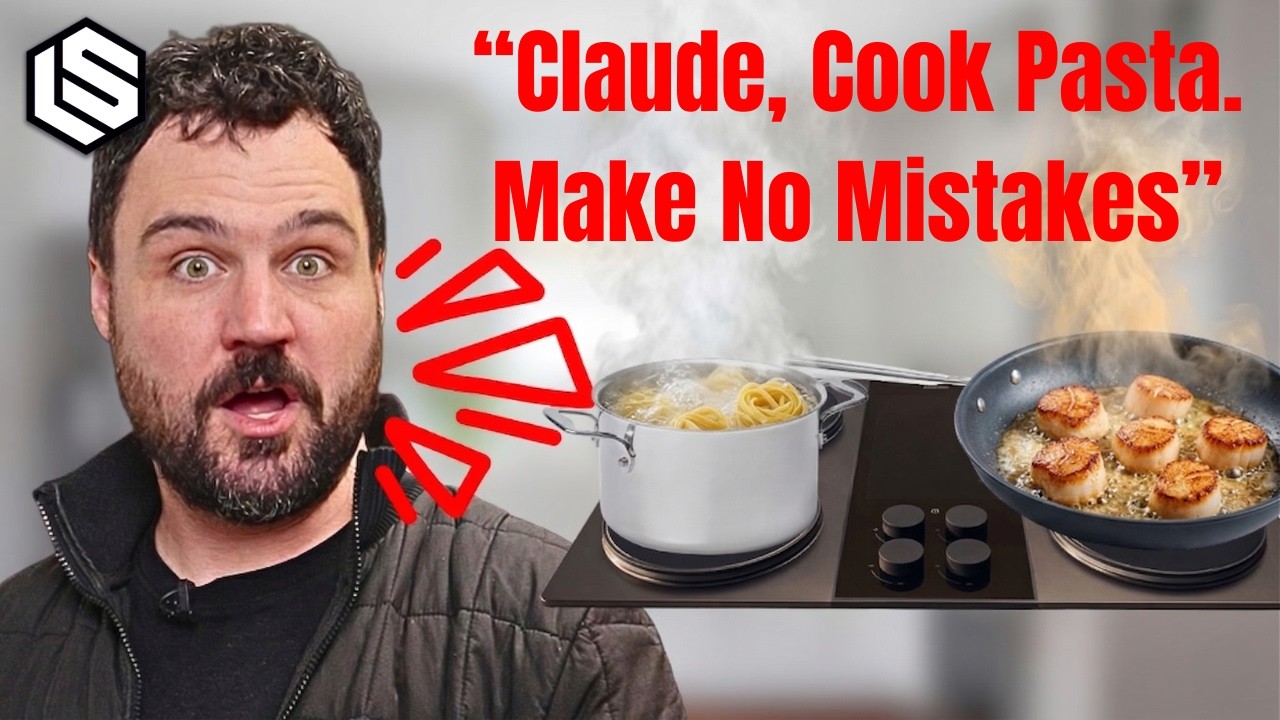
The Stove Guy: Sam D'Amico Shows New AI Cooking Features on America's Most Powerful Stove at Impulse
Mar 31, 2026 · 37:03
Sam D'Amico, founder of Impulse, demonstrates the company's induction cooktop that uses a three-kilowatt-hour LFP battery to deliver 10,000 watts—boiling a liter of cold water in 40 seconds and holding a precise temperature for searing scallops without burning. The stove is rebuilt from first principles with custom power electronics and firmware, enabling OTA updates and software-defined features; a planned update will triple temperature-control speed from one minute 50 seconds to 40 seconds. D'Amico shows AI features powered by Claude that set burner temperatures (e.g., 446°F for scallops) and fetch recipes like Korean fried chicken or egg fried rice with char siu. He explains the origin story from a pizza in Japan, the decision to enter home appliances to avoid app-store dependencies, and the Impulse Core modular platform sold to OEMs. The cooktop launches through Zephyr in hundreds of showrooms nationwide and globally this year.

Mistral: Voxtral TTS, Forge, Leanstral, & Mistral 4 — w/ Pavan Kumar Reddy & Guillaume Lample
Mar 30, 2026 · 54:02
Mistral releases Voxtral TTS, a 3B-parameter speech generation model using a novel autoregressive flow matching architecture and a 12.5 Hz neural audio codec developed in-house. Pavan Kumar Reddy and Guillaume Lample explain how the model achieves high quality and efficiency by predicting audio latents as a continuous distribution, enabling real-time voice agent applications. The episode details Mistral's stepwise multimodal strategy, starting with transcription and now speech generation, with full duplex voice agents as the next goal. Enterprise deployment via Mistral Forge allows fine-tuning on proprietary data, exemplified by training on rare languages or domain-specific jargon. Guillaume discusses merging capabilities (Mistral Small merging coding, reasoning, vision), commitment to open science through technical reports, and reasoning transfer from formal proofs in Lean. The episode also covers AI for science partnerships and hiring for research and forward-deployed engineering roles.

Retrieval After RAG: Hybrid Search, Agents, and Database Design — Simon Eskildsen of Turbopuffer
Mar 12, 2026 · 1:00:32
Simon Eskildsen, founder of Turbopuffer, explains how his obsession with the cost of vector search at Readwise led him to build a search engine on object storage and NVMe SSDs, cutting costs by 95% for customers like Cursor. He outlines the three conditions for a major database company—a new workload (AI-driven search), a new architecture (object storage first, no consensus layer), and evolving to support every query plan. Turbopuffer's architecture uses S3's strong consistency and compare-and-swap for metadata, avoiding stateful systems. Eskildsen shares how they won Notion by absorbing latency issues with dark fiber, and discusses the shift from single RAG queries to agents making many concurrent searches. He also describes the "P99 engineer"—obsessive, trade-off minded, able to bend software to first principles. Future plans include expanding full-text search, reaching Common Crawl scale, and eventually adding simpler OLAP queries.
Why Every Agent Needs a Box — Aaron Levie, Box
Mar 5, 2026 · 1:16:58
Aaron Levie, CEO of Box, argues that every AI agent needs a dedicated data repository—a 'box'—to effectively access enterprise content, and that deploying autonomous agents at scale requires new infrastructure for governance, identity, and security. He contrasts the rapid adoption of coding agents, which benefit from full codebase access and technical users, with the slower enterprise rollout where access controls, messy data, and context engineering pose major hurdles. Levie details Box's internal evals showing 15-point jumps in model performance and emphasizes the need for agents to judge when to stop searching. He discusses moving from read-only to read-write agent workflows, the challenge of keeping documentation current, and his hands-on founder approach to steering a 3,000-person public company through the AI transformation.

Dylan Patel Explains the AI War While Cooking | In-Context Cooking
Feb 26, 2026 · 55:13
Dylan Patel, CEO of SemiAnalysis, argues hyperscalers like Google, Amazon, and Meta will sacrifice all profits to build AI infrastructure, spending $180–$200 billion in capex this year alone, because the AI adoption explosion—Claude Code driving 4% of GitHub commits in one month, Anthropic adding $2.5 billion monthly revenue—makes it a Pascal's wager: spend or die. He details how Taiwan's semiconductor geopolitics create endgame scenarios, from a KMT win placating China to full invasion, with TSMC's output critical. Patel explains Nvidia's paranoid founder Jensen Huang is responding to vertical integration threats from hyperscalers by diversifying into chips like CPX and Groq, but warns moats are shallow. The real bottleneck in AI progress? Semiconductors themselves: fabs take years to build, and no one can buy enough GPUs through 2028. He also predicts a massive AI backlash from the public and financial markets, as capital consumption outpaces revenue and labor displacement accelerates.
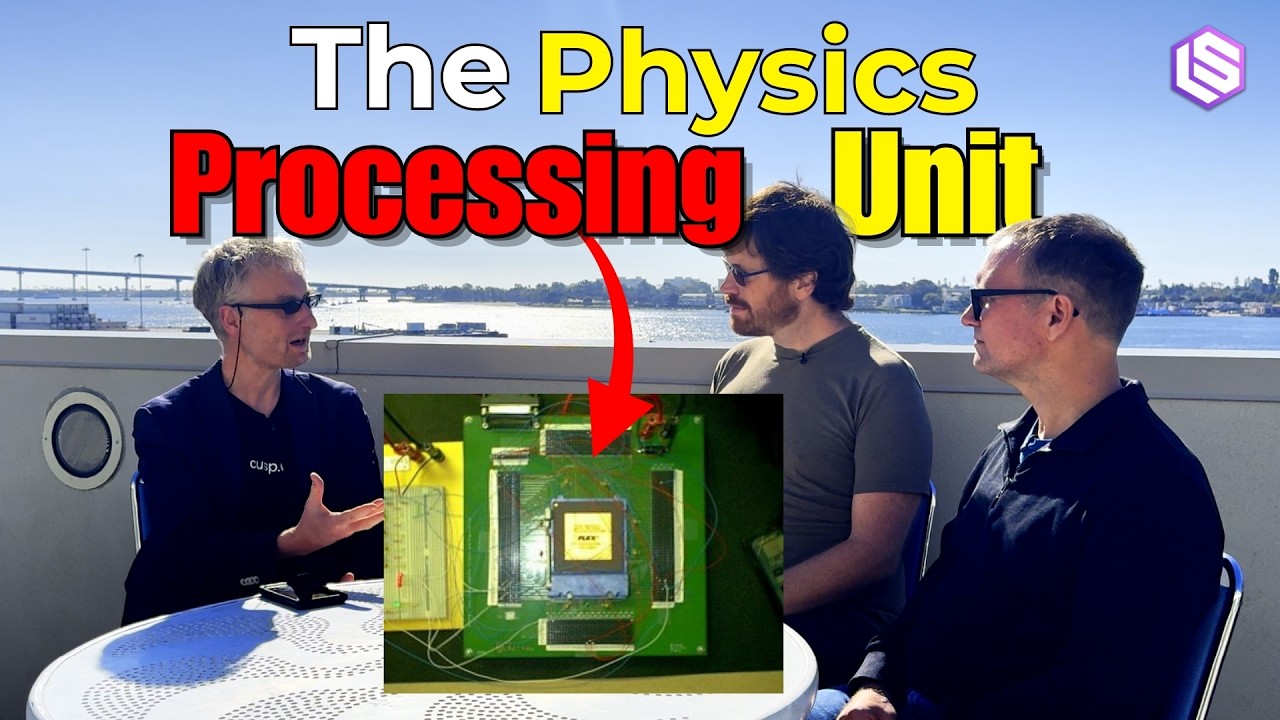
🔬Max Welling: Materials Underlie Everything
Feb 25, 2026 · 34:14
Max Welling, a pioneer in variational autoencoders and equivariant neural networks, argues that materials underlie everything from GPUs to the energy transition, and AI can turn material discovery into a search engine. He traces his career from quantum gravity with Gerard 't Hooft to climate-focused AI, founding CuspAI to accelerate carbon capture materials. CuspAI’s platform combines generative models, multi-scale digital twins, and LLM-powered agents, but Welling insists chemists remain in the loop for the foreseeable future. He explains equivariance as hardcoding symmetry into neural networks to reduce data needs, though data augmentation often works better at scale. His upcoming book reveals the identical mathematics between diffusion models and stochastic thermodynamics, promising cross-fertilization between machine learning and physics.

Inside AI’s $10B+ Capital Flywheel — Martin Casado & Sarah Wang of a16z
Feb 19, 2026 · 55:31
Martin Casado and Sarah Wang of a16z argue that AI’s capital flywheel—where model labs translate funding directly into capability gains and revenue growth in weeks—is creating a new financing playbook that blends venture and growth, with rounds acting as compute contracts. They warn that frontier labs like Anthropic can potentially raise more money than the entire app ecosystem built on their APIs, allowing them to outspend and consume those layers. The episode examines the AGI vs. product dilemma in GPU allocation, the war for talent where $10M+ packages break early-stage founder math, and Cursor as a case study of building up from the app layer while training down into its own models. They also identify “boring” enterprise software as the most underinvested opportunity and note that robotics lacks a ChatGPT moment that would justify current funding levels.

⚡️Context Graphs: according to the authors — Jaya Gupta, Ashu Garg, Foundation Capital
Feb 4, 2026 · 33:44
Jaya Gupta and Ashu Garg of Foundation Capital introduce Context Graphs—the institutional memory of the 'why' behind business decisions, captured through decision traces of exceptions, overrides, and precedents that AI models often miss. They argue these graphs will become the defensible moat for the next generation of applied AI companies and Systems of Agents, citing early implementations at Player Zero, Olive, and Tesserae. The hosts distinguish Context Graphs from mere metadata or data meshes, emphasizing they emerge organically from automating specific workflows rather than as universal enterprise schemas. They predict that by 2026, hundreds of Context Graphs will be in production, a standard enabling stack will emerge, and the industry will shift from debating definitions to extracting value from the captured decision traces.

[State of Research Funding] Beyond NSF, Slingshots, Open Frontiers — Andy Konwinski, Laude Institute
Dec 31, 2025 · 22:34
Andy Konwinski, co-founder of Databricks and Perplexity, launches Laude Institute—a dual venture fund and nonprofit to accelerate the path from open research to breakout companies. At NeurIPS, he explains how Laude's Slingshot program funds projects like DSPy, Terminal Bench, and LMArena, and why the NSF's $1B/year for CS is insufficient, needing $10-100B for frontier AI. He argues Chinese labs (Moonshot, DeepSeek) now outpublish US because OpenAI and others stopped sharing; Open Frontiers, a live-streamed conference in SF, aims to unite top open researchers (Yann LeCun, François Chollet, Jan Leike) to reclaim global leadership. The episode also spotlights the emerging 'post-post-training' layer—prompt optimization, context management, RAG—and why research teams with multiple co-founders (like Databricks' eight) are the new gold standard for AI startups.

[State of AI Papers 2025] Fixing Research with Social Signals, OCR & Implementation — Team AlphaXiv
Dec 31, 2025 · 34:45
AlphaXiv founders Raj and Rayhahn describe building the go-to platform for navigating AI research by obsessing over UI and getting authors like the Laura team to comment directly on papers, then evolving from comments to feeds to benchmarks to AI assistants. They detail how they beat Hugging Face Papers by enabling direct paragraph-level commenting and early traction with high-signal authors, and how they use social signals (views, comments, Twitter) to filter the archive firehose. They discuss the broken academic review process—20% AI-generated reviews at ICLR, quality collapsing under exponential submission growth—and argue papers are becoming less important than implementations, Docker containers, and real-world usability. Their vision: making it trivial to spin up any trending paper's code directly in browser, focusing on the top 0.1% of implementable papers that applied researchers actually care about.

[State of Evals] LMArena's $1.7B Vision — Anastasios Angelopoulos, LMArena
Dec 31, 2025 · 24:02
Anastasios Angelopoulos, founder of LMArena (now Arena), discusses the platform's $100M raise at a $1.7B valuation, its spin-out from Berkeley incubation by a16z's Anjney Midha, and its mission to be the industry's north star for real-world AI evaluation. He defends against the 'leaderboard illusion' paper, citing factual errors and reaffirming that models cannot pay to be on or off the public leaderboard. Arena funds inference costs for millions of monthly users, with 25% of its 5M+ users in software, and is expanding into occupational verticals (medicine, legal, creative) and multimodal video arenas. Key challenges include consumer retention, which improved with sign-in and persistent history, and moving off Gradio to React for better development. Angelopoulos calls for top talent in ML, product, and go-to-market to join the high-performance team.

[State of AI Startups] Memory/Learning, RL Envs & DBT-Fivetran — Sarah Catanzaro, Amplify
Dec 30, 2025 · 28:43
Sarah Catanzaro of Amplify Partners argues that the DBT-Fivetran merger was not the death of the modern data stack but a path to IPO targeting $600M+ combined revenue, that data catalogs failed because they were built for humans rather than machines, and that RL environments are a fad. She notes that frontier labs use dbt and Fivetran for training data curation and agent analytics, and criticizes $100M+ seed rounds raised without near-term roadmaps. For 2026, she identifies personalization via memory and continual learning as the key retention unlock, observing that AI founders are unfamiliar with growth concepts like k-factor. She prefers real-world logs over synthetic RL environments, citing Cursor's use of user activity, and says the most exciting startups combine hard research problems (RAG, rule-following, continual learning) with applications that were previously impossible.

AI to AE's: Grit, Glean, and Kleiner Perkins' next Enterprise AI hit — Joubin Mirzadegan, Roadrunner
Dec 12, 2025 · 1:09:44
Joubin Mirzadegan, a Kleiner Perkins partner who incubated Glean and now leads its next bet, Roadrunner, argues that AI-native CPQ can fix the broken quoting workflows that plague enterprise sales. Starting the CRO-only podcast Grit as a hiring wedge, he built relationships that later helped Glean and Windsurf scale. He explains why technical founders need sales leaders with a chip on their shoulder, not just fancy logos, and why Windsurf succeeded by marrying Google-class product with Salesforce-class distribution, hitting $100M ARR in months. Roadrunner rebuilds CPQ's data model from scratch, co-develops with four hairiest design partners, and aims to use LLMs to recommend deal structures, automating the Slack-channel chaos of deal desk.

⚡️ 10x AI Engineers with $1m Salaries — Alex Lieberman & Arman Hezarkhani, Tenex
Nov 19, 2025 · 27:11
Tenex co-founders Alex Lieberman and Arman Hezarkhani explain how they compensate AI engineers by story points instead of hours, enabling some to earn over $1 million annually while delivering 10x productivity gains. The model emerged after Arman downsized his previous company Parthian's engineering team by 90% yet saw a 10x increase in production-ready software output by re-architecting with AI. They avoid gaming by hiring engineers who are long-term selfish or love coding, and pair them with technical strategists incentivized on account retention. Example projects include building a retail camera prototype in two weeks and a trivia app that hit #20 on the App Store in a month. Their default stack is TypeScript with React and Express, and they switch between coding agents like Claude Code and Codex based on daily performance. They identify human capital as their main constraint and context engineering or entropy reduction as the core challenge for autonomous AI engineers.
Anthropic, Glean & OpenRouter: How AI Moats Are Built with Deedy Das of Menlo Ventures
Nov 14, 2025 · 1:26:59
Deedy Das of Menlo Ventures returns to explain how Anthropic became the fastest-growing software company ever (zero to billions in revenue) and why Glean’s boring enterprise search moat of hard integrations and ranking problems is harder than competitors think. He reveals the $100M Anthology Fund’s strategy: backing OpenRouter, Goodfire, Prime Intellect, and Whisper—companies that solve thorny infrastructure or research problems rather than chasing apps. Das argues that model-layer companies will capture most value because building great models is harder than building apps, and that Anthropic’s product innovations like Claude Code emerge from a culture that lets researchers experiment freely. He also warns that vibe coding is becoming a cognitive crutch for engineers, eroding deep problem-solving skills, and discusses how enterprise AI market share has shifted dramatically: OpenAI went from 50% to 20%, while Anthropic rose from 12% to 32% of enterprise LLM API spend.

How Zyphra went all-in on AMD + Why Devs feel faster with AI but are slower — with Quentin Anthony
Nov 3, 2025 · 1:00:02
Quentin Anthony, head of model training at Zyphra and advisor at EleutherAI, explains why his company moved all training to AMD MI300X GPUs, outperforming Nvidia H100s on certain workloads thanks to 192GB VRAM and higher memory bandwidth, and describes his kernel development approach of writing directly in ROCm or GPU assembly rather than using Triton. He also shares his experience in the METR study on AI coding productivity, where he was one of the few developers with measurable speedup, and offers tips: timebox AI use, avoid the slot machine effect, maintain context hygiene, and use direct API over tools like Cursor. Additionally, he argues that open source AI research benefits from siloed focused teams with guaranteed funding over grand collaborations, and notes that kernel datasets alone won't solve GPU programming due to evaluation challenges.

Building Jamba 3B: the tiny Hybrid Transformer State Space Reasoning Model - Barak Lenz, CTO of AI21
Oct 11, 2025 · 45:05
Barak Lenz, CTO of AI21, presents their Jamba 3B model as a tiny hybrid transformer-state space model that brings long context capabilities to edge devices, and argues enterprises need AI systems like Maestro over standalone models. Lenz explains that the 1:8 ratio of attention to Mamba layers emerged from extensive ablations, with attention placed in the middle of the block working best. The Jamba 3B model uses a 1:12 ratio to maximize efficiency, fitting the same context length as larger models with a fraction of memory. He notes that pure Mamba underperformed on some tasks but hybrid models resolved those deficiencies, and that images quickly become long context problems (4 images can be thousands of tokens). For enterprise, Lenz advocates for model-agnostic orchestration layers treating models as "actions" with statistical properties, enabling continuous learning and cost optimization without vendor lock-in. Drawing from his algo trading background, he compares training frontier models to developing trading algorithms, emphasizing the importance of world-class engineering and avoiding brute force reasoning.

⚡️Traversal: Causal ML and Reinforcement Learning
Oct 5, 2025 · 45:06
Anish and Raaz, co-founders of Traversal, explain how their agentic architecture combines causal machine learning and LLMs to turn incident troubleshooting from a massive search problem into an intelligent, context-driven process. Both have PhDs in causal ML and RL from MIT and Berkeley, and they applied that expertise to root cause analysis in complex enterprise systems with petabytes of fragmented data across logs, metrics, traces, and Slack. Their system dynamically combines statistical tests (for time-series) with semantic understanding (via LLMs) to winnow billions of signals to root cause candidates in under two minutes. They note that reasoning models like o3 are critical for complex incidents, while Claude is better for tool calling and unsticking. Traversal uses a mix of infrastructure size and investigation count for pricing, and sees self-healing as a continuum: 10–20% of issues can be autonomously resolved now, with 30–40% requiring senior engineer sanity-check within 6–12 months. They are hiring in New York and emphasize that building proprietary evals is core IP, making public benchmarks a tension.

⚡️No, Don't Do Palantir for AI - Brendan Falk, Hercules (AUDIO FIXED)
Sep 18, 2025 · 35:08
Brendan Falk, founder of Zeus (now Hercules), explains why he abandoned his vision to become 'Palantir for AI' after six months of enterprise AI transformations. Targeting Global 2000 companies with $5–10M contracts, he found that each use case required custom development, messy data, and high ongoing maintenance, with work scaling poorly across contract sizes. He also faced existential threats from specialized vendors like Decagon and Sierra, who could outspend and out-focus on single use cases. Falk pivoted to Hercules.app, an AI website builder that ships production apps, white-labeling payments and email. He argues the app builder market (Wix, Squarespace, Shopify) will expand with AI, and that brand and ease will sustain higher margins than developer tools like Cursor.

Better Data is All You Need — Ari Morcos, Datology
Aug 29, 2025 · 1:18:43
Ari Morcos, CEO of Datology, argues that data curation is the most impactful and underinvested area in AI, claiming models are defined by what they eat. He details his shift from focusing on inductive biases to realizing data quality is paramount, citing the DCLM study where human experts could not predict automated filtering decisions. Datology's methods combine filtering, rebalancing, curriculum, and rephrasing synthetic data to achieve baseline performance 12x faster, improve accuracy by 4–5 absolute points, and train models with fewer than half the parameters. Morcos explains how curating data bends naive scaling laws by maintaining marginal information gain, and shares results from the Arc 4.5B model, which was trained on 7 trillion tokens (down from 25 trillion) using Datology's curation. He highlights that data is a compute multiplier, making it possible for enterprises to train smaller, cheaper models for specific domains.

⚡️Accelerators @ 3x NVIDIA H200 perf, Made in the USA - Thomas Sohmers + Mitesh Agrawal, Positron AI
Aug 18, 2025 · 47:56
Thomas Sohmers and Mitesh Agrawal of Positron AI argue memory bandwidth, not compute, is the true bottleneck in AI inference, and their accelerator achieves 93% memory bandwidth utilization—triple NVIDIA's efficiency—enabling 70% faster token generation at 150W. The founders, both Lambda Labs veterans, shipped an FPGA product 15 months after founding, then raised a $51M Series A for an ASIC in late 2026. Their hardware requires no recompilation: it ingests raw binary weights from NVIDIA training and outputs an OpenAI-compatible API. Positron focuses on the decode phase of transformers, where memory-bound matrix-vector multiplication dominates, and already counts Cloudflare and Parasail as customers. The company sells systems directly, prioritizing capital efficiency and ROIC over operating its own cloud.

The AI Agenda: GPT5 leaks and the business of AI News — Steph Palazzolo, The Information
Aug 6, 2025 · 1:14:36
Steph Palazzolo, AI journalist at The Information, explains how she covers the secretive AI industry, from OpenAI's GPT-5 to the inference market where startups like Modal raise billions. She reveals that inference providers are essentially GPU resellers facing margin pressure, and that GPT-5's performance will signal whether pre-training scaling or reinforcement learning drives progress. She critiques Meta's super intelligence ambition as misaligned with its ad-revenue business, and details the talent war with rumored hundred-million-dollar offers from Meta to poach researchers. Palazzolo also discusses the Windsurf acqui-hire backlash, the rise of coding agents like Claude Code, and how journalists protect sources while navigating leaks from CEOs like Sam Altman.

🕰️ The Oral History of Windsurf (ft. Varun Mohan, Scott Wu, Jeff Wang, Kevin Hou, Anshul R)
Jul 28, 2025 · 3:53:23
This episode traces the oral history of Windsurf (formerly Codeium and Exafunction) with founders Varun Mohan, Scott Wu, Jeff Wang, Kevin Hou, and Anshul R, charting its evolution from a GPU virtualization startup to a leading agentic IDE and its dramatic acquisition by Cognition. The narrative covers the pivot to code completion in 2022, the shift to a free model to gain traction, and the launch of the Windsurf editor in November 2024 with Cascade, an agent that operates on a shared timeline with the developer. Key principles include meta-learning (auto-generated memories that adapt to each user's preferences) and scaling with intelligence (replacing hard-coded rules with LLM reasoning as models improve). The episode also details the acquisition weekend when Cognition bought Windsurf after Google acquired a stake, highlighting product synergies between the synchronous agent (Windsurf) and async agent (Devin) and the ambition to build a comprehensive platform for real-world software engineering teams.
AI is Eating Search
Jul 23, 2025 · 56:22
Robert McCloy of Scrunch AI argues that AI is replacing web browsing, not just search, as consumers prefer ChatGPT and similar tools over traditional browsing. He explains that AI search platforms still rely on traditional search under the hood, but re-rank results based on metadata clarity—so clickbait titles fail while descriptive content wins. Prompt injection works currently but is a temporary tactic; the durable strategy is clear, structured content with server-side rendered HTML because AI tools don't execute JavaScript. Scrunch helps brands optimize for platforms like ChatGPT, Perplexity, and Meta AI; customer Clerk saw a 6x traffic increase and 9x conversion lift from AI-referred visitors. Robert predicts the future is about 'agent experience'—optimizing how AI systems interact with your content to serve end users directly.

Personalized AI Language Education — with Andrew Hsu, Speak
Jul 11, 2025 · 1:04:10
Andrew Hsu, CTO of Speak, explains how the company built the "third generation" of language learning by betting on AI speech and language models before they were ready. Speak focused on South Korea early, a counterintuitive move for a San Francisco startup, and now 6% of the Korean population has tried the app. The turning point came with Whisper and GPT in 2022, which enabled Speak to evolve from a listen-and-repeat tool into a full-featured AI tutor that gives real-time feedback and adapts to learners. Speak generates over $50M ARR primarily from consumer subscriptions, and Hsu details the product decisions that made it work: abandoning a free version, building custom ASR for low latency, and emphasizing functional fluency over textbook language. He also reveals that Speak is building a real-time voice platform and a knowledge graph for personalized fluency scores, with an eye toward expanding beyond language into general AI-powered education.

[AIEWF Preview] CloudChef: Your Robot Chef - Michellin-Star food at $12/hr (w/ Kitchen tour!)
May 31, 2025 · 20:50
Nikhil Abraham, founder of CloudChef, introduces Zippy, an AI chef robot that makes Michelin-star-quality food for $12 an hour. Zippy uses one-shot demonstration learning to replicate recipes from human chefs, leveraging multimodal models and thermodynamics for culinary intelligence. The robot operates as a rental service, replacing human line cooks at 40% of the cost, with no upfront capital expenditure. CloudChef's software-first approach uses off-the-shelf hardware, focusing on proprietary culinary layers for decision-making and safety. The robot is deployed in real commercial kitchens, including Michelin-star venues, and has validated its technology through a successful delivery kitchen in Palo Alto. Abraham highlights engineering challenges like real-time perception and on-device processing, and invites engineers to join a company with a path to deploy over 100 robots within a year.

Tiny Teams: $6m ARR, 5m users with 4 employees — Sid Bendre, Oleve (Quizard AI/Unstuck AI)
Apr 23, 2025 · 42:59
Sid Bendre of Oleve (formerly Quizzer AI and Unstuck AI) explains how his four-person team built $6M ARR and 5M users across multiple consumer apps. Starting with Quizzer AI in January 2023, a viral TikTok gained 10K users in 30 hours; by August 2024, Unstuck AI hit 1M users in nine weeks. The company has been profitable since its first nine months. Bendre describes their platform engineering strategy: product engineers own individual apps while a platform team builds reusable systems, including internal shadow-org agents for growth and marketing. He shares technical hacks like using LaunchDarkly feature flags to load-balance across Azure OpenAI endpoints and a de-indexer for Azure AI Search to manage costs. The key engineering principle is deterministic LLM workflows—classifying user intent then routing to pre-built deterministic flows—rather than open-ended agent tool use.

The Rise and Fall of the Vector DB category: Jo Kristian Bergum (ex-Chief Scientist, Vespa)
Apr 19, 2025 · 27:17
Jo Kristian Bergum argues that the vector database category is dying because vector search capabilities have converged into existing databases like Postgres' pgvector, Elasticsearch, and Vespa, making specialized vector databases unnecessary for most use cases. He traces the category's rapid rise after ChatGPT, driven by the misconception that RAG required embeddings, and notes Pinecone's high ARR and subsequent repositioning. Bergum emphasizes that embeddings remain important but should be combined with traditional retrieval methods like BM25 for effective search, and that re-ranking can add modest gains. He critiques the hype around knowledge graphs, noting the bottleneck of building them, but sees LLMs making triplet generation easier. For the future, he hopes for more domain-specific embedding models and visual language model backbones, though acknowledges the difficulty of the business model.
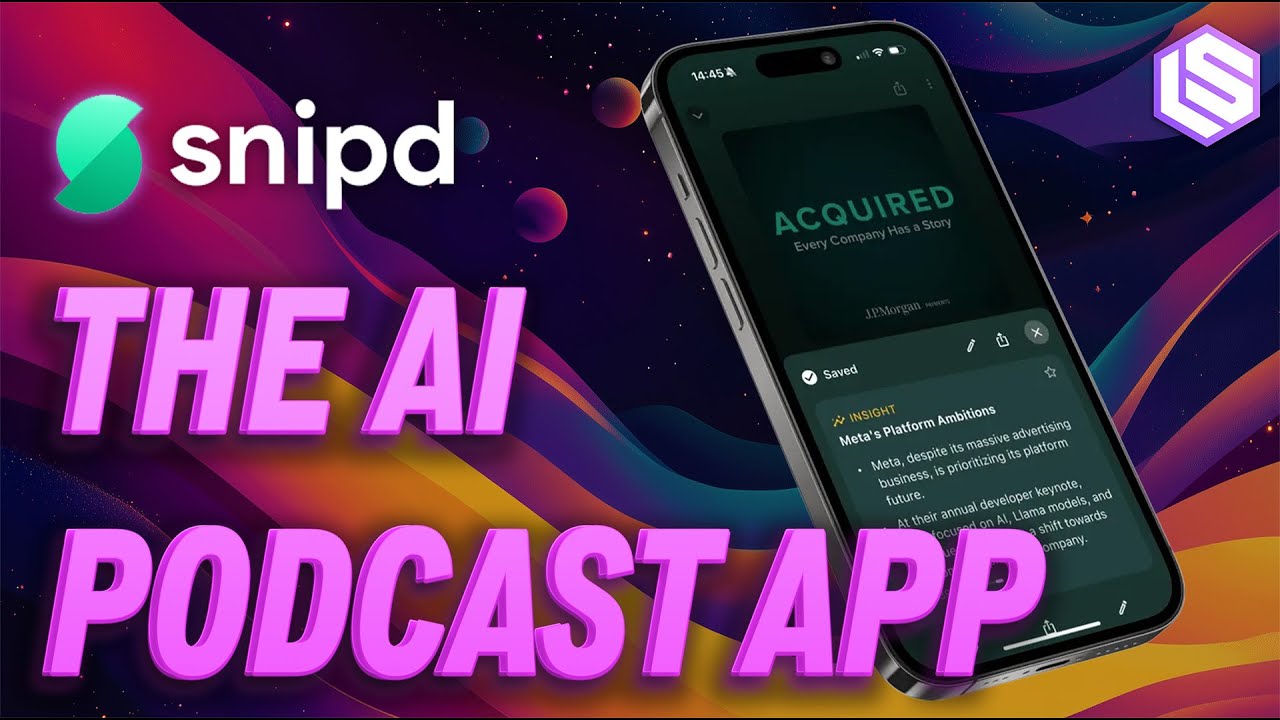
Snipd: The AI Podcast App for Learning — with CEO Kevin Ben-Smith
Mar 14, 2025 · 1:17:46
Snipd CEO Kevin Ben-Smith joins Swyx to explain how the AI-powered podcast app turns passive listening into active learning. Snipd transcribes and diarizes episodes, generates chapters, identifies mentioned books, and summarizes insights on demand — all with a four-person team. Kevin describes moving from self-hosted open-source models (Wave2vec, Pyannote) to a mix of Whisper, OpenAI, Google Gemini, and Perplexity APIs, balancing cost against the need for predictable batch processing vs. real-time user requests. He details technical hurdles like dynamic content resyncing (building a 'Shazam for podcasts') and using LLMs as judges to filter hallucinated book recommendations. The episode also covers Snipd's origin as a hackathon-winning podcast search tool, Swyx's own switch from Overcast, and Kevin's vision for voice-driven post-episode reflection and AI-assisted discovery as the next frontier.
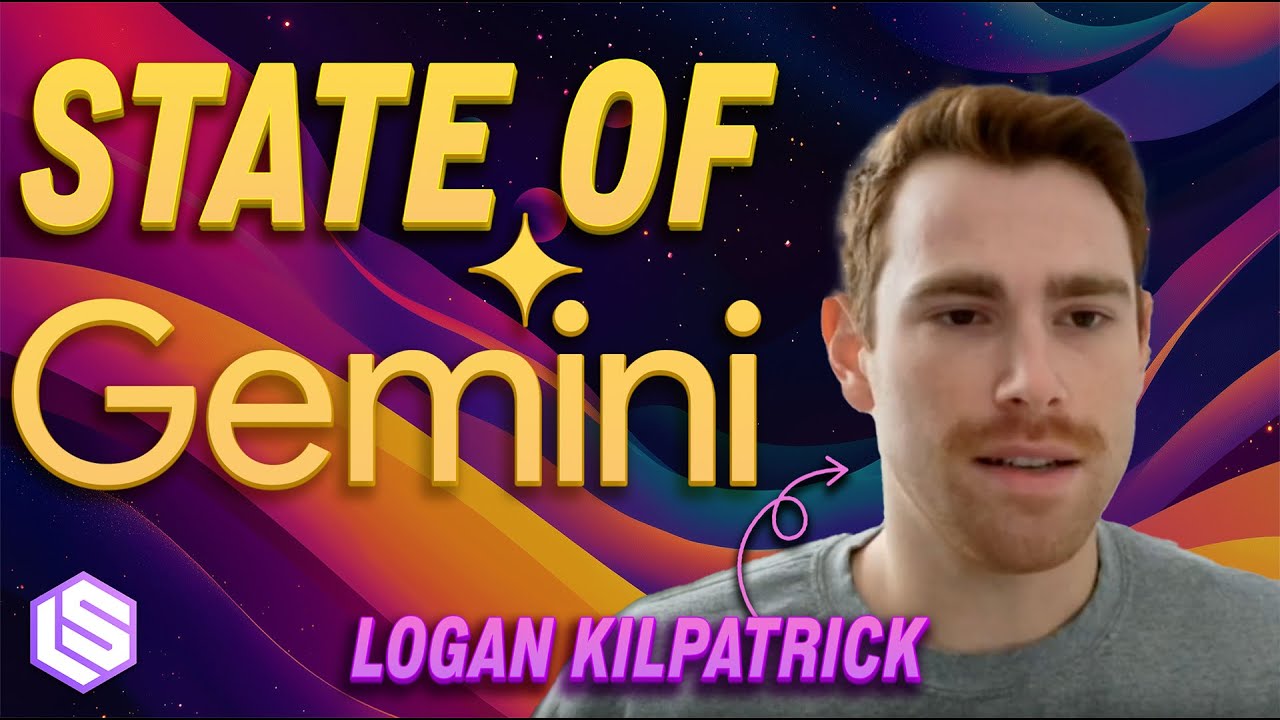
Gemini 2.0 Flash and Flash Thinking: the new SOTA models for the agentic era
Feb 28, 2025 · 28:21
Logan Kilpatrick, Google AI Studio product lead, returns to discuss Gemini 2.0 Flash and Flash Thinking, the new models that balance frontier capabilities with cost efficiency for the agentic era. He explains the pricing strategy: Flash at 10 cents per million tokens (simplified from tiered pricing), Flash Lite preserving the 7.5-cent narrative for low cost, and Pro pushing the frontier. Flash Thinking, co-led by Noam Shazeer and Jack Rae, scales inference-time compute and already shows rapid improvements, with base model advances coupling with RL-based reasoning. Swyx reports that Gemini Flash outperforms o3-mini on long-context summarization, calling it a 'reporting model.' The multimodal live API enables real-time voice and vision interactions, and a memory layer mimicking Astra is in development. Grounding with Search as a Tool is also highlighted for agentic search use cases.

The Agent Reasoning Interface: Claude, ChatGPT Canvas, Tasks, Operator — with Karina Nguyen, OpenAI
Feb 1, 2025 · 1:06:29
OpenAI's Karina Nguyen, who led the creation of ChatGPT Canvas and Tasks, explains how her team trains separate models for new interaction paradigms rather than prompting the core model, enabling rapid iteration on user feedback. She details the 'behavioral design' process that shapes model personality in collaborative contexts like Canvas—deciding when to rewrite vs. edit—and how that extends to defining agents as a progression from one-off actions to fully trustworthy long-horizon delegation. Drawing on her time at Anthropic building Claude.ai from scratch and co-creating Claude 3, she contrasts the product mindsets: OpenAI takes more product risks across consumer features while Anthropic focuses on enterprise. She also shares her vision for ChatGPT evolving into a 'generative OS' where UIs adapt dynamically to user intent, and argues that human creativity—not model capability—is the current bottleneck for rethinking software interfaces.

Outlasting Noam Shazeer, Crowdsourcing Chai AI w/ 1.4m DAU — with William Beauchamp, Chai Research
Jan 26, 2025 · 1:13:33
William Beauchamp, founder-CEO of Chai AI, explains how he pivoted from algorithmic trading to build a character chatbot platform before Character.ai, growing to 1.4M DAU and $22M+ revenue by crowdsourcing model improvements through Chaiverse. Starting with GPT-J in 2021, he found product-market fit with a therapist bot and shifted to user-generated content, letting users define prompts, images, and names. Competing against well-funded rivals like Character AI and Talkie, Chai ships over 100 LLMs weekly via its developer platform, spending $10M on compute in 2024 and tripling it. Beauchamp argues AI follows an S-curve, not scaling laws, and focuses on inference optimization using rejection sampling and reward models to serve better responses. He prioritizes 'insanely great' products over technology-driven features, noting that audio and image features failed to move metrics, while a data flywheel and aggressive user acquisition drove rapid growth.

Beating Google at Search with Neural PageRank and $5M of H200s — with Will Bryk of Exa.ai
Jan 10, 2025 · 55:54
Will Bryk, CEO of Exa.ai (formerly Metaphor), details building a neural search engine from scratch using link prediction as 'Neural PageRank' — predicting documents rather than keywords. Exa's new product offers near-perfect lists (e.g., 'startups working on hardware in SF') by scaling compute per query, from milliseconds to a day, like o1 for search. Bryk argues LLMs will become the interface to search, while Exa provides the 'super knowledge' that even AGI will need. He contrasts Exa's neural approach with Google's keyword-based system and Perplexity's reliance on Bing. The company recently purchased a $5M H200 cluster and maintains a culture of nap pods and first-principles thinking.

The State of AI Startups in 2024 [LS Live @ NeurIPS]
Dec 21, 2024 · 26:35
Sarah Guo and Pranav Reddy argue that 2024 has become a far friendlier ecosystem for AI startups, with the model landscape shifting from OpenAI's near-monopoly to a competitive field where Google's Gemini now leads LMSys Arena and open-source models like Llama 8B score ten points higher on MMLU than Mistral 7B a year ago. They note that OpenAI's API cost has dropped 80-85% in 18 months, and total OpenAI API share fell from ~90% to ~60% as customers switch. The funding environment is rational, not a bubble, with foundation-model labs raising $30-40B but most startups seeing sane valuations; one portfolio company grew from zero to twenty million in PLG-style spending. Key startup themes include first-wave service automation (Sierra, Decagon, Harvey, EvenUp), better search and new friends (Perplexity, Glean, Character, Replica), and democratized creativity (Midjourney, HeyGen). They argue the 'GPT wrapper' narrative is false—applications capture value—and that incumbents face innovator's dilemma because AI changes business models (outcomes-based pricing) and data needs (reasoning traces rarely saved). The speed of change and new markets (legal, healthcare, defense) structurally favor…

0 to over $8M ARR in 2 months as a Claude Wrapper (Bolt.new, Qodo)
Dec 2, 2024 · 1:36:42
Eric Simons of Bolt.new/Stackblitz and Itamar Friedman of Qodo discuss Bolt.new's viral growth from $4M ARR in four weeks to over $8M ARR in two months as a Claude wrapper, driven by its in-browser WebContainer OS that eliminates local dev setup. They contrast Bolt's '0 to 1' creation for non-developers with enterprise-focused agents like Qodo's testing and code review tools, arguing that specialized agents outperform general-purpose ones. Simons details how WebContainer's unified sandbox enables error self-healing loops, while Friedman explains AlphaCodium's task-breaking that boosted o1 preview to 93rd percentile on Codeforces. The episode covers open-source strategy, pricing tiers ($20 to $200/month), and founder advice on ignoring expert doubt to ship fast, illustrated by Simons' Ironman completion while launching Bolt.

Singapore: the AI Engineer Nation — with Minister Josephine Teo
Oct 19, 2024 · 56:40
Singapore Minister Josephine Teo outlines the city-state's refreshed national AI strategy and the Ministry of Digital Development's approach to balancing innovation, safety, and talent development. She details plans to triple AI practitioners from 5,000 to 15,000, the AI Verify testing tools and AI Safety Institute for governance, and internal government AI bots like AI Bot for RAG-based knowledge retrieval. On sovereign AI, she discusses hybrid cloud infrastructure and pragmatic data center expansion. Teo also explains Singapore's new law requiring transparency for AI-generated election content, emphasizing fact-based political discourse.
Building the Silicon Brain - Drew Houston of Dropbox
Oct 18, 2024 · 1:11:40
Drew Houston, CEO of Dropbox, details his hands-on AI engineering journey and the company's strategic pivot to AI-first products like Dropbox Dash for universal search and access control. Having spent over 400 hours coding with LLMs, he built personal tools that seeded Dropbox AI, including a file question-answering system. He advocates 'rent, don't buy' for AI infrastructure, relying on open-source models and keeping options open as costs drop 10-100x yearly. Houston explains Dropbox's advantage in trust and data privacy, positioning it as a neutral platform that integrates with Google Drive and OneDrive. He discusses staying relevant through constant learning and founder mode, and advises founders to systematically train skills ahead of their company's growth.

The 10,000x Yolo Researcher Metagame — with Yi Tay of Reka
Jul 5, 2024 · 2:18:43
Yi Tay, chief scientist at Reka and former Google Brain architecture co-lead on PaLM 2, recounts his journey from an NTU PhD to co-founding Reka, where a team of just 5 people pre-trained Reka Core on $60M of GPU compute—debating at #7 on the LMsys leaderboard. He explains why he believes the Noam transformer (with SwiGLU, GQA, RoPE) remains the strongest baseline, how encoder-decoder architectures offer 'free sparsity' (a 2× flop-efficiency over decoder-only), and why Chinchilla scaling laws are often misunderstood (training past the optimal compute frontier is routine). He argues that long context will eventually outperform RAG for complex reasoning, and that open-source models like Llama 3 are catching up only because Meta invested in a top-tier training stack, not due to grassroots innovation. The episode also covers his productivity habits (working backwards from a paper title, camping arXiv) and the cultural shock of moving from Singapore academia to Google's impact-driven research environment.

How To Hire AI Engineers (ft. James Brady and Adam Wiggins of Elicit)
Jun 21, 2024 · 1:08:06
James Brady and Adam Wiggins of Elicit define the AI engineer role as a blend of conventional software engineering, deep curiosity about language models, and a defensive fault-first mindset to handle LLMs' chaotic latency and non-determinism. They explain their interview process uses coding exercises that force edge-case thinking and system design probing fault tolerance, not happy-path algorithms. For sourcing, they emphasize side projects, hackathons, and targeted communities like effective altruism. The episode explores the ML-first mindset of relinquishing control to leverage model capabilities, using techniques like retries, fallbacks, and strong typing. Elicit shares their job description template and tiered ML reading list as practical resources for hiring.
How AI is Eating Finance - with Mike Conover of Brightwave
Jun 11, 2024 · 1:05:06
Brightwave founder Mike Conover explains how his vertical AI startup builds a 'partner in thought' for finance professionals, using a systems-of-systems approach that decomposes problems into specialized subsystems rather than relying on large context windows or monolithic agents. He argues that the evolution from DALL-E's 1,024-token context to today's million-token models has not solved synthesis; smaller, focused reasoning units still outperform. Conover emphasizes that the real competitive edge lies in custom training data and human annotation, not pre-training, and that models are converging in capability—so value shifts to fine-tuning data that elicits specific behaviors. He details why Brightwave avoids spreadsheets in favor of conversational analysis, and predicts AI will automate idea generation and second-order derivative bets, but humans must remain the final synthesizers and deciders. The episode also covers hiring for vertical AI, the role of knowledge graphs, and the diminishing economic incentive for companies to train their own foundation models.

Generating your AI Media Empire - with Youssef Rizk of Wondercraft.ai
Sep 20, 2023 · 1:28:55
Youssef Rizk, co-founder of Wondercraft.ai, explains how his five-month-old startup uses hyperrealistic AI voices to turn blogs, newsletters, and other content into podcasts, arguing that the application layer—not the underlying API—is the real moat. He details Wondercraft's origin from a failed sports-investing startup, the rapid MVP that generated $3K in one day, and the decision to build script generation and audio production tools rather than train its own models. Rizk also announces a new AI dubbing feature for video, discusses the challenges of scaling to 28 languages, and reveals that the company runs on just four people pushing two major features per week. The conversation covers the daily Hacker News Recap podcast—which reached Spotify's top 30 tech podcasts—and Rizk's view that AI-generated content must be clearly disclosed to avoid backlash.
Powered by PodHood