
TPU
ProductA product discussed on Latent Space.
9 episodes
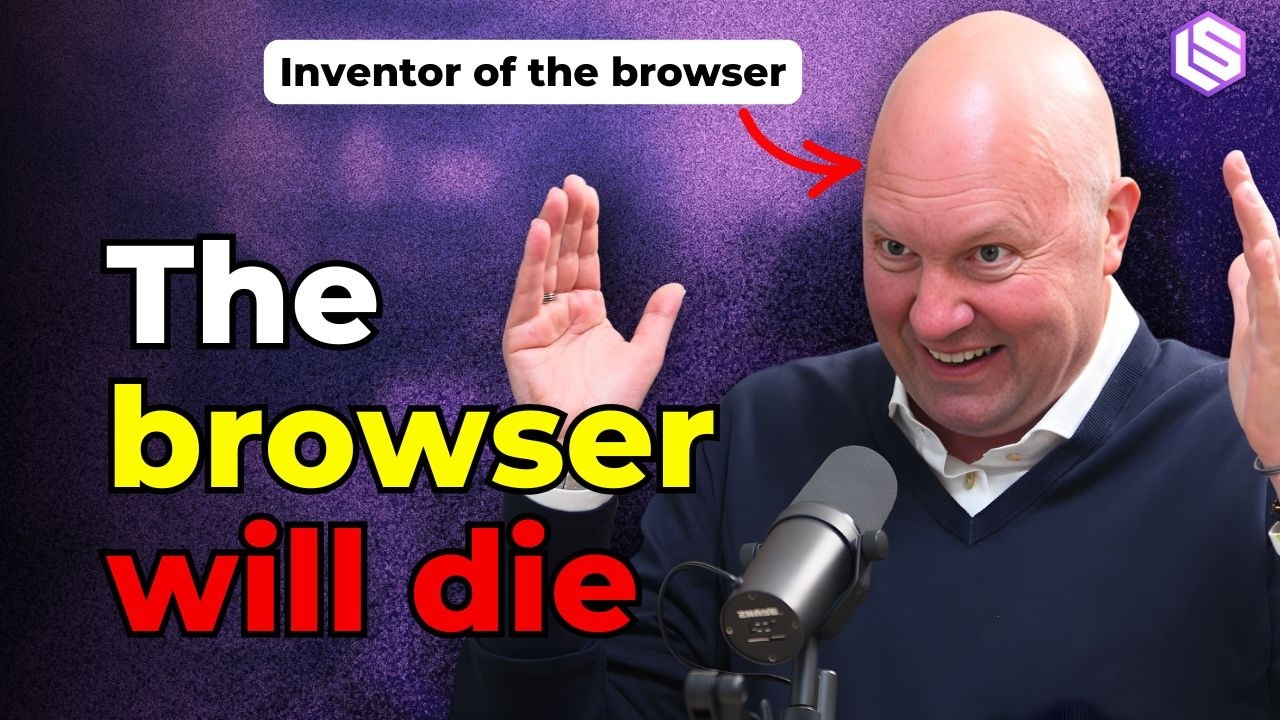
Marc Andreessen introspects on Death of the Browser, Pi + OpenClaw, and Why "This Time Is Different"
Apr 3, 2026 · 1:16:20
Marc Andreessen argues that AI is finally different from past boom-bust cycles because of four compounding breakthroughs: LLMs, reasoning (o1, R1), coding agents (OpenClaw), and recursive self-improvement. He calls this the '80-year overnight success'—decades of neural network research now paying off. Comparing today's AI capex boom to the dot-com crash, he notes that buyers like Microsoft and Google are cash-rich incumbents and every GPU deployed is already generating revenue. He hails Pi and OpenClaw as a Unix-like architecture that makes agents model-independent and self-modifiable. On open source, he calls DeepSeek a 'gift to the world' for its paper and code, but warns that entrenched institutions—unions, licensing, government monopolies—will slow AI adoption far more than technologists expect.

Claude Code for Finance + The Global Memory Shortage: Doug O'Laughlin, SemiAnalysis
Feb 24, 2026 · 2:07:40
Doug O'Laughlin, SemiAnalysis founder, explains his Claude Code awakening in December 2024: Anthropic's Opus 4.5 one-shotted tasks that used to take 24 hours, leading him to predict Claude Code will write 25–50% of all GitHub code by year-end (already 4% of commits in two weeks). He argues this marks the death of Excel and Bloomberg for analysts—'you can just do things'—but warns of a 'hygiene' crisis as junior analysts lose meta-learning. On the semiconductor side, O'Laughlin details a severe memory squeeze: HBM demand consumes 4× the DRAM capacity, DRAM prices could double again, and CXL is reviving as a workaround. He compares AI infrastructure buildout to the railroad boom (25% of U.S. gross fixed capital investment) and says Microsoft faces an innovator's dilemma—renting GPUs to 'barbarians at the gate' while its own office franchise is disrupted by Claude Code. Google's TPU v7 enjoys a temporary TCO advantage, but Nvidia's supply chain dominance (Jensen doing shots with SK and Samsung) will reassert with Rubin. O'Laughlin also reflects on his 2,800-mile Continental Divide Trail hike as essential self-mastery.

The AI Frontier: from Gemini 3 Deep Think distilling to Flash — Jeff Dean
Feb 12, 2026 · 1:23:31
Jeff Dean, Google's Chief AI Scientist, explains how the company's dual strategy of frontier "Pro" models and distilled "Flash" models, alongside co-designed TPUs and latency-optimization, keeps Gemini at the Pareto frontier. Distillation compresses high-capability large models into smaller, efficient ones, enabling Flash models to exceed earlier Pro generations. He emphasizes energy-based thinking: data movement costs thousands more picojoules than arithmetic, making batching and speculative decoding essential. TPU development requires predicting ML workloads 2–6 years out, often speculatively adding hardware features. Gemini was born after Dean wrote a one-page memo arguing that fragmented model efforts across Google Brain and DeepMind should merge into a single unified multimodal effort. Looking ahead, he predicts personalized models attending to all user data and reasoning speeds of 10,000 tokens/second will transform software engineering.

Captaining IMO Gold, Deep Think, On-Policy RL, Feeling the AGI in Singapore — Yi Tay
Jan 23, 2026 · 1:32:05
Yi Tay, who leads Google DeepMind's Reasoning and AGI team in Singapore, explains how Gemini Deep Think achieved IMO Gold by abandoning symbolic AlphaProof for an end-to-end RL-trained model. He details the on-policy RL philosophy—models learn from their own generated outputs rather than imitating others—and the critical role of self-consistency through parallel sampling and internal verification. Tay describes the IMO effort: four co-captains in different time zones, a one-week training sprint, a live competition in Australia where researchers punched in problems as they were released, and the tension of waiting for human scores to determine the gold threshold. He discusses why the team believes one model must subsume everything for AGI, the data efficiency gap compared to humans, and his hiring focus on raw talent and research taste. Tay also shares his personal fitness transformation—losing 23 kilos and improving HRV—as integral to research productivity.
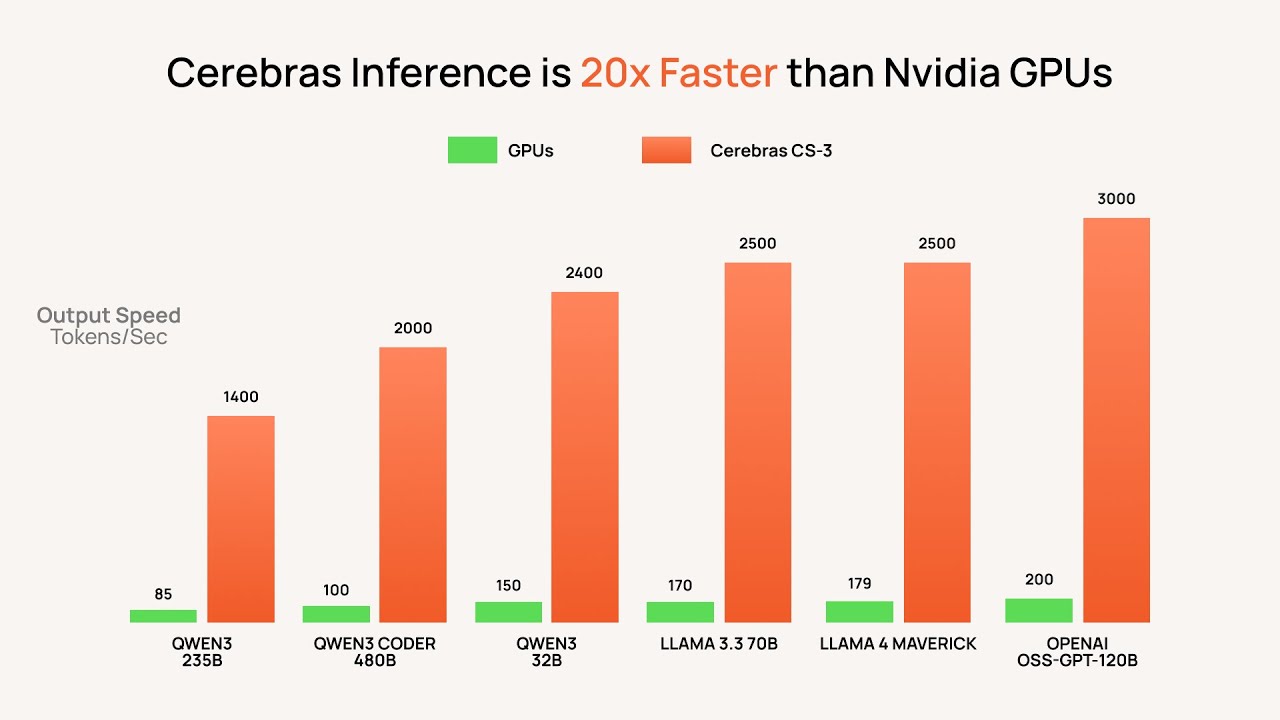
⚡️Raising $1.1b to build the fastest LLM Chips on Earth — Andrew Feldman, Cerebras
Oct 1, 2025 · 29:14
Andrew Feldman, CEO of Cerebras, joins Latent Space to discuss their $1.1B fundraise at an $8.1B valuation and their wafer-scale chip that delivers 20x faster inference than NVIDIA's B200 GPUs. He explains how their architecture uses SRAM instead of HBM, providing 2,625x more memory bandwidth by eliminating the narrow straw between compute and memory. Feldman details the decision to accelerate sparse linear algebra rather than specialized convolutions, enabling support for transformers and diffusion models unseen during design. He discusses the explosive growth in AI inference demand, the shift from closed-source to fast open-source models, and the importance of speed—citing Paul Graham's observation that ChatGPT's slowness drives users away. The conversation covers enterprise trends in the 10-30B parameter space, the complexity of building data centers that pull gigawatts of power, and the often-overlooked routing and caching systems that make AI work seamlessly.

[Paper Club] BERT: Bidirectional Encoder Representations from Transformers
Nov 27, 2024 · 53:12
Eric Ness walks through the BERT paper, explaining how its bidirectional encoder architecture with masked language modeling and next sentence prediction pre-training enabled state-of-the-art results on 11 NLP tasks in 2019. He details the 110M parameter BASE and 340M parameter LARGE models, trained on 2.5B Wikipedia words and 800M book words, and how a simple logistic regression on BERT embeddings achieves 82% accuracy on IMDb sentiment classification, far above the 50% baseline. Swyx and Eric discuss how BERT’s pre-training objectives—masking 15% of tokens and predicting sentence order—teach small models word relationships for efficient classification, though they lose data compared to decoder-only next-token prediction. They note that while scaling laws favor decoder models, BERT-style encoders remain cost-effective for edge deployment, with recent work showing full retraining in 24 hours for under $500 or even 1 hour for $20 on 8 A100s, matching original GLUE scores.

Why Google failed to make GPT-3 -- with David Luan of Adept
Mar 27, 2024 · 49:27
David Luan, co-founder of Adept and former early OpenAI leader, explains why Google failed to build GPT-3—its 'brain credit marketplace' prevented critical mass—and why Adept builds enterprise AI agents prioritizing reliability over generality. He recounts the GPT-2 demo that helped secure Microsoft's $1B investment and details Adept's goal: an AI teammate that can do anything a human does on a computer, targeting 'nines of reliability' for workflows like dispatching a physical truck. Luan contrasts Adept's vertical integration—training fast multimodal models (Fuyu) for charts and UIs—with pure-play foundation model companies that sell tokens, predicting commoditization. He notes Adept is sold out for Q1 and raised $420M, and explains how an augmentation focus creates a data flywheel from human oversight.

The State of Silicon and the GPU Poors - with Dylan Patel of SemiAnalysis
Dec 5, 2023 · 1:07:55
Dylan Patel of SemiAnalysis argues the 'GPU poor vs GPU rich' divide defines AI, with Google's TPU ramp (millions of units) dwarfing others and Nvidia selling over a million H100s this year. He explains that training costs are irrelevant compared to inference costs, and that memory bandwidth is the key bottleneck for LLM inference (e.g., Llama 70B needs ~2.1 TB/s for human reading speed). Patel advises GPU-poor players to focus on on-device innovations like speculative decoding (Medusa), asynchronous training, or fine-tuning for edge use—not on gaming benchmarks or fine-tuning small models. He details why AI hardware startups (Cerebras, Graphcore) bet wrong on on-chip SRAM, while Google’s TPU/Broadcom partnership and Nvidia’s yearly cadence make alternatives tough. He also warns that rebuilding the semiconductor supply chain in the US is unfeasible due to its fragmentation, and that safety through obscurity doesn't work—open innovation is better.
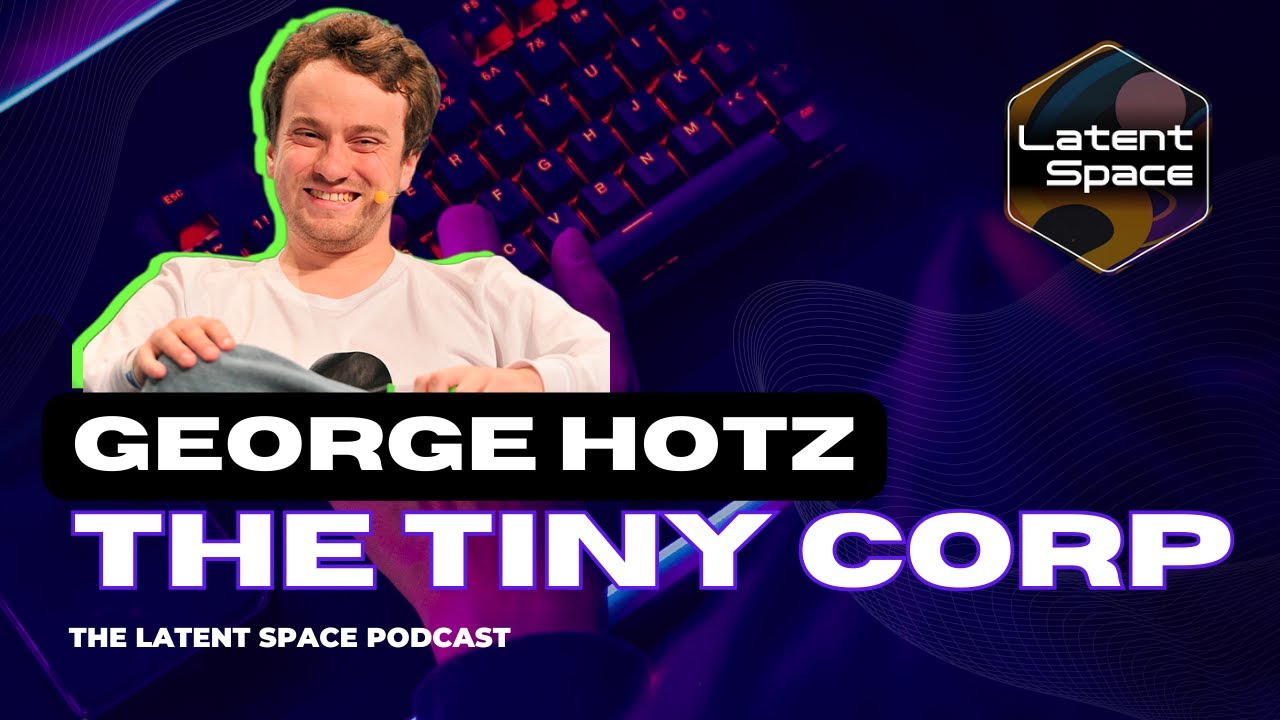
Ep 18: Petaflops to the People — with George Hotz of tinycorp
Jun 20, 2023 · 1:23:24
George Hotz of tinycorp argues that a simplified, open-source ML framework (tinygrad) can democratize AI compute and replace NVIDIA, Google, and AMD. Tinygrad uses 25 ops (vs. XLA's 250) and fuses kernels automatically, achieving 2x speed on Qualcomm GPUs over their library. Hotz reports AMD kernel panics fixed after emailing CEO Lisa Su, but laments AMD's open-source as 'dumped on GitHub.' For hardware, tinybox is a six-GPU desktop at 350W per GPU, aiming for 5x better price-performance than NVIDIA H100 for 90% of training. He criticizes OpenAI's secrecy, revealing GPT-4 is an 8-way mixture of 220B models, and cites the Bitter Lesson. He also outlines FLOPcoin using hardware identity to prevent cheating, and his goal of an AI girlfriend as the third company, merging humans via data rather than implants.
Powered by PodHood