
Temporal
ProductA product discussed on Latent Space.
3 episodes
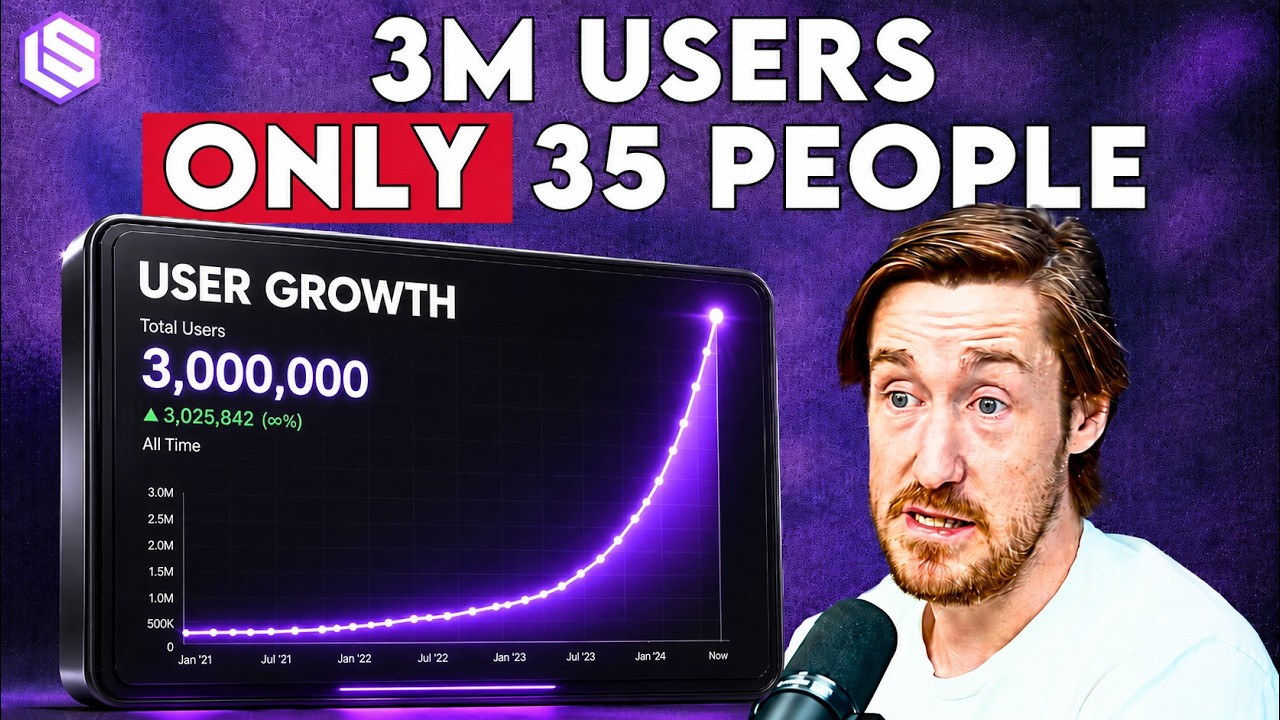
The Agent-Native Cloud: 3M Users, 100K Signups/Wk, Data Centers, & Death PRs — Jake Cooper, Railway
May 20, 2026 · 1:29:54
Jake Cooper, founder of Railway, argues that the next era of software infrastructure requires an agent-native cloud built on own-metal data centers, with primitives for version control, observability, and orchestration at 1000x scale. Railway grew from a slow six-year grind to 3 million users and 100,000 weekly signups with only 35 people, after surviving a $500,000/month loss on its free tier and rebuilding the business. Cooper explains that building its own data centers yields a three-month payback period and 70% margins, while using cloud bursting (AWS, GCP, Oracle) for overflow, and that data center debt is a better tool than venture debt for infra startups. He details how agents need CLIs with many flags, safe production forks, feature flags, and incremental rollouts, and why the pull request is dying in favor of prompt requests. Railway relies on Temporal for orchestration but may build its own workflow engine, and uses an internal tool called Central Station to aggregate customer feedback and incidents. Cooper advocates using agents to generate and review code instead of writing it by hand, and says focus on primitives—not GPUs—is key for now.

[AIEWF Preview] Containing Agent Chaos — Solomon Hykes
Jun 3, 2025 · 27:14
Solomon Hykes, creator of Docker and founder of Dagger, argues that the industry needs an open standard for AI coding agent environments to avoid repeating the fragmentation seen before Docker. Dagger, a workflow engine originally built for post-development automation (CI/CD), is now being pulled by its community into the agentic space to solve environment isolation, portability, and observability for concurrent agent teams. Hykes insists containers are the right base layer but require a new, agent-native UX—unlike legacy Dockerfile or Compose—that is decoupled from any IDE, model, or cloud provider. He critiques current vertical monoliths (e.g., proprietary IDE-hosted agent environments) and advocates for a Lego-like modular approach where the environment is the standard linchpin. Dagger integrates with existing stacks rather than replacing them, and Hykes previews fresh, unreleased content for his upcoming keynote at AI Engineer World's Fair.
Agents @ Work: Dust.tt — with Stanislas Polu
Nov 11, 2024 · 58:53
Stanislas Polu, co-founder of Dust.tt, argues that horizontal agent platforms—not vertical, single-use-case agents—will win the enterprise by letting non-technical employees build their own automation. A former OpenAI researcher who worked directly with Ilya Sutskever on formal mathematics and saw GPT-4 internally before ChatGPT, Polu left in 2022 to start Dust, now an open-source infrastructure layer that connects company data (Slack, Notion, GitHub) to LLMs and lets anyone create simple, instruction-driven agents. He contrasts Dust’s API-first, integration-heavy approach with LangChain’s open-source orchestration and Adept’s browser automation bet, insisting that most useful agent workflows require only a few tool calls and that function-calling quality (where GPT-4 Turbo still leads) matters more than model size. Dust achieves 88% daily active user penetration at some enterprise customers, and Polu predicts the first billion-dollar company run by a single person will emerge once platforms like Dust mature enough to let tiny teams scale to massive output.
Powered by PodHood