
Spark
ProductA product discussed on Latent Space.
2 episodes

The Agent Cloud: Databricks’ Bet on the Future of AI — Matei Zaharia and Reynold Xin
Jun 24, 2026 · 1:10:06
Databricks cofounders Matei Zaharia and Reynold Xin argue the company is moving beyond the lakehouse into a full data-and-AI operating system, anchored by two new initiatives: Omnigent, an open-source meta-harness for combining coding and enterprise agents, and LTAP, a unified storage layer that gets most HTAP benefits without collapsing query engines. Omnigent provides a common API for agent sessions, files, streams, tool calls, and cancellation, solving portability, collaboration, and security issues across Claude Code, Codex, Cursor, and custom agents. LTAP writes transactional data directly in columnar Parquet format, eliminating brittle CDC pipelines—Reynold jokes CDC means 'continuous data corruption'—and enables instant analytics without overloading the source database. The episode details Databricks’ culture of rapid prototyping, where an engineer built the LTAP prototype without a formal design doc, and the thesis that traditional software will be rewritten once data is in the right place with agents on top. They also cover Mosaic’s shift from general frontier models to specialized fine-tuned models like document parsing, internal agent usage, and security features such…
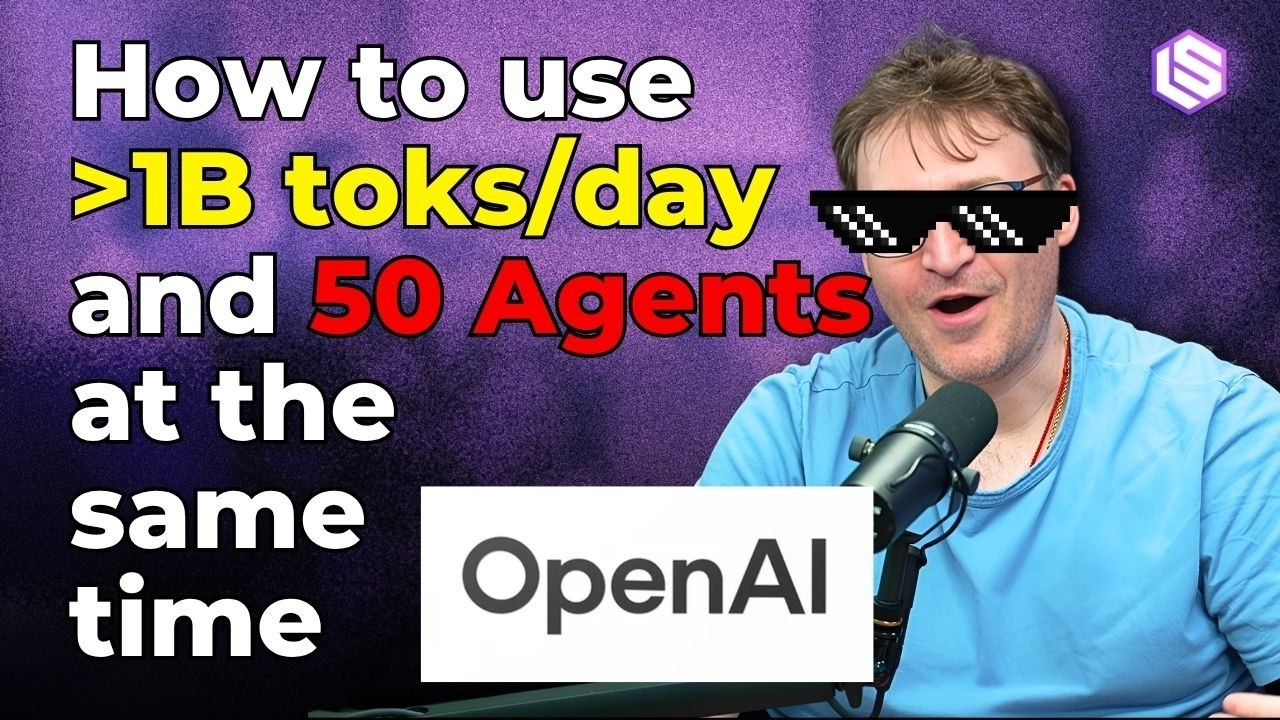
Extreme Harness Engineering: 1M LOC, 1B toks/day, 0% human code or review — Ryan Lopopolo, OpenAI
Apr 7, 2026 · 1:17:54
Ryan Lopopolo of OpenAI's Frontier team details his team's extreme experiment in harness engineering: building a 1M LOC internal Electron app with zero human-written or reviewed code, relying instead on Codex agents that process 1B tokens daily ($2-3k/day). He argues that humans are the bottleneck and that teams should encode non-functional requirements into specs, skills, and observability tooling rather than prompting agents to 'try harder.' The result is Symphony, a ghost library spec and Elixir reference implementation that automates the entire pull-request lifecycle, including self-review and merge. Lopopolo explains how the team scales by treating software as agent-legible text, using worktrees for multi-agent collaboration, and feeding agent mistakes back into the repository via docs like core-beliefs.md. He also discusses Frontier's enterprise platform for safe agent deployment, noting that success depends on giving agents full context—even company culture and inside jokes—so they can act as full teammates.
Powered by PodHood