
Red Pajama
ProductA product discussed on Latent Space.
2 episodes
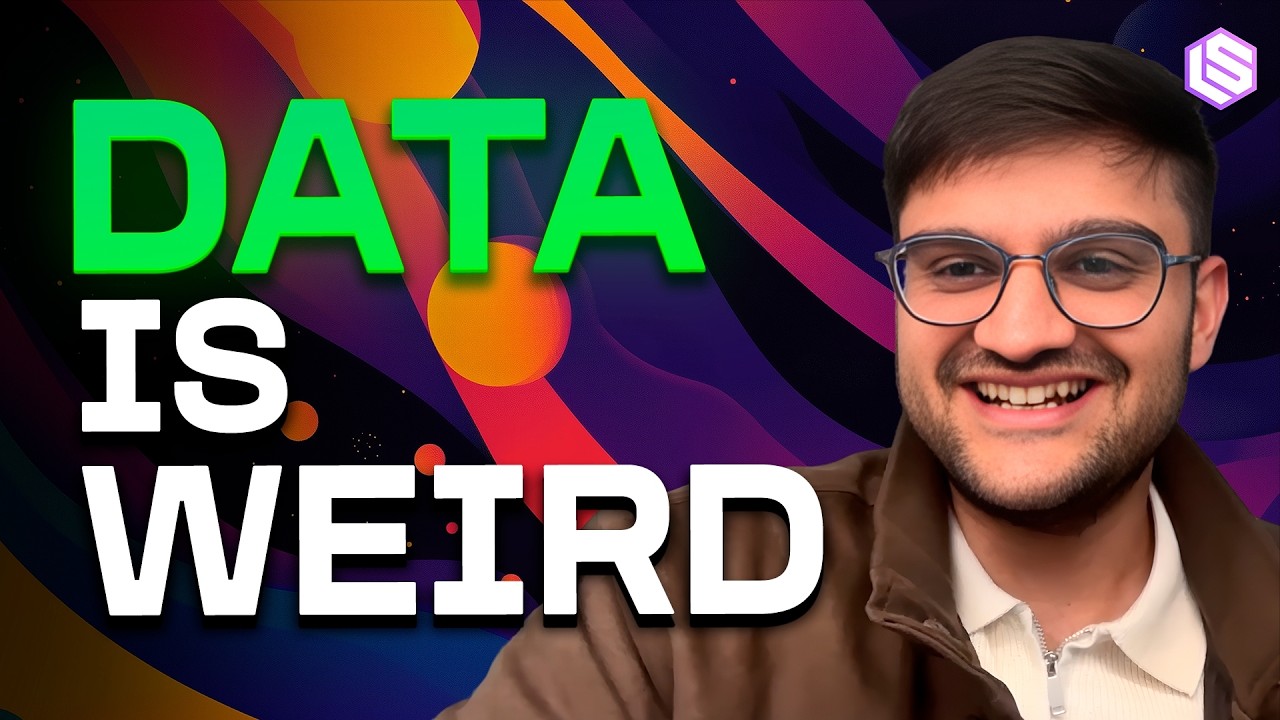
⚡️ Reverse Engineering OpenAI's Training Data — Pratyush Maini, Datology
Feb 10, 2026 · 27:02
Pratyush Maini from Datology reveals how the seahorse emoji question exposes that frontier models like GPT-4.1, GPT-5, and OLMo 3.1 now exhibit self-correction loops—a sign that reasoning traces are baked into mid-training data, not just post-training. By tracking response length surges four months after o1's release and corroborating with OLMo's data, Maini argues that foundation models must contain core capabilities like self-reflection, reinforcing the 'Fine Tuner's Fallacy': you cannot simply fine-tune for a capability; it must be in pre-training. He also highlights Datology's BeyondWeb project, which uses a source-rephrasing paradigm to transform internet data at trillion-token scale, achieving Nemotron-level performance in 2.7x less compute—making specialized pre-training accessible for enterprises. The episode concludes that 2026-2027 will see a shift toward domain-specific pre-training, as the cost amortizes when a smaller pre-trained model outperforms a larger fine-tuned one.
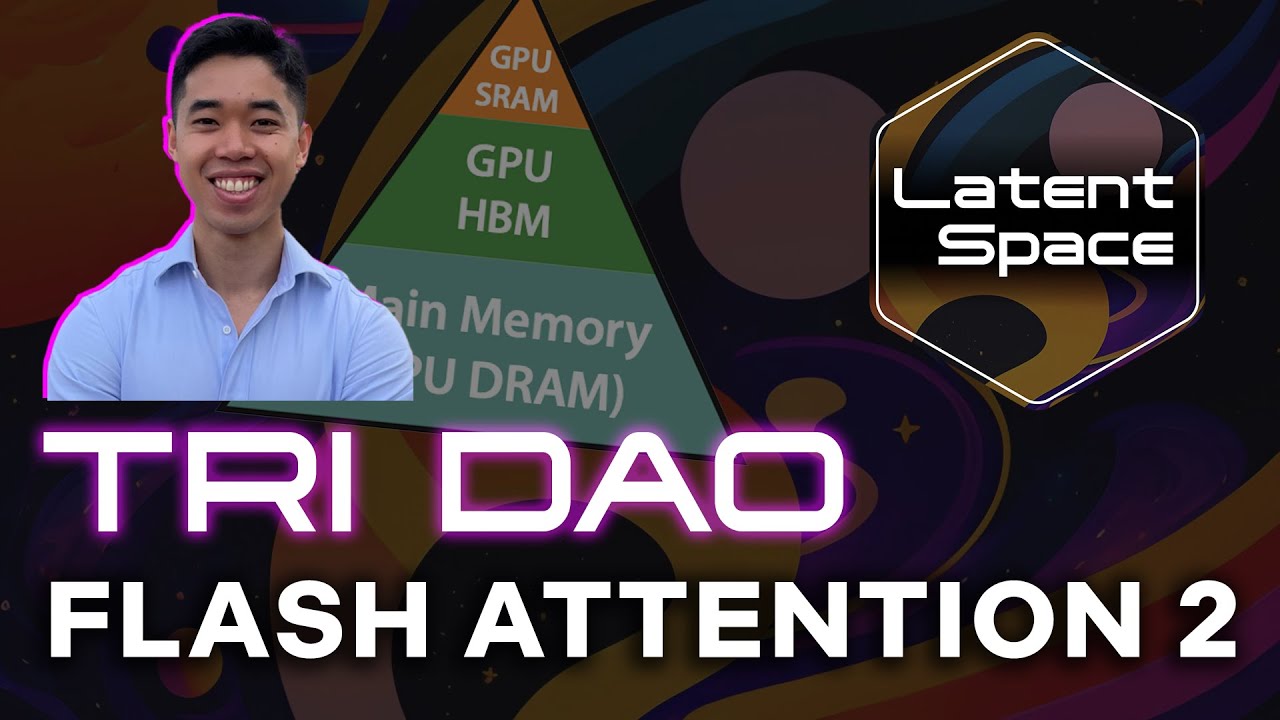
FlashAttention-2: Making Transformers 800% faster AND exact
Aug 3, 2023 · 1:04:06
Tri Dao, creator of FlashAttention and FlashAttention-2, explains how his I/O-aware algorithm makes attention 2x faster by fusing kernels and using online softmax, achieving near-matrix-multiply efficiency. He argues that transformer alternatives like state space models and RNNs (e.g., RWKV) could surpass transformers for long sequences and high-throughput generation, though attention still dominates. Dao discusses the hardware lottery, where NVIDIA's CUDA ecosystem entrenches transformers, and advocates for open-source AI, praising Meta's Llama 2 for shifting enterprise adoption despite its restrictive license. He emphasizes that understanding both algorithms and systems is key to scaling AI, and that academia should pursue risky bets that industry cannot.
Powered by PodHood