
Playwright
ProductA product discussed on Latent Space.
5 episodes
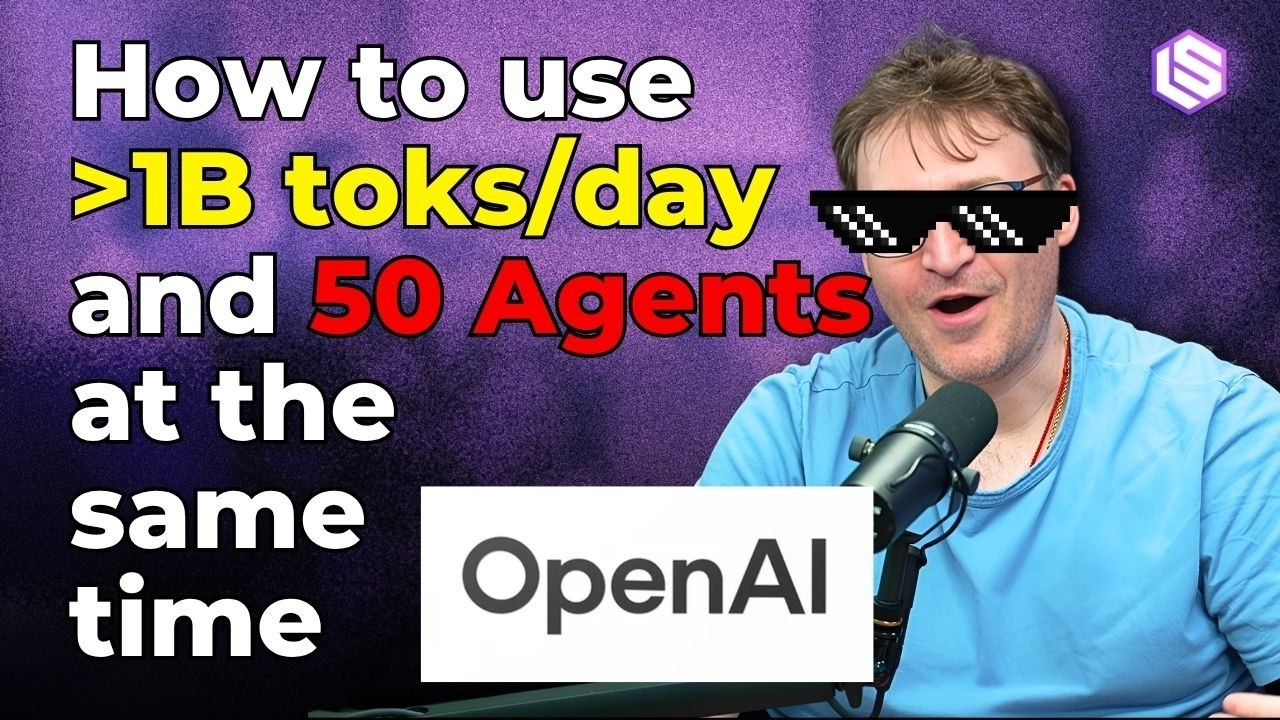
Extreme Harness Engineering: 1M LOC, 1B toks/day, 0% human code or review — Ryan Lopopolo, OpenAI
Apr 7, 2026 · 1:17:54
Ryan Lopopolo of OpenAI's Frontier team details his team's extreme experiment in harness engineering: building a 1M LOC internal Electron app with zero human-written or reviewed code, relying instead on Codex agents that process 1B tokens daily ($2-3k/day). He argues that humans are the bottleneck and that teams should encode non-functional requirements into specs, skills, and observability tooling rather than prompting agents to 'try harder.' The result is Symphony, a ghost library spec and Elixir reference implementation that automates the entire pull-request lifecycle, including self-review and merge. Lopopolo explains how the team scales by treating software as agent-legible text, using worktrees for multi-agent collaboration, and feeding agent mistakes back into the repository via docs like core-beliefs.md. He also discusses Frontier's enterprise platform for safe agent deployment, noting that success depends on giving agents full context—even company culture and inside jokes—so they can act as full teammates.

⚡️Monty: the ultrafast Python interpreter by Agents for Agents — Samuel Colvin, Pydantic
Mar 14, 2026 · 34:02
Samuel Colvin joins Shawn Wang to introduce Monty, Pydantic's ultrafast Python interpreter built with AI for agents, positioning it as a lightweight, secure alternative to sandboxes for code execution. Monty runs inside the same process, achieving sub-microsecond latency (800 nanoseconds in a hot loop), versus over a second for cloud sandboxes. Colvin explains the inspiration came from conversations at Anthropic about type safety's critical role in AI tool calling, and how Monty fills the gap between simple tool calling and full sandboxes. Monty is not full CPython—it lacks third-party library support and some standard library modules—but covers essential built-ins, implemented largely by LLMs that Colvin calls 100x faster for tasks where internal and external APIs are well-known, unit tests are trivial, and there's no API bikeshedding. He demonstrates a Pydantic AI agent using Monty to scrape LLM pricing from websites, with type checking built into the runtime so only permitted host functions (e.g., Playwright, Beautiful Soup wrappers) can be called. Colvin also shares his workflow using Claude Code, Codex, and Gemini CLI in combination for code review and implementation, and…

⚡️Claude Sonnet 4.5 and Anthropic's roadmap for Agents and Developers — Mike Krieger, Anthropic
Sep 30, 2025 · 26:25
Mike Krieger, Anthropic's CPO, discusses the launch of Claude Sonnet 4.5 and its implications for AI development, emphasizing the growing symbiosis between product and research teams. He describes his personal 'vibe evals' for new models, including generating a Virtual Boy-style game and a Nintendo board presentation, and notes that Sonnet 4.5 traffic eclipsed Sonnet 4 on day one. Krieger explains how Anthropic is improving model output quality across UIs, Excel, and PowerPoint, and highlights the shift toward interactive planning rather than pure autonomy. He reveals the rename of the Claude Code SDK to the Claude Agent SDK, reflecting its general-purpose use for complex agentic workflows beyond coding. Krieger stresses the need for better visual understanding in models and invites developers to share feedback on hard challenges to help improve the platform.

Amp: The Emperor Has No Clothes
Sep 25, 2025 · 1:21:59
Quinn Slack (CEO) and Thorsten Ball (Amp Dictator) from Sourcegraph discuss Amp Code, a coding agent that ships 15x/day with no code reviews. They explain the strategic pivot from Cody to Amp, emphasizing that building the best coding agent trumps everything else. The team dogfoods Amp internally, using it to build itself, and maintains both a VS Code extension and CLI, with a 50/50 internal split. They argue that model choice is becoming less important than the harness around the model, and they reject features like prompt enhancers, custom subagents, and MCP servers as not adding value. Common failure modes include outsourcing thinking but not typing and using agents without proper context engineering. They predict async agents running 24/7 will dominate, and they target early adopters willing to adapt their codebases and workflows for maximal agent effectiveness.

Browserbase: Browser Infrastructure For Your AI Agents
Feb 28, 2025 · 1:01:33
Paul Klein IV, CEO of Browserbase, argues that headless browser infrastructure is a critical primitive for AI agents to automate the web. Browserbase solves the hard problem of running thousands of browsers in the cloud—too big for Lambda, requiring Firecracker microVMs—and exposes APIs via its open-source framework Stagehand (act, extract, observe). It handles proxies, CAPTCHA solving, and offers a live view iframe for human-in-the-loop control. Primary use cases include browser automation and web scraping as a heavy-hitter renderer when simpler methods fail. Paul explains his choice to go solo founder and how Browserbase's in-person, 10–5 culture enables fast execution. He predicts the future of software will involve software acting on other software via browsers.
Powered by PodHood