
o3-mini
ProductA product discussed on Latent Space.
4 episodes

⚡️Using RFT to Build Clinical Superintelligence
Jul 29, 2025 · 26:58
Brendan Fortuner, Head of Eng at Ambience AI, explains how the healthcare startup uses OpenAI's reinforcement fine-tuning (RFT) to build clinical AI assistants that help doctors automate note-taking and ICD-10 coding, saving up to two hours per day. Ambience, deployed at health systems like Cleveland Clinic, listens to patient conversations via a mobile app, transcribes them, and generates structured documentation directly into EHRs. Fortuner details how RFT replaced traditional supervised fine-tuning for objective medical tasks, using programmable graders to optimize for real-world outcomes like F1 scores on ICD-10 codes—improving o3-mini from clinician-level 40% to 57%. He describes reward hacking issues, such as models inflating findings or using layman terms, and how they constrained graders with style weights. The episode also covers domain expert vs. ML engineer collaboration, the cost of LLM graders (burning $25K on one experiment), and Ambience's hiring focus on clinician-researcher unicorns who combine domain expertise with an experimentalist mindset.
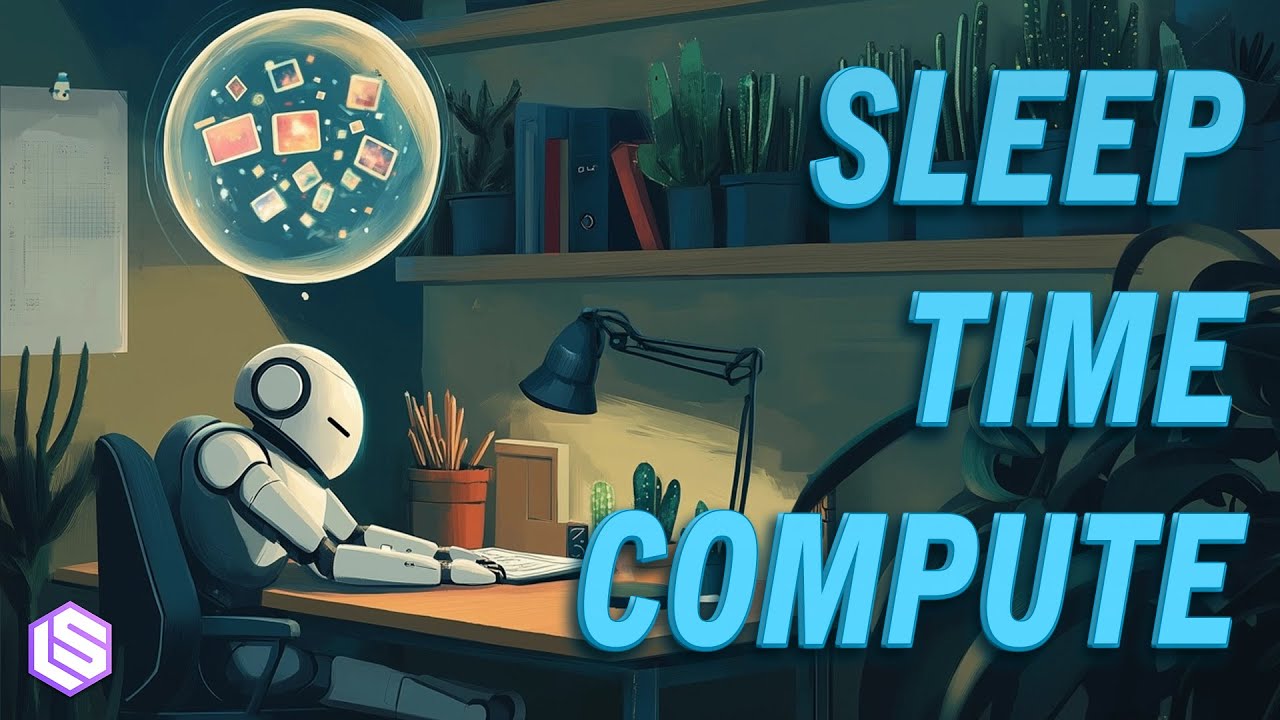
Sleep-Time Compute — Letta AI (Charles Packer, Charlie Snell, Kevin Lin)
Apr 21, 2025 · 34:02
This episode covers Letta AI's new paper on Sleep-Time Compute, a scaling direction that applies compute during model idle periods (sleep time) rather than only at test time. Charles Packer, Kevin Lin, and Charlie Snell explain that sleep-time compute precomputes inferences from static context before queries arrive, yielding Pareto improvements on math benchmarks like GSM8K by shifting the accuracy-to-token curve leftwards. They distinguish it from test-time compute by emphasizing that sleep-time tokens incur no user-latency cost, and show that the benefit is largest when questions are predictable from context. The team also ties the concept to stateful agents and memory systems (building on MemGPT), releasing two implementations: one for low-latency chatbots and another for document-driven agents.
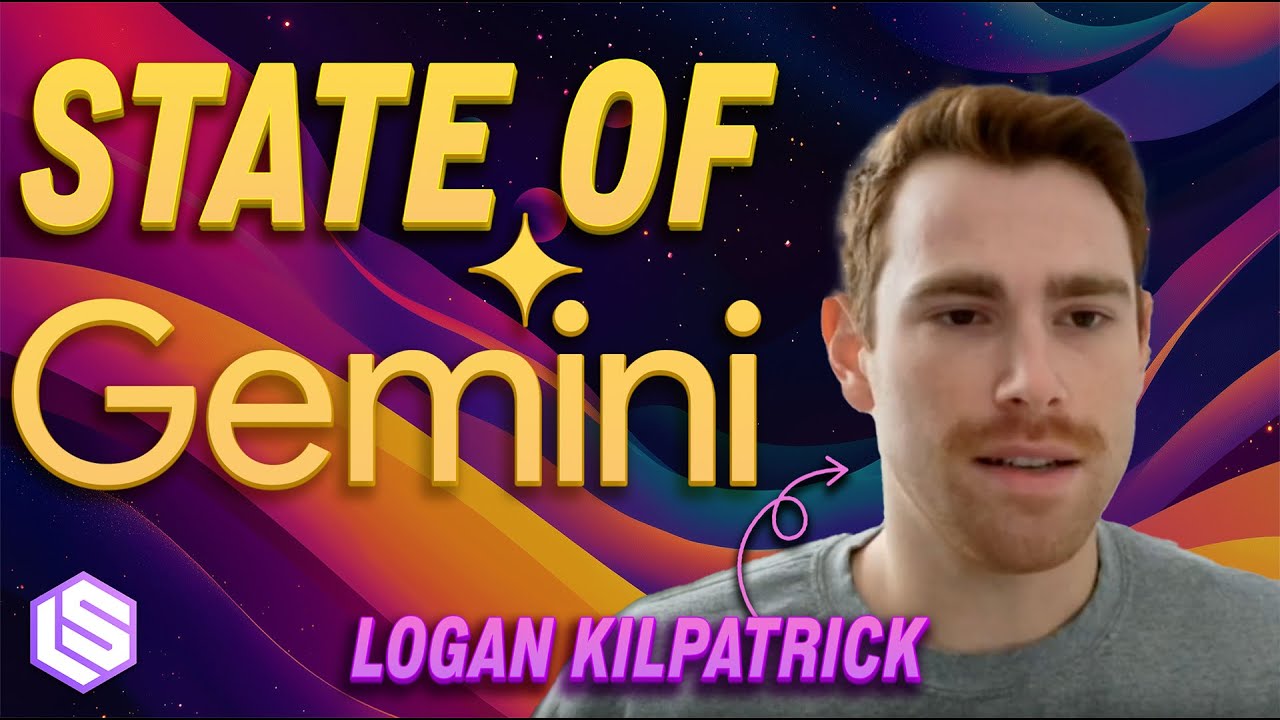
Gemini 2.0 Flash and Flash Thinking: the new SOTA models for the agentic era
Feb 28, 2025 · 28:21
Logan Kilpatrick, Google AI Studio product lead, returns to discuss Gemini 2.0 Flash and Flash Thinking, the new models that balance frontier capabilities with cost efficiency for the agentic era. He explains the pricing strategy: Flash at 10 cents per million tokens (simplified from tiered pricing), Flash Lite preserving the 7.5-cent narrative for low cost, and Pro pushing the frontier. Flash Thinking, co-led by Noam Shazeer and Jack Rae, scales inference-time compute and already shows rapid improvements, with base model advances coupling with RL-based reasoning. Swyx reports that Gemini Flash outperforms o3-mini on long-context summarization, calling it a 'reporting model.' The multimodal live API enables real-time voice and vision interactions, and a memory layer mimicking Astra is in development. Grounding with Search as a Tool is also highlighted for agentic search use cases.

The AI Architect: Bret Taylor
Feb 11, 2025 · 1:35:59
Bret Taylor, CEO of Sierra and chairman of OpenAI, recounts engineering AI's future across three eras — rewriting Google Maps' frontend in a weekend (cutting un-gzipped code to 20K), building Sierra's in-house agent platform for consumer brands like Sonos and SiriusXM, and navigating OpenAI's leadership crisis. He argues that AI agents' core abstractions are still pre-React, compares today's agents to jQuery, and predicts that outcome-based pricing will dominate as agents complete jobs rather than assist humans. He urges software engineers to move up the stack toward domain-specific agents and to embrace Rust-like languages for AI-generated code, emphasizing formal verification and safety. Taylor also shares how OpenAI prioritizes mission over product features, and why the relationship with Microsoft remains OpenAI's most important partnership.
Powered by PodHood