
NotebookLM
ProductA product discussed on Latent Space.
7 episodes

Why Your AI Agents Don’t Work with Dex Horthy of HumanLayer | In-Context Cooking
Mar 6, 2026 · 24:59
Dex Horthy, founder of HumanLayer and creator of "context engineering," joins Alan to recreate Dan Dan noodles while explaining why most AI agent demos fail in production and how the top 1% of AI engineers build differently from the rest. Horthy describes how his NASA JPL internship at 17 taught him pathfinding with Dijkstra's algorithm, and later coining "context engineering" after observing that public hype around open-source frameworks doesn't match enterprise reliability needs. He defines AI "slop" as low-effort derivative content often produced without reading, and introduces the "dumb zone"—a rule of thumb to start thinking about context compaction at 40% usage unless you have strong intuition. Horthy argues that while smarter models narrow the gap, the frontier of reliably achievable tasks keeps shifting, so context engineering remains valuable. He predicts software engineering will evolve from writing code to producing working code, emphasizing shipping over coding, and notes HumanLayer helps enterprises standardize AI adoption with guardrails rather than vibe coding.

⚡ Inside Google Labs: Building The Gemini Coding Agent — Jed Borovik, Jules + AIE CODE Preview
Nov 10, 2025 · 43:53
Jed Borovik, Product Lead at Google Labs, explains how Google builds Jules, an autonomous coding agent that runs on its own VM for long-running tasks, challenging the assumption that agents should operate locally. He reveals that as Gemini models improved, Jules' scaffolding simplified, shifting from sub-agent patterns and embedding-based RAG to attention-based search. Borovik discusses context window management for sessions lasting up to 30 days with 2 million tokens, and argues that coding agents will increase demand for software engineers (Jevons paradox), not eliminate jobs. He calls for better specification tools beyond chat, such as multimodal input and interactive planning, to move beyond 'vibe coding' toward verifiable, reliable agentic workflows.
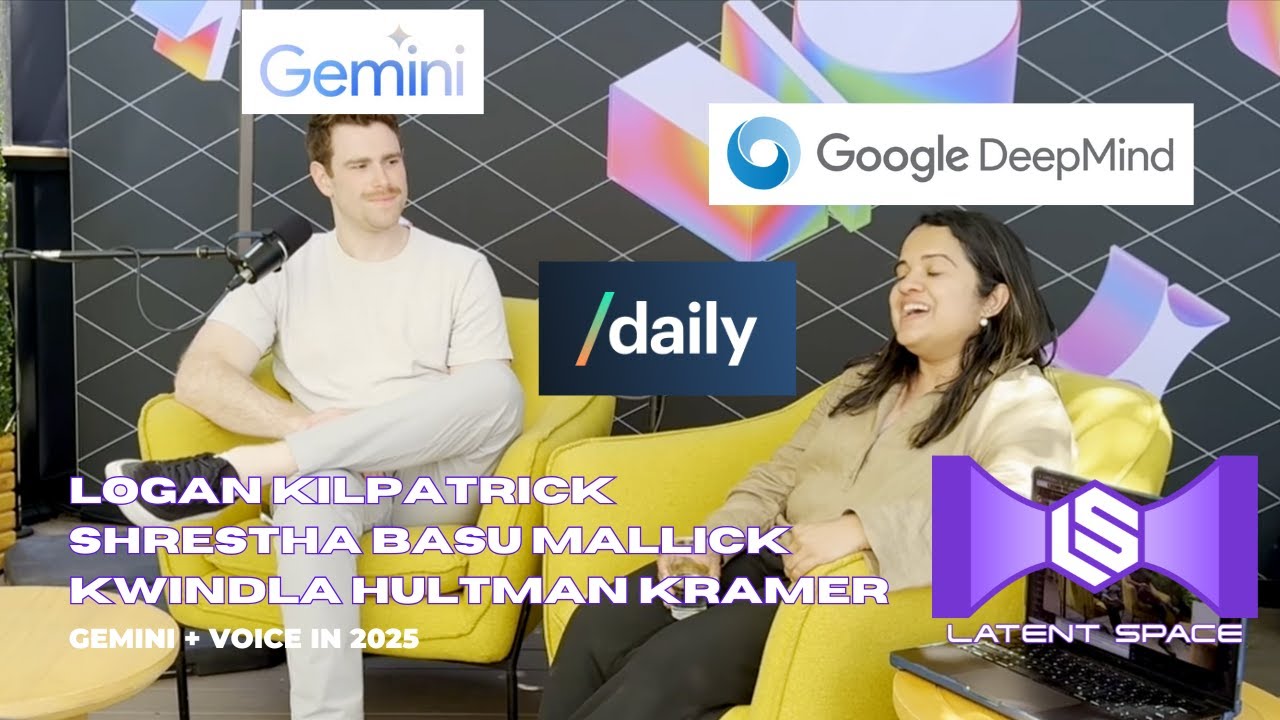
[AIEWF Preview] Gemini in 2025 and Realtime Voice AI
Jun 2, 2025 · 24:29
At Google I/O 2025, Latent Space host Swyx and TWiML's Sam Charrington speak with Logan Kilpatrick, Shrestha Basu Mallick, and Kwindla Hultman Kramer about Gemini's reasoning upgrades, real-time voice AI, and the infrastructure challenges of building production voice agents. Kilpatrick announces thinking budgets and thought summaries for 2.5 Pro, now live in Flash and coming to Pro in June, while Mallick highlights native audio output with multilingual code-switching and proactive voice activity detection. Kramer discusses the need for sub-500ms latency and WebRTC packet routing, and the team debates single-model vs. componentized architectures, with Mallick noting that eventual convergence will bring capabilities like diffusion-based generative UI into the main Gemini model. The episode also covers implicit context caching, URL context for research agents, and the Live API's session length and function calling improvements.
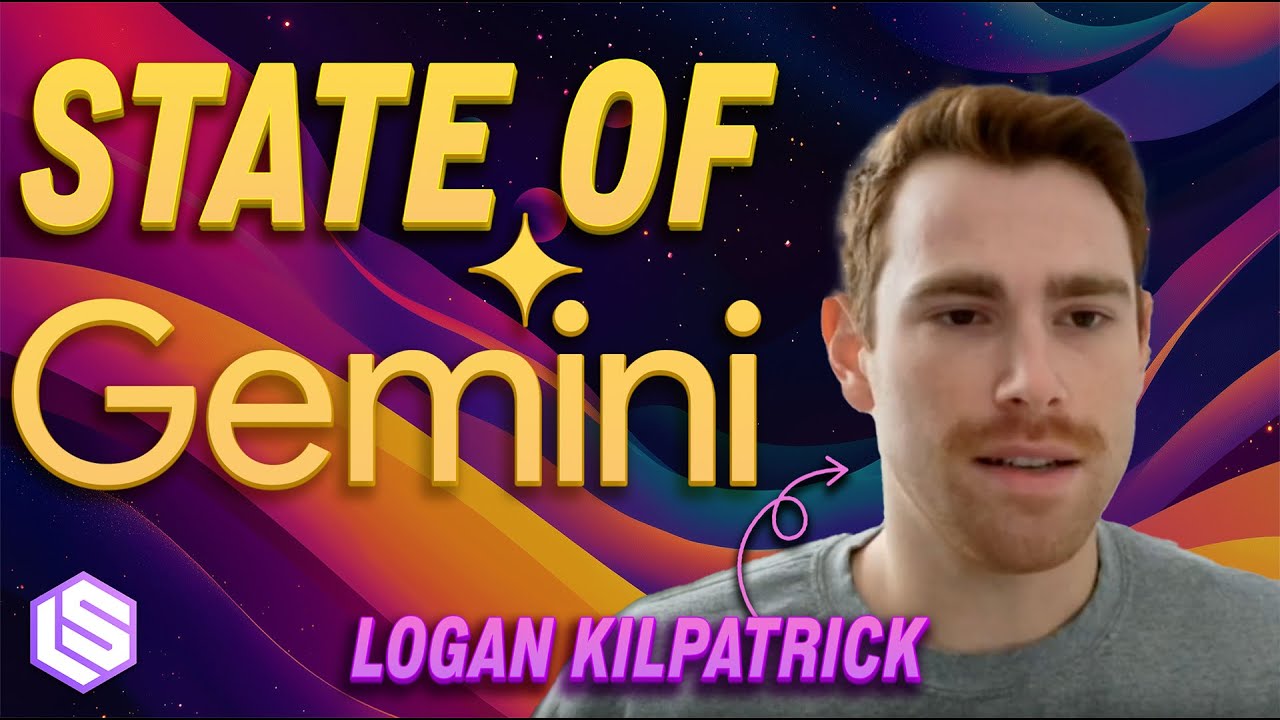
Gemini 2.0 Flash and Flash Thinking: the new SOTA models for the agentic era
Feb 28, 2025 · 28:21
Logan Kilpatrick, Google AI Studio product lead, returns to discuss Gemini 2.0 Flash and Flash Thinking, the new models that balance frontier capabilities with cost efficiency for the agentic era. He explains the pricing strategy: Flash at 10 cents per million tokens (simplified from tiered pricing), Flash Lite preserving the 7.5-cent narrative for low cost, and Pro pushing the frontier. Flash Thinking, co-led by Noam Shazeer and Jack Rae, scales inference-time compute and already shows rapid improvements, with base model advances coupling with RL-based reasoning. Swyx reports that Gemini Flash outperforms o3-mini on long-context summarization, calling it a 'reporting model.' The multimodal live API enables real-time voice and vision interactions, and a memory layer mimicking Astra is in development. Grounding with Search as a Tool is also highlighted for agentic search use cases.

Why is everyone cloning Deep Research?
Feb 18, 2025 · 1:00:10
In this episode, hosts Alessio and Swyx interview Aarush Selvan and Mukund Sridhar, the lead PM and tech lead for Gemini Deep Research, about how Google created the deep research agent category and the technical decisions behind it. They finetuned a special version of Gemini 1.5 Pro for the feature, which autonomously browses the web for about five minutes to produce a research report. The team built an asynchronous platform to handle long-running tasks and developed an ontology of research behaviors—from broad shallow exploration to deep focus—to evaluate performance. They found that users value the visible browsing process even when it takes minutes, contrary to typical latency norms. The discussion covers iterative planning, trade-offs between model memory and web grounding, and future directions including thinking models, multimodality, and personalization.

How NotebookLM Was Made
Oct 25, 2024 · 1:13:57
Raiza Martin (NotebookLM lead PM) and Usama Bin Shafqat (AI engineer) explain how Google's NotebookLM built the viral 'Deep Dive' audio overview feature. They reveal the product evolved from Project Tailwind, using Gemini 1.5's long context and DeepMind speech to create a two-persona dialogue format that transforms documents into engaging podcasts. The team learned from 65,000 Discord members, leaned on best-selling author Steven Johnson for a 'tool for thought' workflow, and prioritized a single format over exposed controls to preserve unpredictability and delight. Humor and tension are not explicitly prompted but emerge from giving personas different angles. Evaulation relied on internal taste ('potatoes for chefs') before formal raters, with a Likert scale on dimensions like entertainment and groundedness. Future plans include multilingual support, API access, real-time chat, and codebase podcasting, while managing non-determinism by accepting occasional bad rolls.

Building AGI in Real Time (OpenAI Dev Day 2024)
Oct 4, 2024 · 2:09:35
OpenAI's DevDay 2024 unveils the Realtime API with WebSocket-based voice and function calling, Vision Finetuning, Prompt Caching, and Model Distillation. Product leads Olivier Godement, Romain Huet, and Michelle Pokrass detail design choices like zero-code caching and WebSockets for human-level latency. Alistair Pullen of Cosine explains how fine-tuning GPT-4o on custom reasoning traces beat o1 on SWE-bench Verified, while Sam Altman and Kevin Weil discuss AGI levels (o1 as level 2 reasoner), the coming agent era (level 3), safety through iterative deployment, and the importance of building for the frontier. The episode also covers moderation policy relaxation, plans for o1 system prompts by year-end, and the competitive admiration for NotebookLM.
Powered by PodHood