
MLX
ProductA product discussed on Latent Space.
2 episodes

⚡️ Google's Open AI Strategy — Omar Sanseviero, Google DeepMind
May 24, 2026 · 29:59
Omar Sanseviero, Google DeepMind's Head of Developer Experience, explains Gemma 4's novel architecture with per-layer embeddings that enable effective parameter offloading: only 2B of 5B parameters need GPU memory, ideal for on-device inference on phones and Raspberry Pis. The model matches 1.5-year-old state-of-the-art in most areas, with Gemini Nano integrated into Pixel and Samsung phones. Gemma 4 supports multimodal input (audio, images, short video) but not audio output or combined audio-video prompts. Sanseviero notes fine-tuning is declining as out-of-box capabilities improve, but remains relevant for specialized domains like healthcare. He contrasts dense (31B) and MoE (27B) variants, highlighting MoE's inference speed but fine-tuning challenges. The team is expanding globally, with Kaggle joining DeepMind to create community-driven benchmarks for model evaluation.
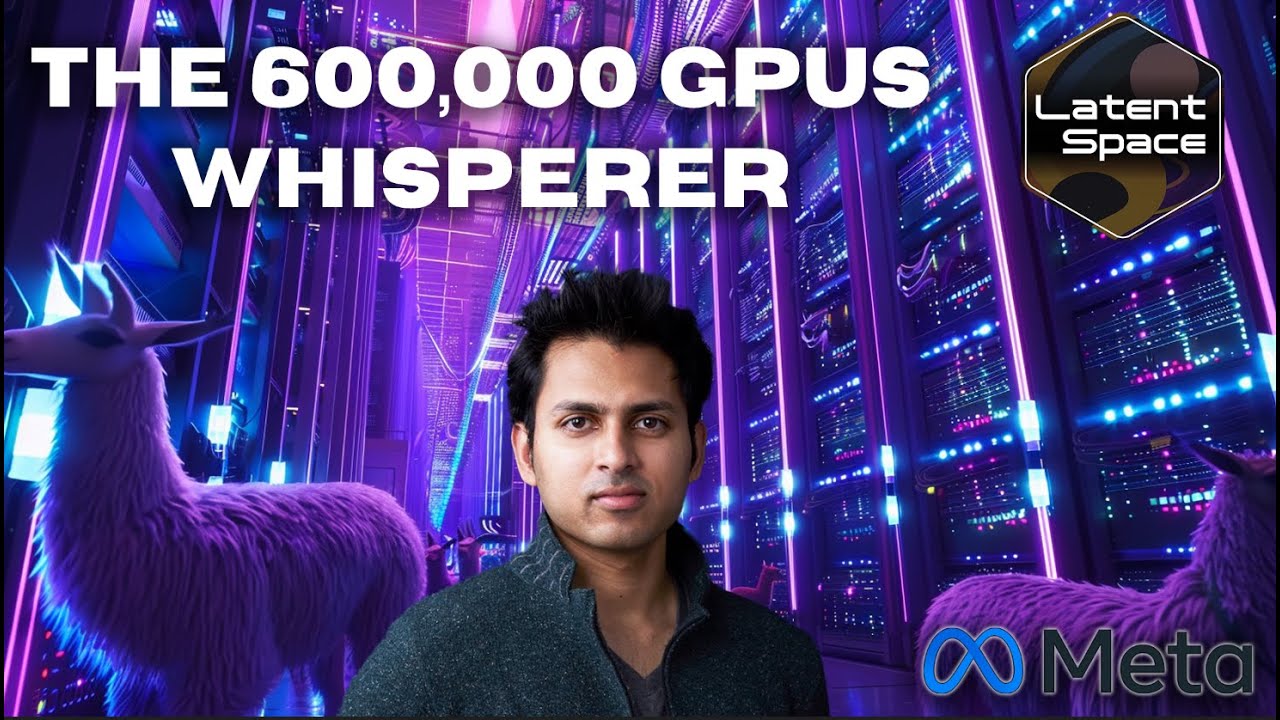
Open Source AI is AI we can Trust — with Soumith Chintala of Meta AI
Mar 6, 2024 · 1:37:38
Soumith Chintala, creator of PyTorch and engineering lead at Meta AI, argues that open source AI is essential for distributing opportunity and trust. He details PyTorch's complexity—1,000 operators needed for generality—and explains synthetic data as a vehicle for imparting symbolic knowledge where humans already have good symbolic models. He highlights a coordination problem in open source: feedback is lost because frontends like Ooba and Ollama lack feedback buttons, and proposes a centralized sinkhole to collect high-quality feedback. Beyond text, he is excited about robotics, where hardware remains a bottleneck, and Osmo's work to digitize smell, which he compares to images in the 1800s.
Powered by PodHood