
Latent Space
ProductA product discussed on Latent Space.
4 episodes

Taste is your Moat (Dylan Field of Figma)
Oct 2, 2025 · 1:01:43
Dylan Field, CEO of Figma, argues that as AI accelerates software creation, design becomes the key differentiator—and Figma Make, a prompt-to-app tool, is Figma's bet on lowering the barrier for everyone. Field recounts his first AI-pill moment with Chris Olah in 2014 and later GPT-3 convincing him of exponential progress. He explains Figma's strategy: treat natural language as today's interface (calling it the 'MS-DOS era of AI'), use Figma as a 'context repository for aesthetics' to ground AI outputs in a user's taste, and solve the blank-canvas problem by letting AI generate initial designs. Field pushes back on 'fast fashion' software, arguing complex products like Workday can't be vibe-coded. He shares Thiel Fellowship lessons (start with 'what could this be' before finding flaws), recruiting advice from John Doerr (obsess over the funnel), and caution about get-rich-quick AI hype, drawing parallels to the NFT cycle he exited.

Greg Brockman on OpenAI's Road to AGI
Aug 15, 2025 · 1:08:37
Greg Brockman, OpenAI co-founder and president, explains how GPT-5's hybrid reasoning and aggressive pricing advance the road to AGI, while releasing GPT-OSS for open source. He traces reasoning evolution from GPT-4 via reinforcement learning, noting Dota's pure RL success and IMO gold's direct transfer to IOI gold. Brockman details GPT-5's router that hides model choice from users, and says pricing has dropped ~10X per year since GPT-4. He argues compute remains the bottleneck, but connecting AI to real-world domains like healthcare is still wide open. Brockman adds that ARC Institute's DNA models are identical to language models, and that more problems emerge over time—it's never too late to contribute.
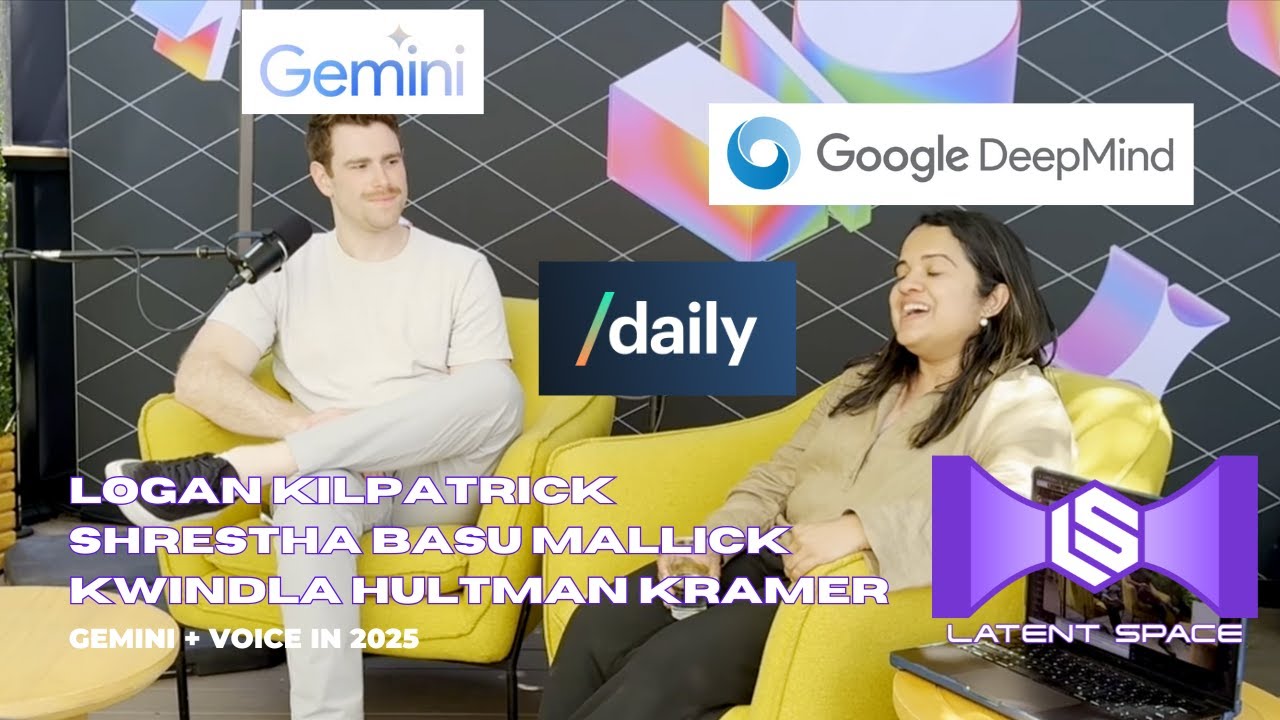
[AIEWF Preview] Gemini in 2025 and Realtime Voice AI
Jun 2, 2025 · 24:29
At Google I/O 2025, Latent Space host Swyx and TWiML's Sam Charrington speak with Logan Kilpatrick, Shrestha Basu Mallick, and Kwindla Hultman Kramer about Gemini's reasoning upgrades, real-time voice AI, and the infrastructure challenges of building production voice agents. Kilpatrick announces thinking budgets and thought summaries for 2.5 Pro, now live in Flash and coming to Pro in June, while Mallick highlights native audio output with multilingual code-switching and proactive voice activity detection. Kramer discusses the need for sub-500ms latency and WebRTC packet routing, and the team debates single-model vs. componentized architectures, with Mallick noting that eventual convergence will bring capabilities like diffusion-based generative UI into the main Gemini model. The episode also covers implicit context caching, URL context for research agents, and the Live API's session length and function calling improvements.
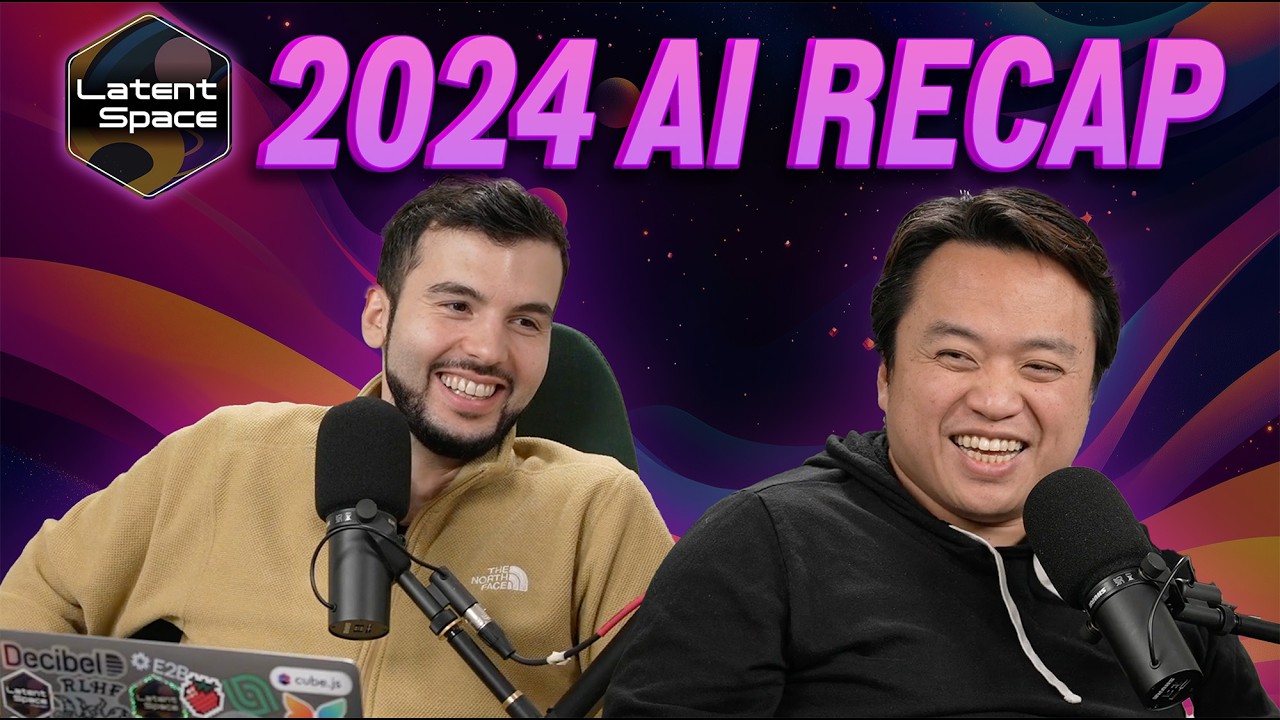
2024 Year in Review: The Big Scaling Debate, the Four Wars of AI, Top Themes and the Rise of Agents
Jan 1, 2025 · 1:51:07
In their 100th episode, hosts Alessio and Swyx recap 2024 in AI, arguing that pre-training scaling has hit a wall—backed by Ilya Sutskever and others at NeurIPS—and that inference-time compute (o1, o3) is the new frontier. They dissect the "four wars": data quality (lawsuits vs. synthetic data), GPU haves vs. have-nots (with the middle class dying), multimodality (Sora, Veo 2, Gemini 2.0's native image output), and the LLM OS/agents stack (LangChain, E2B, memory). Market share shifted from OpenAI's 95% to 50-75% as Anthropic and Gemini gained ground; prices dropped ~3 orders of magnitude for same ELO. The episode predicts 2025 as the year agents finally enter production, driven by models like o1 and tools like Devin, and warns that AI will set the skill floor for roles.
Powered by PodHood