
LangMem
ProductA product discussed on Latent Space.
3 episodes
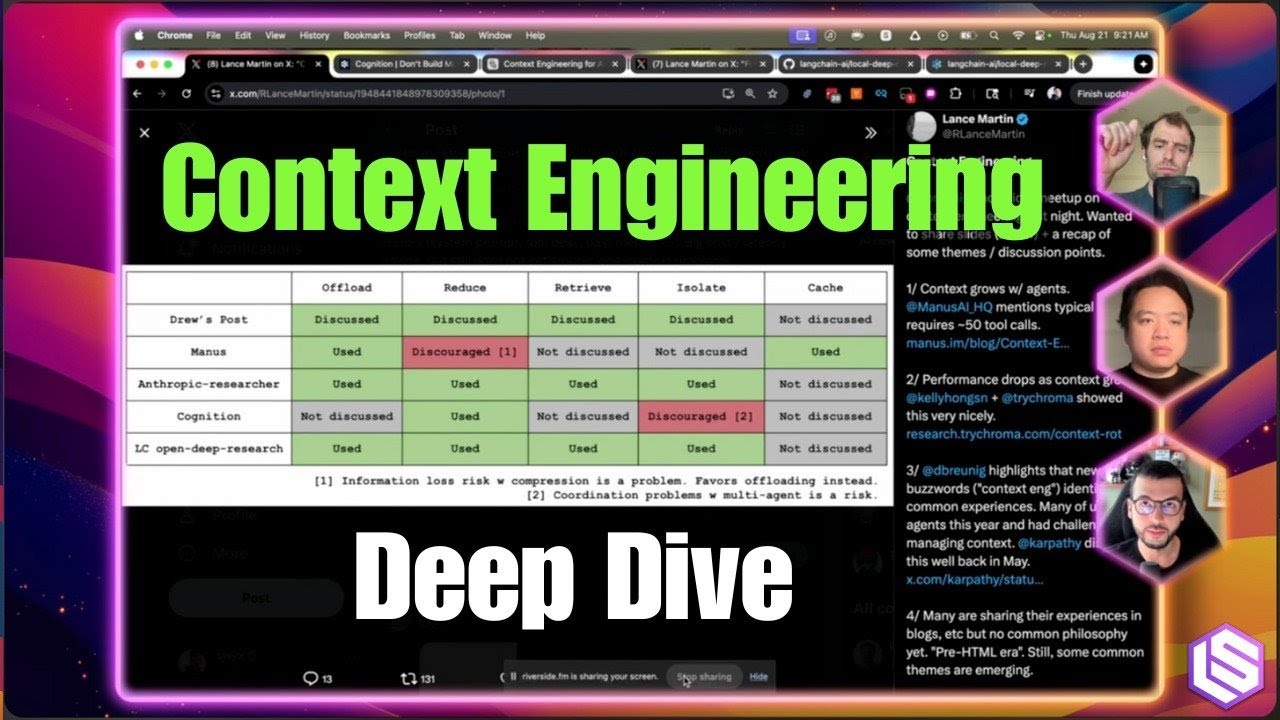
Context Engineering for Agents - Lance Martin, LangChain
Sep 11, 2025 · 1:03:18
Lance Martin from LangChain discusses context engineering for AI agents, arguing that managing context from tool calls is the key challenge and introducing five techniques: offloading, reducing, retrieval, caching, and context isolation. Offloading saves raw tool call outputs to disk and passes only summaries, drastically cutting token usage—Martin's deep research agent went from 500,000 tokens per run to much less. Manus uses file system offloading and warns that irreversible pruning risks information loss, while Cognition advocates fine-tuned summarization for agent-agent boundaries. For retrieval, Martin contrasts Windsurf's multi-step indexing with Claude Code's agentic search using grep and llms.txt, finding the latter more effective. He applies the Bitter Lesson to agent engineering: his own Open Deep Research evolved from a highly structured workflow to a simple agent loop as models improved, and he warns against rigid abstractions that hinder adaptation.
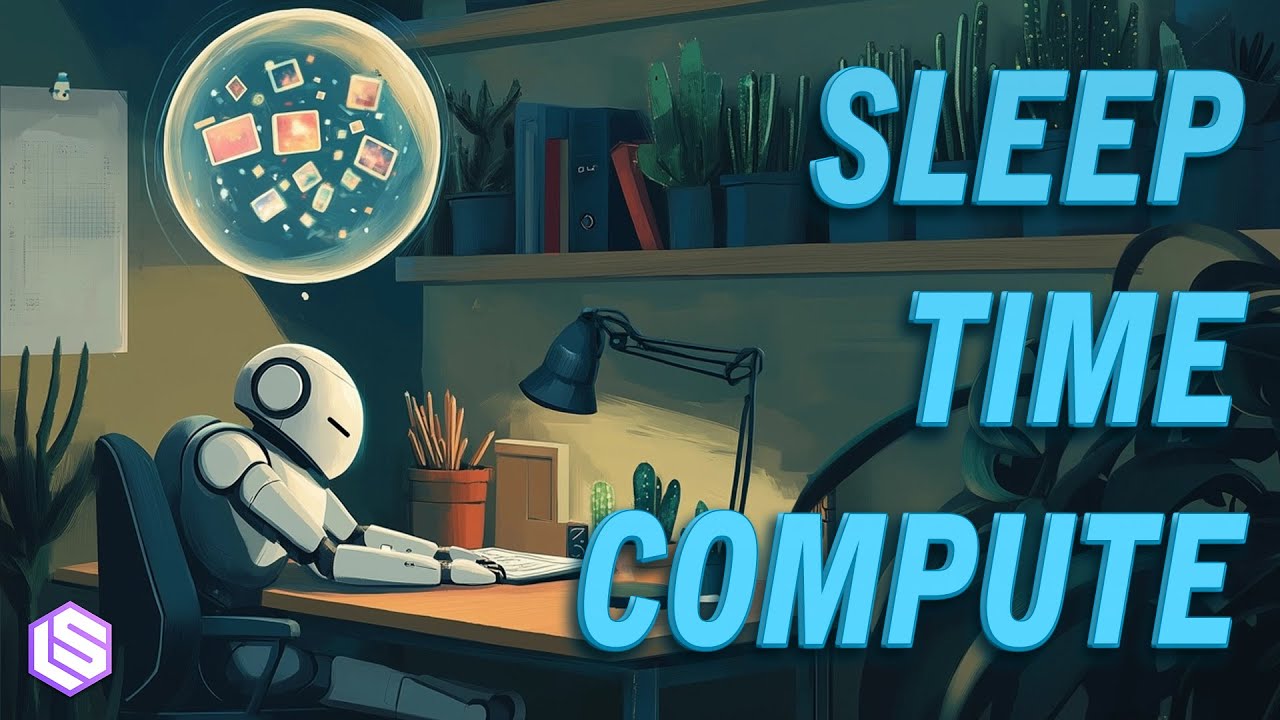
Sleep-Time Compute — Letta AI (Charles Packer, Charlie Snell, Kevin Lin)
Apr 21, 2025 · 34:02
This episode covers Letta AI's new paper on Sleep-Time Compute, a scaling direction that applies compute during model idle periods (sleep time) rather than only at test time. Charles Packer, Kevin Lin, and Charlie Snell explain that sleep-time compute precomputes inferences from static context before queries arrive, yielding Pareto improvements on math benchmarks like GSM8K by shifting the accuracy-to-token curve leftwards. They distinguish it from test-time compute by emphasizing that sleep-time tokens incur no user-latency cost, and show that the benefit is largest when questions are predictable from context. The team also ties the concept to stateful agents and memory systems (building on MemGPT), releasing two implementations: one for low-latency chatbots and another for document-driven agents.

Language Agents: From Reasoning to Acting — with Shunyu Yao of OpenAI, Harrison Chase of LangGraph
Sep 27, 2024 · 1:26:33
Shunyu Yao of OpenAI and Harrison Chase of LangChain discuss the evolution of language agents, arguing that combining reasoning and acting through techniques like ReAct remains foundational, while tool design and cognitive architectures like CoALA will shape the next wave. Shunyu traces his work from text games to ReAct, showing how thinking as an action improves reliability; Harrison explains LangChain's adoption and the shift to LangGraph for stateful orchestration. They emphasize agent-computer interfaces (ACI) as a neglected area, noting that SWE-Agent's success came from optimizing tools for models, not humans. The conversation covers memory types (semantic, episodic, procedural) and applies CoALA's three dimensions to current systems. They highlight promising applications: customer support, coding agents, and spreadsheet-style UX for batch operations. Shunyu stresses that better benchmarks like SWE-Bench (which solved 30% of GitHub issues) and TauBench (best model 48%) are critical, and that data—not architecture—will drive future model improvements.
Powered by PodHood