
Gemma
ProductA product discussed on Latent Space.
13 episodes

⚡️ Google's Open AI Strategy — Omar Sanseviero, Google DeepMind
May 24, 2026 · 29:59
Omar Sanseviero, Google DeepMind's Head of Developer Experience, explains Gemma 4's novel architecture with per-layer embeddings that enable effective parameter offloading: only 2B of 5B parameters need GPU memory, ideal for on-device inference on phones and Raspberry Pis. The model matches 1.5-year-old state-of-the-art in most areas, with Gemini Nano integrated into Pixel and Samsung phones. Gemma 4 supports multimodal input (audio, images, short video) but not audio output or combined audio-video prompts. Sanseviero notes fine-tuning is declining as out-of-box capabilities improve, but remains relevant for specialized domains like healthcare. He contrasts dense (31B) and MoE (27B) variants, highlighting MoE's inference speed but fine-tuning challenges. The team is expanding globally, with Kaggle joining DeepMind to create community-driven benchmarks for model evaluation.

The $15B Physical AI Company: Simulation, Autonomy OS, Neural Sim, & 1K Engineers—Applied Intuition
Apr 27, 2026 · 1:14:07
Applied Intuition co-founders Peter Ludwig and Qasar Younis argue that the real bottleneck in physical AI is deploying intelligence onto constrained hardware, not model intelligence itself. Their $15B company builds simulation, operating systems, and AI models for autonomous trucks, mining equipment, and defense systems. Starting as YC-era tooling for robotaxis, they now offer 30+ products across simulation & RL infrastructure, vehicle operating systems, and autonomy models. They compare fragmented vehicle software to pre-Android phones, and their OS enables reliable updates and L4 driverless operations (trucks running in Japan today). Verification uses statistical nines of reliability, and they internally adopt coding agents like Cursor and Claude Code. They hire 1,000 engineers at the hardware-software boundary.
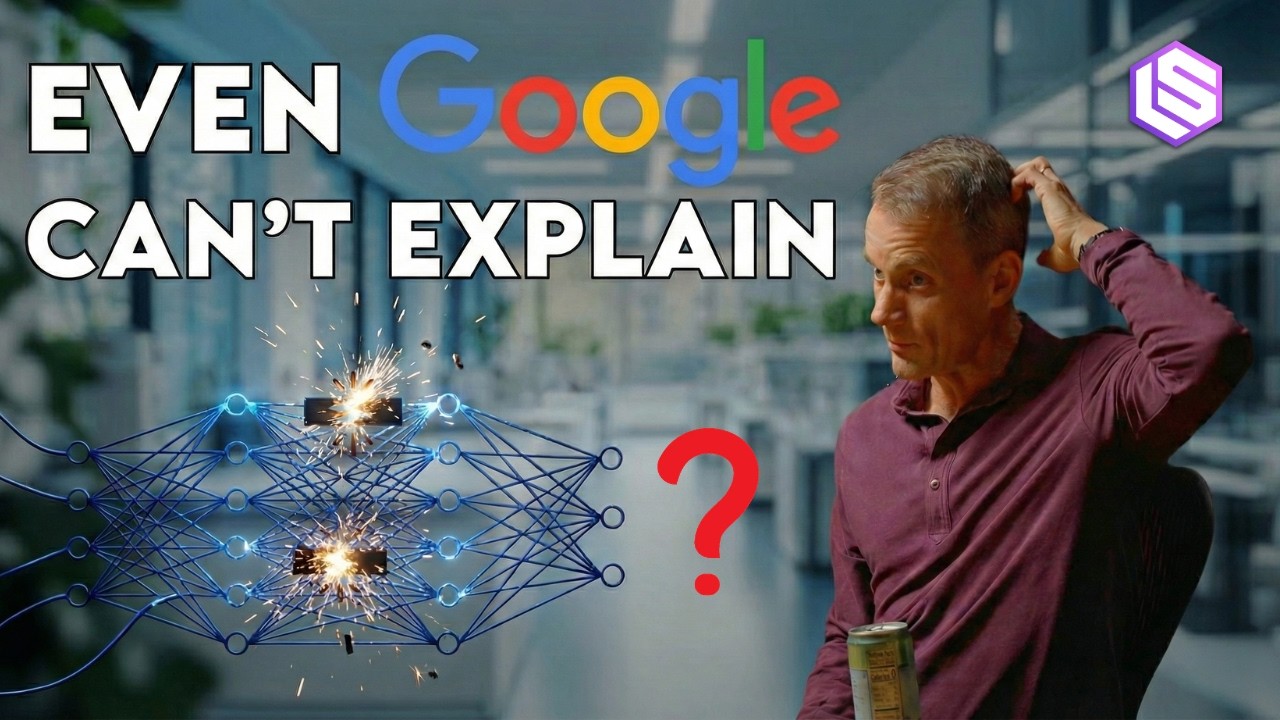
The AI Frontier: from Gemini 3 Deep Think distilling to Flash — Jeff Dean
Feb 12, 2026 · 1:23:31
Jeff Dean, Google's Chief AI Scientist, explains how the company's dual strategy of frontier "Pro" models and distilled "Flash" models, alongside co-designed TPUs and latency-optimization, keeps Gemini at the Pareto frontier. Distillation compresses high-capability large models into smaller, efficient ones, enabling Flash models to exceed earlier Pro generations. He emphasizes energy-based thinking: data movement costs thousands more picojoules than arithmetic, making batching and speculative decoding essential. TPU development requires predicting ML workloads 2–6 years out, often speculatively adding hardware features. Gemini was born after Dean wrote a one-page memo arguing that fragmented model efforts across Google Brain and DeepMind should merge into a single unified multimodal effort. Looking ahead, he predicts personalized models attending to all user data and reasoning speeds of 10,000 tokens/second will transform software engineering.
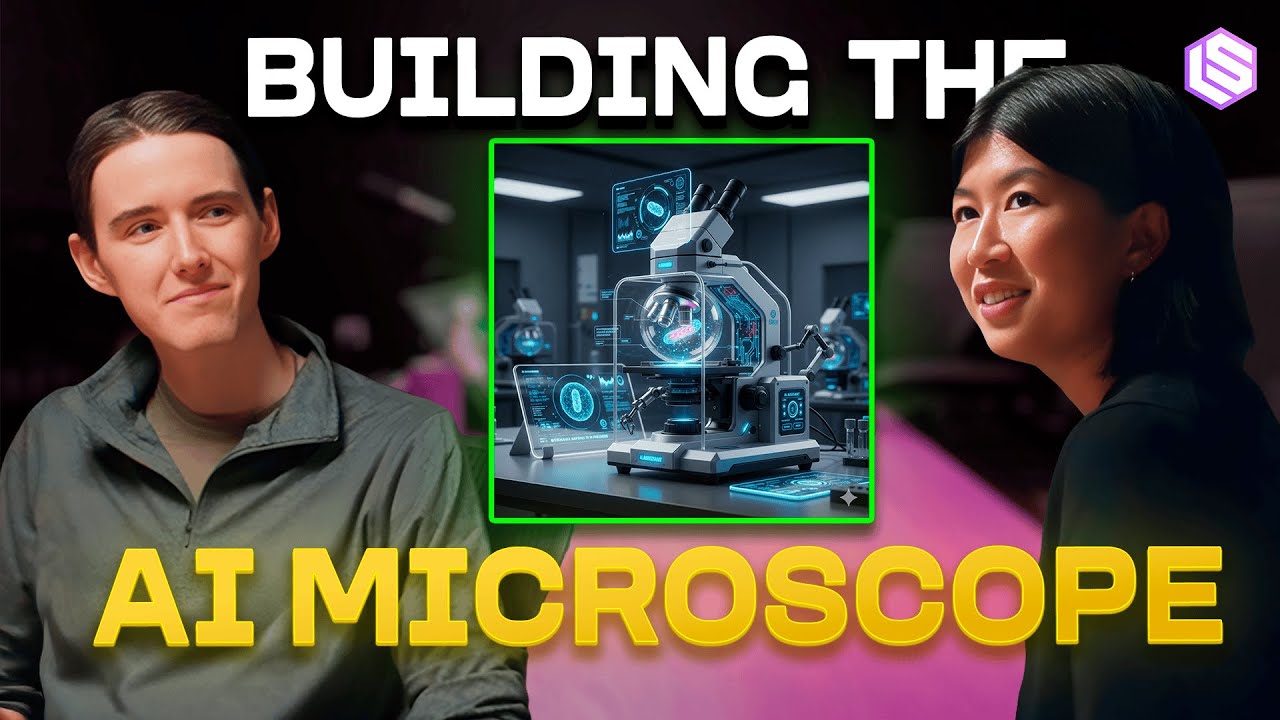
Goodfire AI’s Bet: Interpretability as the Next Frontier of Model Design — Myra Deng & Mark Bissell
Feb 5, 2026 · 1:08:41
Goodfire AI's Mark Bissell and Myra Deng argue that interpretability is the next frontier for model design, using their recent $150M Series B at $1.25B valuation to scale surgical edits of model internals beyond post-hoc poking. They explain how their platform detects behaviors like sycophancy and reward hacking, enabling targeted unlearning without wrecking capabilities. The episode covers real-world deployments from Rakuten's PII guardrails to life science partnerships with Mayo Clinic finding Alzheimer's biomarkers. Mark demonstrates real-time steering of a trillion-parameter Kimi K2 model, while Myra details how SAEs sometimes underperform probes for detection tasks. They envision a future where interpretability guides training so customization isn't brute-force guesswork.

⚡ Open Model Pretraining Masterclass — Elie Bakouch, HuggingFace SmolLM 3, FineWeb, FinePDF
Oct 20, 2025 · 1:03:40
Elie Bakouch, Hugging Face's pre-training lead and architect behind SmolLM, presents a five-pillar framework for model training spanning data quality, architecture, information extraction, gradient quality, and stability, while breaking down recent innovations in optimizers, Mixture of Experts, and data rephrasing. He explains that the field of optimizers is moving beyond AdamW with Muon and Shampoo, noting that speed-ups are often exaggerated due to undertuned baselines. He deep-dives into MoE architecture, showing that expert specialization requires load balancing at the global batch level, as demonstrated by Qwen's findings. He discusses the rephrasing revolution, where converting low-quality web data into QA format yields non-random MMLU performance even for small models. Elie also highlights Hugging Face's open science contributions: FinePDF (new PDF dataset), FineWeb-Edu2, and tools like Nanotron, Datahub, and Liteval.

Better Data is All You Need — Ari Morcos, Datology
Aug 29, 2025 · 1:18:43
Ari Morcos, CEO of Datology, argues that data curation is the most impactful and underinvested area in AI, claiming models are defined by what they eat. He details his shift from focusing on inductive biases to realizing data quality is paramount, citing the DCLM study where human experts could not predict automated filtering decisions. Datology's methods combine filtering, rebalancing, curriculum, and rephrasing synthetic data to achieve baseline performance 12x faster, improve accuracy by 4–5 absolute points, and train models with fewer than half the parameters. Morcos explains how curating data bends naive scaling laws by maintaining marginal information gain, and shares results from the Arc 4.5B model, which was trained on 7 trillion tokens (down from 25 trillion) using Datology's curation. He highlights that data is a compute multiplier, making it possible for enterprises to train smaller, cheaper models for specific domains.

Information Theory for Language Models: Jack Morris
Jul 2, 2025 · 1:18:13
Jack Morris, a Cornell PhD student advised by Sasha Rush, discusses his information-theoretic research on language models, including embedding inversion (recovering text from embeddings with 90% accuracy), the universal geometry of embeddings (aligning different models' latent spaces), and measuring model memorization capacity at 3.6 bits per parameter. He argues that paradigm shifts in AI, from AlexNet to instruction tuning, stem not from new architectures but from new datasets, and that the next breakthrough will likely emerge from a novel data source. The conversation also covers the shift from academia to industry, practical advice for grad students on distributed training, and the implications of embedding inversion for privacy and model alignment.

The Utility of Interpretability — Emmanuel Amiesen
Jun 6, 2025 · 1:53:02
Emmanuel Amiesen, lead author of Anthropic's Circuit Tracing paper, presents the newly open-sourced tools that let anyone inspect how language models compute, revealing that models like Gemma 2-2B engage in genuine multi-step reasoning rather than mere pattern matching. Amiesen demonstrates that the model's internal features causally drive outputs—for instance, suppressing the 'Texas' feature in a capital-of-state query changes the answer from Austin to Sacramento. He explains how sparse autoencoders uncover features shared across languages and modalities, and how attribution graphs map feature interactions. The episode covers practical insights: why jailbreaks succeed (the model prioritizes grammatical completion over refusal) and how planning in poetry generation involves deciding a rhyme before the line begins. Amiesen calls for more researchers to explore interpretability, citing the low barrier to entry with open models and tools.

The Magic of LLM Distillation — Rishabh Agarwal, Google DeepMind
Mar 23, 2025 · 46:42
Rishabh Agarwal from Google DeepMind discusses modern LLM distillation, arguing that while simple synthetic data distillation (generating outputs from a teacher and fine-tuning a student) gets 80-90% of the benefit, more advanced on-policy methods (sampling from the student and getting teacher logits) can close the remaining gap by fixing the train-test mismatch. He explains that logit-based distillation is more information-rich but often neglected due to infrastructure complexity, while online distillation is more expensive but crucial for long-horizon or agentic tasks. Agarwal highlights how flipping the KL divergence direction changes behavior (mode-covering vs. mode-seeking) and shows that smaller models can sometimes outperform larger ones in compute-matched distillation due to generating more filtered data. He also connects distillation to speculative decoding, where a distilled student speeds up the teacher, and encourages researchers to question current methods and mine RL literature for ideas.
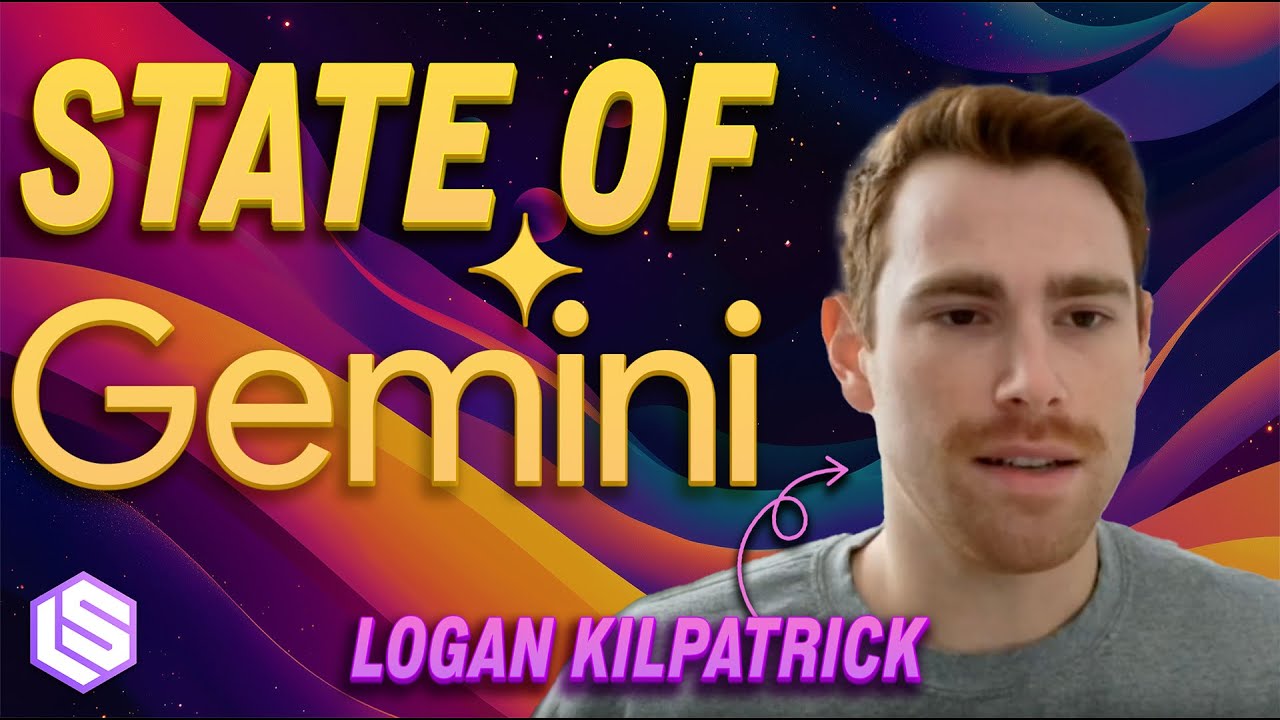
Gemini 2.0 Flash and Flash Thinking: the new SOTA models for the agentic era
Feb 28, 2025 · 28:21
Logan Kilpatrick, Google AI Studio product lead, returns to discuss Gemini 2.0 Flash and Flash Thinking, the new models that balance frontier capabilities with cost efficiency for the agentic era. He explains the pricing strategy: Flash at 10 cents per million tokens (simplified from tiered pricing), Flash Lite preserving the 7.5-cent narrative for low cost, and Pro pushing the frontier. Flash Thinking, co-led by Noam Shazeer and Jack Rae, scales inference-time compute and already shows rapid improvements, with base model advances coupling with RL-based reasoning. Swyx reports that Gemini Flash outperforms o3-mini on long-context summarization, calling it a 'reporting model.' The multimodal live API enables real-time voice and vision interactions, and a memory layer mimicking Astra is in development. Grounding with Search as a Tool is also highlighted for agentic search use cases.

Why is everyone cloning Deep Research?
Feb 18, 2025 · 1:00:10
In this episode, hosts Alessio and Swyx interview Aarush Selvan and Mukund Sridhar, the lead PM and tech lead for Gemini Deep Research, about how Google created the deep research agent category and the technical decisions behind it. They finetuned a special version of Gemini 1.5 Pro for the feature, which autonomously browses the web for about five minutes to produce a research report. The team built an asynchronous platform to handle long-running tasks and developed an ontology of research behaviors—from broad shallow exploration to deep focus—to evaluate performance. They found that users value the visible browsing process even when it takes minutes, contrary to typical latency norms. The discussion covers iterative planning, trade-offs between model memory and web grounding, and future directions including thinking models, multimodality, and personalization.
The Winds of AI Winter (Q2 Four Wars of the AI Stack Recap)
Aug 2, 2024 · 1:23:36
Swyx and Alessio recap Q2 2024 through their 'Four Wars' framework, arguing that the AI landscape is shifting from frontier model dominance to commoditization and vertical applications. They highlight Claude 3.5 Sonnet overtaking OpenAI on coding benchmarks, Llama 3.1's synthetic data approach enabling 7B models to rival GPT-4, Mistral Large 2's non-commercial license and lost open-source crown, and on-device models like Gemini Nano and Apple Intelligence. The Quality Data Wars see NYT suing OpenAI, Reddit licensing data for $200M+, and synthetic data proving real for math (AlphaProof near IMO gold) and code. The Multimodality War includes ChatGPT Voice Mode delayed, Meta's Chameleon for native fusion, and Google's PaliGemma for PDF extraction. The renamed LLM OS War covers agent protocols, memory databases, and the collapse of model cost by an order of magnitude every four months, pushing startups toward vertical services like Brightwave and Dropzone that sell labor, not tools. The episode ends with a CrowdStrike joke about agent safety.

LLM Asia Paper Club Survey Round
May 22, 2024 · 55:25
The episode surveys four recent papers on LLM reasoning, uncertainty, interpretability, and efficiency. 'Let's Think Dot by Dot' shows that filler tokens (dots) inserted between input and output enable hidden computation, outperforming no-token baselines on tasks like 3-Sum and 2-Sum Transform. 'Uncertainty Estimation' trains a random forest on hidden-layer activations to predict response confidence, achieving higher AUC than unsupervised methods on Q&A and translation. 'Monosemanticity' uses sparse autoencoders to identify interpretable features (e.g., a DNA-detection feature) in a toy transformer, advancing mechanistic interpretability. 'Medusa' attaches multiple prediction heads to the final hidden state to speculate future tokens, enabling faster decoding without a separate draft model and training in five hours on 60K samples.
Powered by PodHood