
Electron
ProductA product discussed on Latent Space.
3 episodes
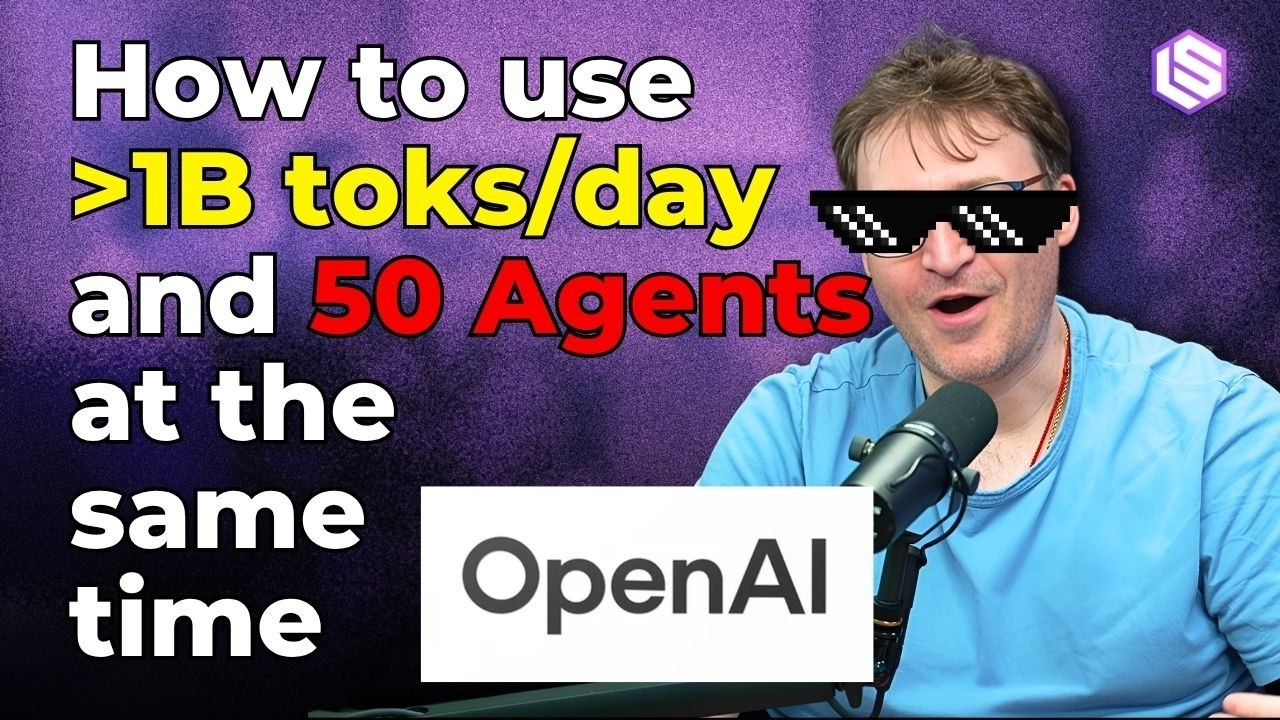
Extreme Harness Engineering: 1M LOC, 1B toks/day, 0% human code or review — Ryan Lopopolo, OpenAI
Apr 7, 2026 · 1:17:54
Ryan Lopopolo of OpenAI's Frontier team details his team's extreme experiment in harness engineering: building a 1M LOC internal Electron app with zero human-written or reviewed code, relying instead on Codex agents that process 1B tokens daily ($2-3k/day). He argues that humans are the bottleneck and that teams should encode non-functional requirements into specs, skills, and observability tooling rather than prompting agents to 'try harder.' The result is Symphony, a ghost library spec and Elixir reference implementation that automates the entire pull-request lifecycle, including self-review and merge. Lopopolo explains how the team scales by treating software as agent-legible text, using worktrees for multi-agent collaboration, and feeding agent mistakes back into the repository via docs like core-beliefs.md. He also discusses Frontier's enterprise platform for safe agent deployment, noting that success depends on giving agents full context—even company culture and inside jokes—so they can act as full teammates.

Anthropic’s Felix Rieseberg on AI Coworkers, Local-First Agents, and the Future of Knowledge Work
Mar 17, 2026 · 1:27:34
Anthropic's Felix Rieseberg explains how Claude Cowork—a VM-based, user-friendly version of Claude Code—was built from pre-existing prototypes in ten days, and why putting AI 'where you work' on the local machine is more powerful than cloud-only approaches. He argues that Silicon Valley undervalues the local computer, comparing it to how we all use MacBooks instead of iPads. The VM gives Claude its own computer, enabling it to install tools and run scripts without constant approval, serving as both a safety boundary and a capability unlock. Rieseberg contrasts Cowork's evaluation on knowledge work tasks (e.g., mortgage management, tax filing) with Claude Code's coding evals, and explains the shift from MCPs to file-based skills—markdown files that tell the model what to do. Real use cases include organizing desktops, uploading videos, and filing taxes. He also expresses concern about the impact on junior employees and hints at future work on autonomy, multiplayer coordination, and portability.

Zed Agents — with Zed Cofounders Nathan Sobo & Antonio Scandurra
May 7, 2025 · 35:50
Zed co-founders Nathan Sobo and Antonio Scandurra explain how their high-performance code editor is launching Zed Agents, aiming to make AI an integrated collaborator rather than just a tool. Built from scratch in Rust for 120fps performance and real-time collaboration via CRDTs, Zed previously open-sourced Xeta, an edit prediction model fine-tuned on Qwen 2.5. Now they introduce an agentic mode that lets LLMs call tools in a loop, surfacing changes in a multi-buffer for easy review. The agent can run shell commands, install MCP servers via an extension store, and be used with bring-your-own-key or a $20/month plan for 500 requests. Sobo and Scandurra stress that vertical integration gives them control to wire AI into debugging, git, and multi-agent workflows where multiple agents collaborate via CRDTs, treating agents as always-available teammates.
Powered by PodHood