
Azure
ProductA product discussed on Latent Space.
4 episodes
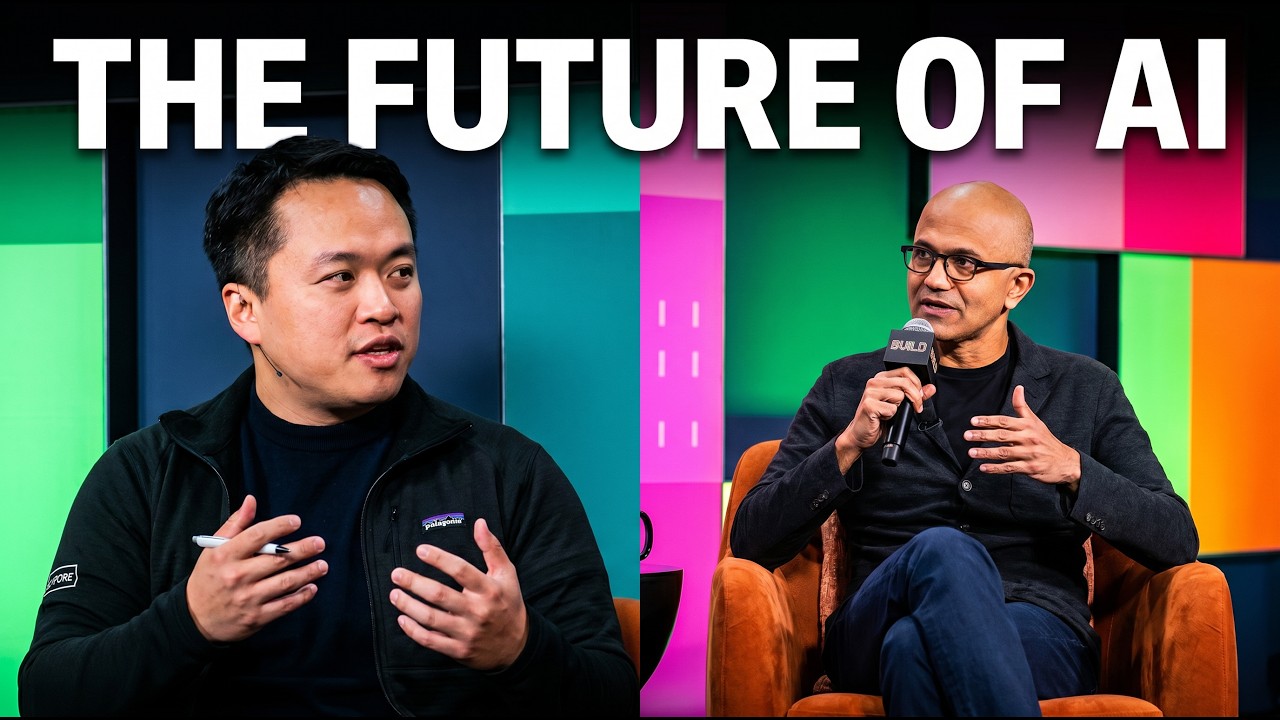
Satya Nadella on AI: @NoPriorsPodcast x Latent Space Crossover Special at Microsoft Build 2026
Jun 3, 2026 · 41:27
Satya Nadella argues that Microsoft's AI strategy is an ecosystem platform enabling any company to build frontier intelligence using models, tools, data, and a harness, not just consume one model. He outlines MAI training with clean data lineage, hill-climbing scaffolds, and private evals as core IP. The harness concept features multi-model harnesses with strong context layers, exemplified by GitHub Copilot and Work IQ turning M365 data into a database for agents. He notes coding agents required new IDE/UI, and long-running autopilots create value. Pricing evolves from per-user to consumption, and SaaS will unbundle and rebundle. Engineering generalists gain leverage; infrastructure roles like RLEs remain critical. Datacenter expansion requires community permission, with benefits in healthcare and rethinking education. Microsoft built more Azure capacity in 15 months than its first 15 years.
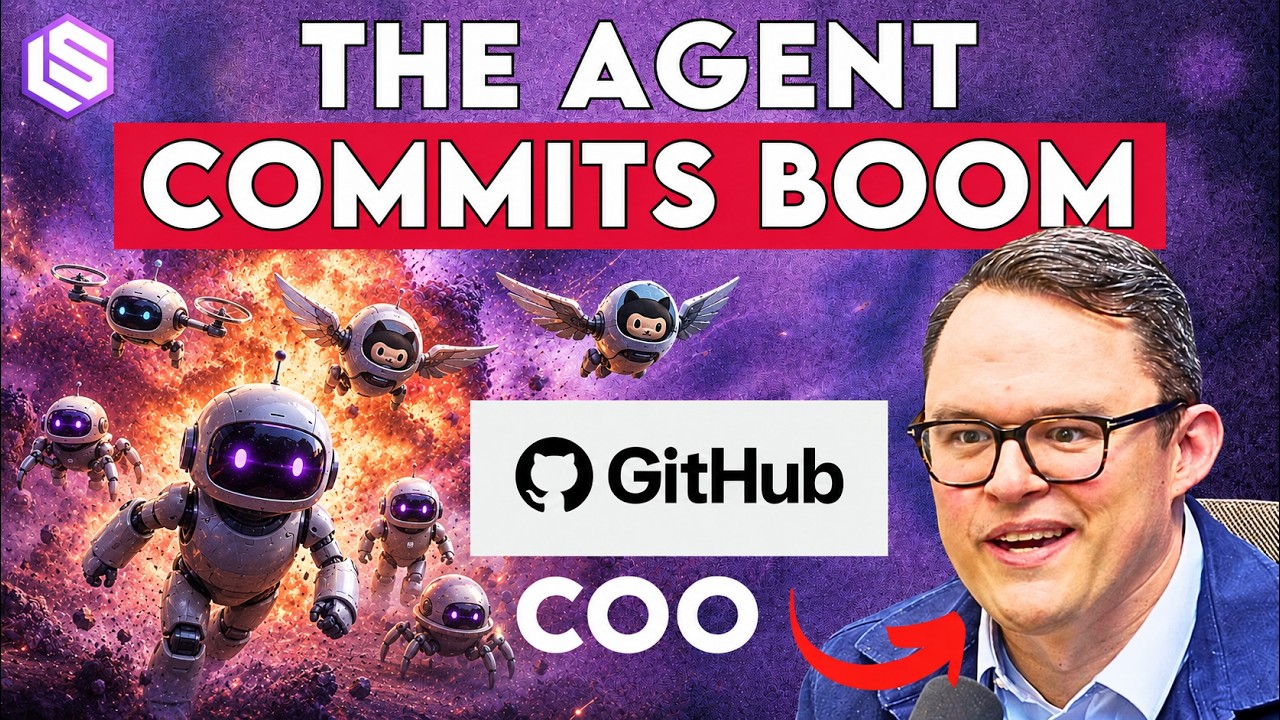
GitHub’s Agent Era: 14x Commits, 200M Developers, Copilot’s Next Act — Kyle Daigle
Jun 2, 2026 · 1:24:44
GitHub COO Kyle Daigle joins Swyx to unpack how the agent era is transforming GitHub's infrastructure and developer workflows, from 14x commit growth to internal AI micro-skills. Daigle describes using WorkIQ, MCP, and Slack/Teams context to retroactively analyze weeks' work and build executive presentations entirely with AI, undetected. He advocates atomic micro-skills over mega-skills and reveals GitHub now hosts 200M developers generating 275M weekly commits, on pace for 14B this year. Scaling issues stem from MySQL1 permissions and monorepo shifts, forcing rewrites of 10-year-old services. Copilot has evolved from code completion to a unified agent SDK powering CLI, desktop, and cloud agents. Microsoft's deep investment in OpenClaw reflects a need for OS-level sandboxing for enterprise agent deployment.

Claude Code for Finance + The Global Memory Shortage: Doug O'Laughlin, SemiAnalysis
Feb 24, 2026 · 2:07:40
Doug O'Laughlin, SemiAnalysis founder, explains his Claude Code awakening in December 2024: Anthropic's Opus 4.5 one-shotted tasks that used to take 24 hours, leading him to predict Claude Code will write 25–50% of all GitHub code by year-end (already 4% of commits in two weeks). He argues this marks the death of Excel and Bloomberg for analysts—'you can just do things'—but warns of a 'hygiene' crisis as junior analysts lose meta-learning. On the semiconductor side, O'Laughlin details a severe memory squeeze: HBM demand consumes 4× the DRAM capacity, DRAM prices could double again, and CXL is reviving as a workaround. He compares AI infrastructure buildout to the railroad boom (25% of U.S. gross fixed capital investment) and says Microsoft faces an innovator's dilemma—renting GPUs to 'barbarians at the gate' while its own office franchise is disrupted by Claude Code. Google's TPU v7 enjoys a temporary TCO advantage, but Nvidia's supply chain dominance (Jensen doing shots with SK and Samsung) will reassert with Rubin. O'Laughlin also reflects on his 2,800-mile Continental Divide Trail hike as essential self-mastery.
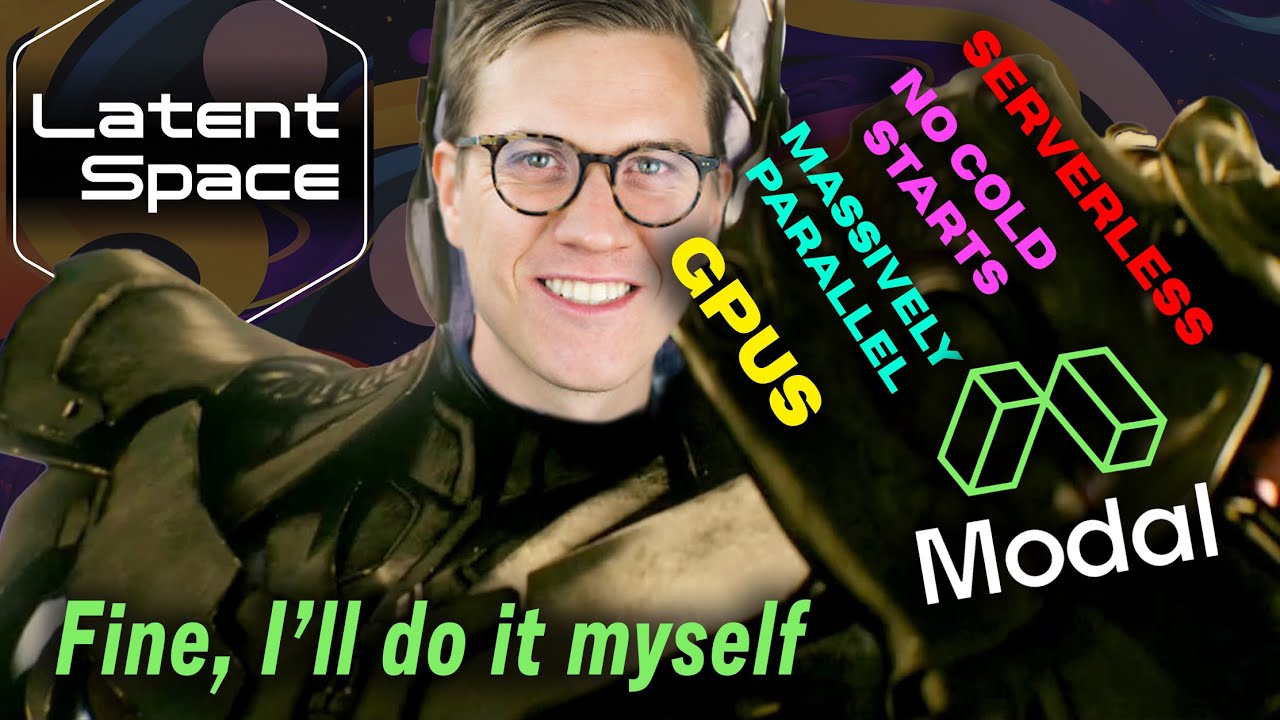
Truly Serverless Infra for AI Engineers - with Erik Bernhardsson of Modal
Feb 19, 2024 · 1:08:58
Erik Bernhardsson, creator of Annoy and Luigi, founded Modal to build a 'postmodern data stack' with a self-revisioning runtime that eliminates container cold starts and lets developers attach GPUs with a Python decorator. His serverless platform can fan out to thousands of GPUs within seconds, becoming a natural fit for GenAI workloads like Stable Diffusion and fine-tuning (e.g., RAMP fine-tuning 100 models in parallel). Modal differentiates from Replicate by targeting custom models and workflows, and from Modular by offering a managed cloud service rather than licensed software. Erik argues that buying hardware is inefficient for startups and that infrastructure founders must be willing to spend years on load balancing, page faults, and DNS. He shares how his IOI Gold Medal background shapes Modal's talent culture, hiring competitive programmers for complex scheduling and bin-packing problems.
Powered by PodHood