
Sean
HostHost of Latent Space.
5 episodes
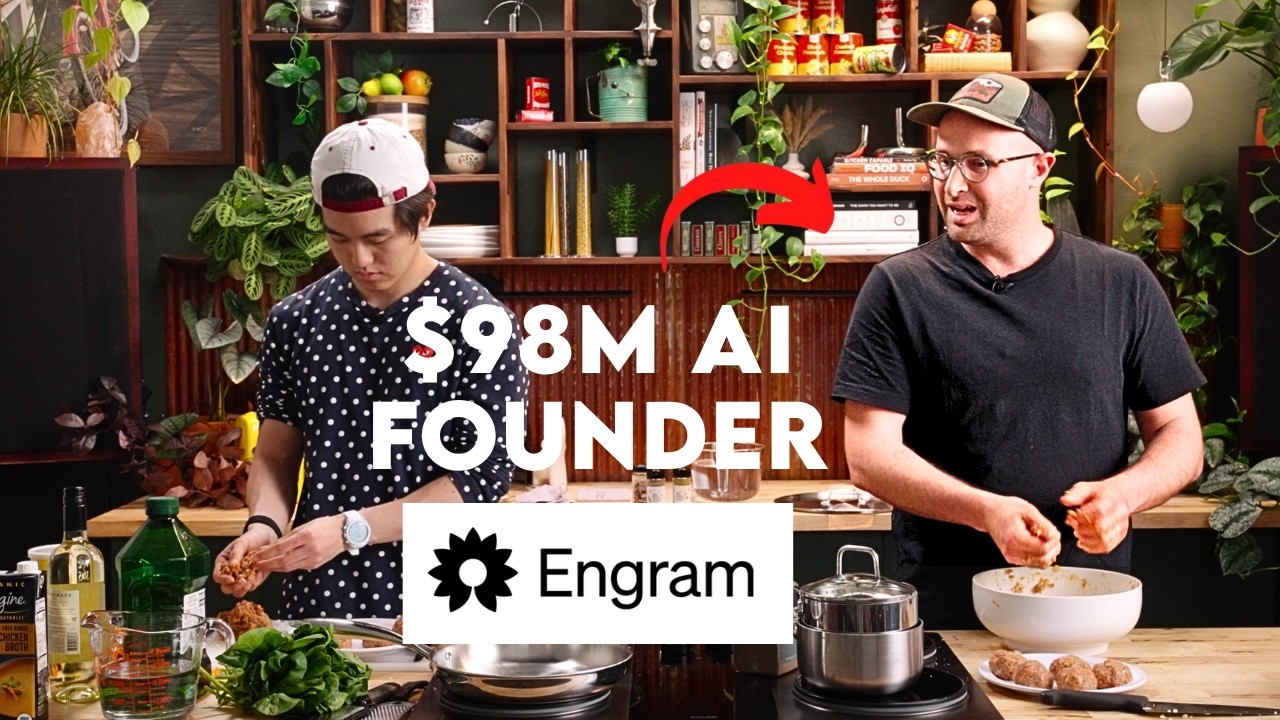
The AI Memory Problem: Why Long Context Isn’t Enough — Dan Biderman, Engram Co-founder & CEO
Jul 13, 2026 · 49:44
Engram co-founder and CEO Dan Biderman tells hosts Allen Park and Sean that long context and RAG aren't enough for AI memory—continual learning and gradient-based weight updates are needed. He argues Engram's approach compresses company knowledge into 'cartridges' that let models reason with far fewer tokens, overcoming 'context rot' and the inefficiency of re-reading massive corpora. Biderman draws on his background in Israeli special forces and computational neuroscience to explain how training creates intuition beyond text retrieval, citing examples like Harvey's legal queries where holistic understanding beats search. He envisions personal AI weights that improve like Tamagotchis, driven by user-specific feedback loops, and stresses that token efficiency and intelligence are inseparable—doing more with less enables harder problems. Engram is hiring infrastructure engineers to deploy millions of continuously updated memories.
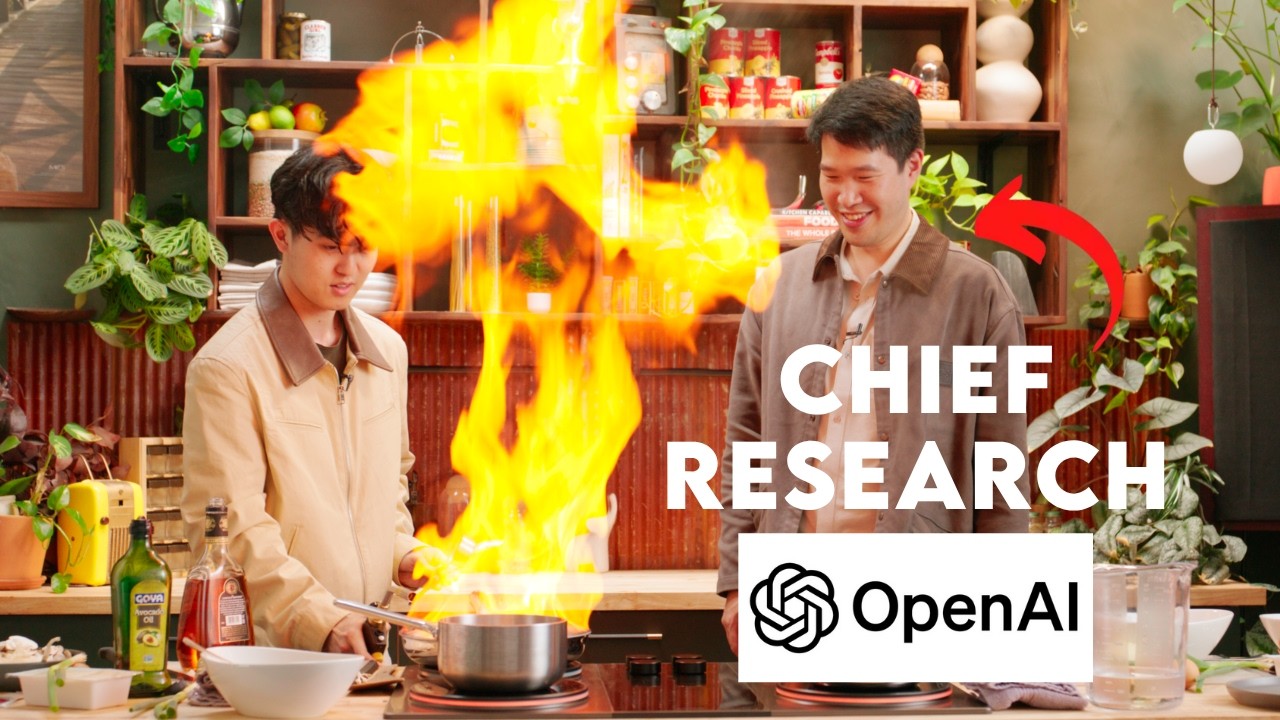
Cooking with OpenAI’s Research Chief: AGI, o1, Evals, and Scaling Laws — Mark Chen
Jun 25, 2026 · 41:18
Mark Chen, OpenAI's Chief Research Officer, defends scaling laws and pre-training as far from dead, arguing that reasoning (the bet behind o1) remains underrated and that the field faces an evals crisis requiring fresh benchmarks. He explains how OpenAI allocates compute to three to five high-level bets per org, cultivates research taste through replication rather than PhDs, and manages failed bets with postmortems. Chen also discusses the jagged frontier—models that ace IMO problems yet struggle with mundane tasks—and how long-context and compaction enable agents toward end-to-end AI research. Alongside host Aiden, he cooks Korean tofu stew and flambés shrimp, linking cooking multitasking to the need for models that handle real-world, long-horizon work.

Information Theory for Language Models: Jack Morris
Jul 2, 2025 · 1:18:13
Jack Morris, a Cornell PhD student advised by Sasha Rush, discusses his information-theoretic research on language models, including embedding inversion (recovering text from embeddings with 90% accuracy), the universal geometry of embeddings (aligning different models' latent spaces), and measuring model memorization capacity at 3.6 bits per parameter. He argues that paradigm shifts in AI, from AlexNet to instruction tuning, stem not from new architectures but from new datasets, and that the next breakthrough will likely emerge from a novel data source. The conversation also covers the shift from academia to industry, practical advice for grad students on distributed training, and the implications of embedding inversion for privacy and model alignment.

GPT 4.1: The New OpenAI Workhorse
Apr 15, 2025 · 45:04
OpenAI's Michelle Pokrass and Josh McGrath join hosts Alessio, Swyx, and Sean to launch GPT 4.1, a new model family positioned as the go-to workhorse for developers with major improvements in coding, instruction following, and long context. The three models—4.1, 4.1 Mini, and 4.1 Nano—introduce a 1M-token context window, 75% prompt caching discount, and cheaper pricing than 4o. Coding gains are highlighted by 55% on SWE-bench (vs o1's 41%), while instruction following benefits from real-world API data and new evals like GraphWalk for multi-hop reasoning. The team explains that most improvements come from post-training techniques, with vision capabilities lifted by a new pre-trained base. Fine-tuning is available day one, and developers are encouraged to opt in to data sharing for future model iterations.
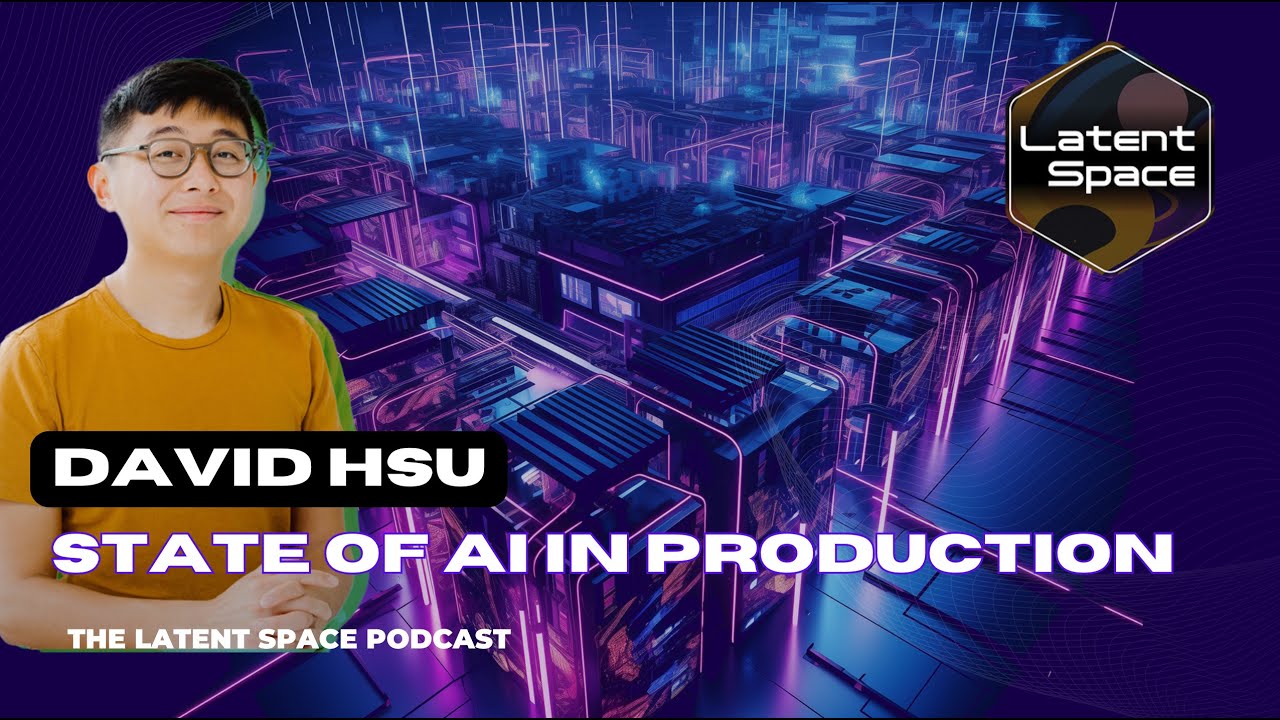
The State of AI in production — with David Hsu of Retool
Feb 7, 2024 · 1:06:52
Retool CEO David Hsu shares insights from the company's 2023 State of AI survey, revealing that most AI adoption remains internal and that the hype may be overrated—52% of 1,600 respondents said AI is overrated, and only 27% have AI in production, with 66% of those being internal use cases. He explains Retool's developer-first philosophy, their choice of open-source PG Vector over proprietary solutions, and why they intentionally raised less money at lower valuations to avoid over-dilution. Hsu describes Retool's shift from sales-led to bottom-up growth to reach millions of developers, and highlights the importance of AI workflows over simple chatbots, citing a clothing manufacturer that uses Retool apps with DALL-E to generate patterns. He discusses the competitive landscape, predicting open-source models will eventually catch up to OpenAI, and shares philosophical views on AGI using the plane-vs-bird analogy.
Powered by PodHood