
RJ Haneke
HostHost of Latent Space.
5 episodes

🔬 "The Most Innovative Diffusion Research Is Happening in Drug Discovery, Not Image Generation"
Jun 30, 2026 · 1:48:40
Evan Feinberg and Sergey Edunov of Genesis Molecular AI argue that diffusion models have unlocked sub-ångström accuracy in protein-ligand structure prediction, a breakthrough that makes AI useful for real drug discovery where the field’s favored 2Å RMSD benchmark is "slop." Their PEARL model uses diffusion with physics-based guidance, synthetic training data from molecular dynamics, and inference-time scaling to predict induced fit—how a protein flexes to accommodate a ligand. On the OpenBind benchmark, PEARL zero-shot surpassed all cofolding models on the notoriously hard EV A721A protease, correctly predicting a flexible loop movement that other methods missed. They also introduce SAPPHIRE, an agentic system that orchestrates AI models for 24/7 drug design, and discuss how downstream ADMET properties (solubility, toxicity, etc.) remain equally critical. The biggest bottleneck they face is GPU availability, and they are actively hiring AI researchers interested in novel architectures beyond standard transformers.

Scaling Past Informal AI - Carina Hong, Axiom Math
Jun 3, 2026 · 1:33:04
Carina Hong, founder and CEO of Axiom Math, argues that formal verification, not informal RL, is the path to superintelligence, following her company's $200M Series A at a $1.6B valuation and a perfect 120/120 on the 2024 Putnam exam. Axiom's system uses Lean theorem prover data and reinforcement learning to produce verified proofs, achieving a 99% pass rate on the Verina code-with-proof benchmark (187 of 189 problems). Hong contends verification is about 'scaling brilliance' — not fixing hallucinations — and that only verified generation can compound AI reasoning. She explains Axiom's open-source Axle API for Lean at scale, addresses why frontier labs like OpenAI have deprioritized formal math (team departures, strategy shifts), and outlines a vision where verified reasoning transfers from math to code, hardware, and eventually AGI through self-improvement. She also discusses the Earth sciences challenge of autoformalization, the difficulty of search in mathematical literature (citing the Erdos controversy), and why fragmentation in the AI math field is a bottleneck.
🔬 The Bitter Lesson is Coming for Proteins - Alex Rives, BioHub
May 27, 2026 · 1:10:12
Alex Rives, head of science at BioHub, argues that scaling language models on protein sequences—the 'bitter lesson' for biology—yields emergent biological understanding, culminating in the open-source ESMC model and ESMFold 2. ESMC, trained on 6.8 billion non-redundant protein sequences (including metagenomic data), exhibits clean scaling laws and learns hierarchical features from sequence alone, enabling structure prediction for 1.1 billion proteins. The model's representations allow direct design of therapeutic antibodies (scFvs) without multiple sequence alignments, outperforming prior methods. Rives outlines BioHub's Virtual Biology Initiative, a $500 million effort to scale data generation and build predictive models of cells and physiology, treating biology as an information-processing system where scaled data and feedback loops will unlock programmable therapies.
🔬How GPT‑5 derived new results in theoretical physics and quantum gravity — Alex Lupsasca, OpenAI
May 5, 2026 · 1:31:51
Alex Lupsasca, a theoretical physicist at OpenAI and recipient of the 2024 New Horizons Breakthrough Prize, details how GPT-5 and subsequent models derived new results in quantum field theory and quantum gravity, solving problems that had stumped experts for over a year. The work focused on 'single minus' gluon tree amplitudes, long believed to be zero, but which humans discovered might be non-zero in a special kinematic region. GPT-5.2 Pro conjectured a simplified formula for these amplitudes, and an internal OpenAI model later proved it, reducing a factorial number of Feynman diagram terms to a linear number. The AI then autonomously extended the result to graviton amplitudes using the gluon paper as a seed, producing a complete paper draft in under an hour. Lupsasca argues this marks a threshold where AI is superhuman on certain physics tasks, accelerating research by acting as a 'scout' that reduces confusion and suggests next questions. He also discusses challenges including AI slop on arXiv and the need for better verification methods.
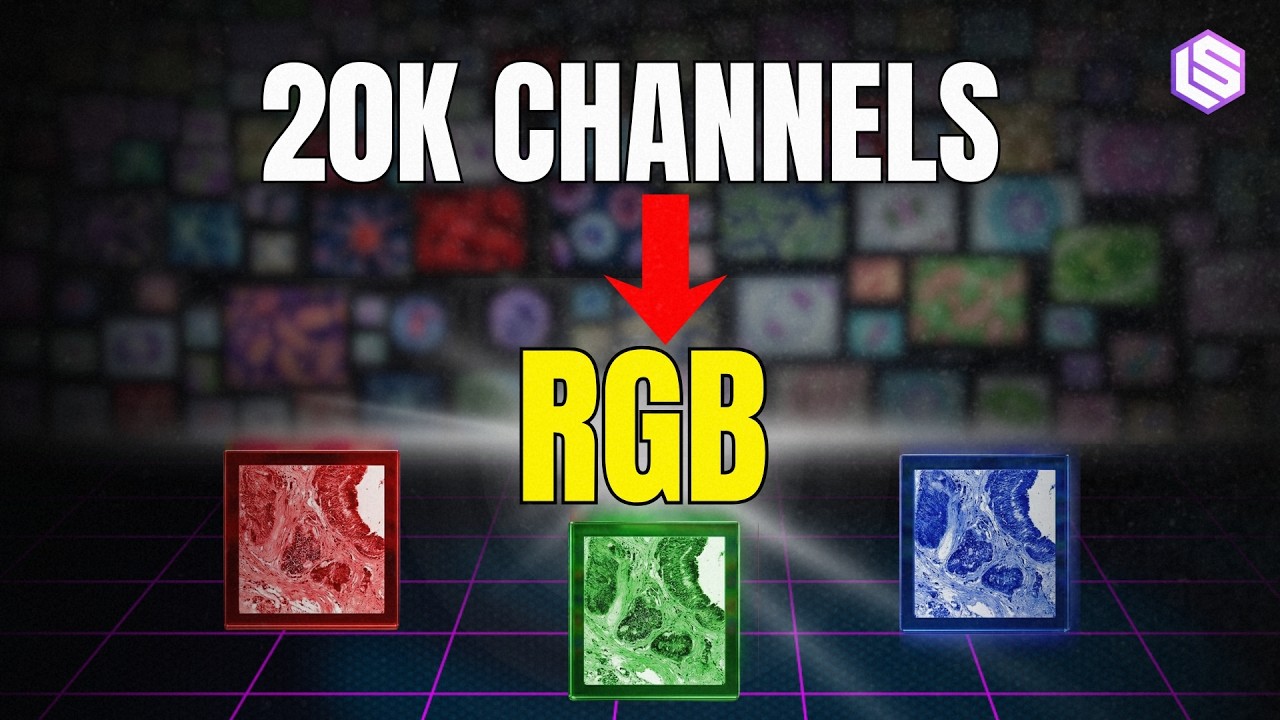
🔬 Training Transformers to solve 95% failure rate of Cancer Trials — Ron Alfa & Daniel Bear, Noetik
Apr 20, 2026 · 1:25:22
Noetik founders Ron Alfa and Daniel Bear argue that 95% of cancer drugs fail in clinical trials not because of pharmacology but because of poor patient selection; their thesis is that the right patients exist but aren't identified. To solve this, Noetik generates its own multimodal data—pathology H&E, spatial transcriptomics with up to 20,000 genes, and protein stains—from human tumor samples, building self-supervised foundation models like OctoVC and the autoregressive Tario. They claim a data moat: over a hundred million spatially resolved cells, an order of magnitude more than any public dataset, which drives better generalization across cancer types. The platform validates predictions via PerturbMap, an in-vivo mouse model with multiplexed CRISPR knockouts, and an ‘in silico humanization’ that reads mouse H&E in human gene space. A $50M deal with GSK licenses OctoVC for therapeutic discovery and fine-tuning on GSK's own data, marking a rare software-focused licensing deal in biotech. Noetik bets that patient-level tissue modeling, not subcellular simulation, will first deliver clinically actionable insights.
Powered by PodHood