
Stripe
CompanyA company discussed on Latent Space.
6 episodes
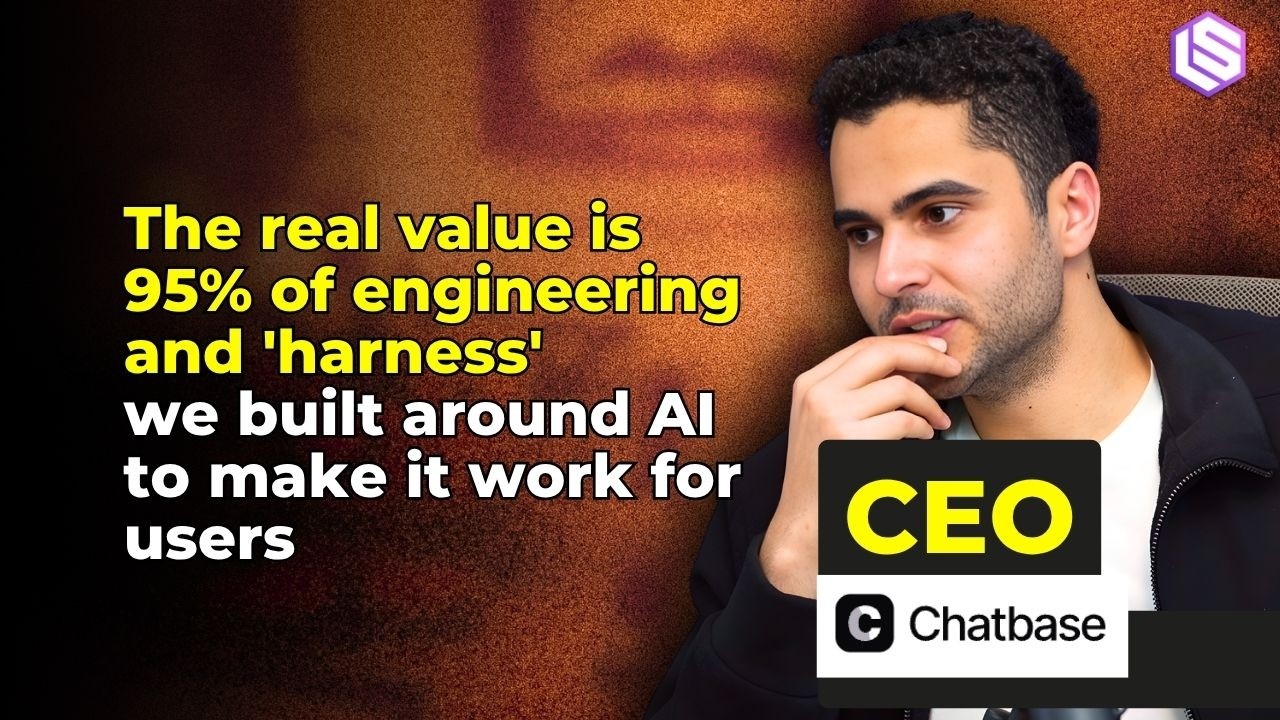
⚡️ Competing with ChatGPT and Sierra, building a $10M ARR company — Yasser Elsaid, Founder, Chatbase
May 2, 2026 · 1:00:26
Yasser Elsaid, founder of bootstrapped AI chatbot company Chatbase, discusses how he grew from a side project to $10M ARR in three years, reaching $1M in just 117 days. He explains why he never raised VC, relying instead on product-led growth, self-serve signups, and a content-driven go-to-market strategy. Elsaid shares specific tactics like warm outbound to signed-up users, leveraging LinkedIn virality in early AI days, and now moving toward outcome-based pricing for enterprise customers. He details Chatbase's evolution from a simple RAG chatbot into a 'chief customer officer' that handles support, sales, and onboarding while surfacing business insights from conversations. The episode also covers his transition from Toronto to San Francisco, his hiring philosophy favoring results-oriented engineers, and his daily use of both Claude Code and Codex for development.
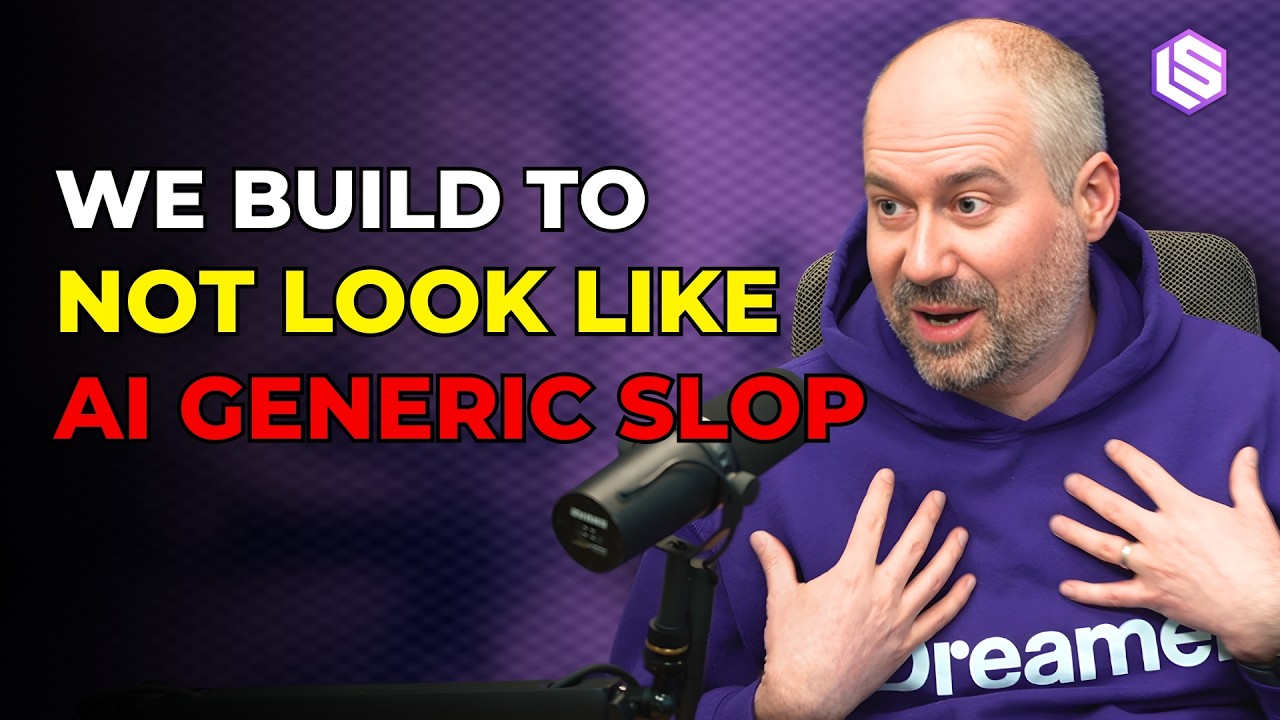
Dreamer: the Agent OS for Everyone — David Singleton
Mar 20, 2026 · 1:04:23
David Singleton, former Stripe CTO, introduces Dreamer, a consumer platform for discovering, building, and using AI agents and agentic apps centered on a personal Sidekick that acts as both companion and kernel-like traffic cop. He demonstrates building a conference schedule app in 25 minutes via natural language, a ski trip app that splits expenses, and tools like Gmail, Google Search, and live sports data feeds. Dreamer features an open tool ecosystem where builders get paid, a private waitlist skip at dreamer.com/latentspace, and a Builder-in-Residence program with a $10,000 prize for the best tool by mid-April. Singleton explains the OS model with Sidekick as kernel and agents as users enforcing data isolation and cross-agent coordination only through Sidekick. He shares insights on tiny-team building (six-person core, 17 total), hiring engineers who collaborate with coding agents, and LLMs' current lack of taste and creativity.
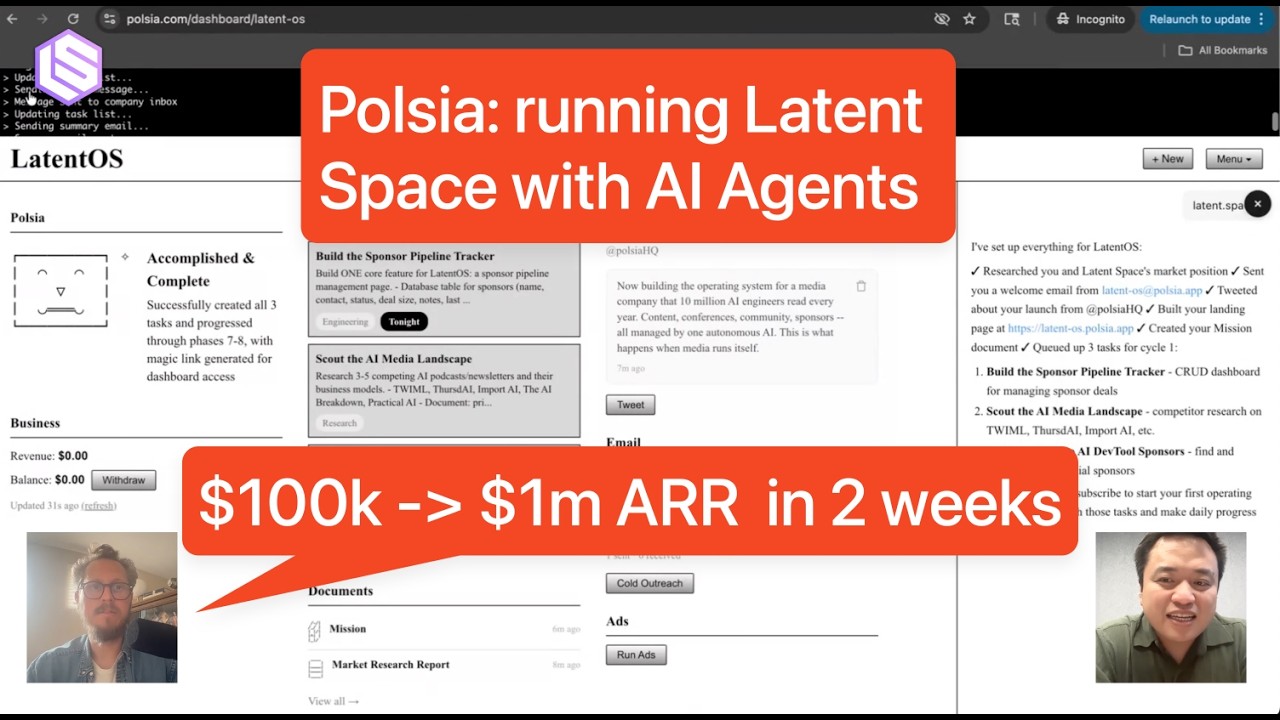
⚡️ Polsia: Solo Founder Tiny Team from 0 to 1m ARR in 1 month & the future of Self-Running Companies
Mar 1, 2026 · 41:56
Polsia, an AI that autonomously builds and runs companies, crossed $1M ARR in its first month, solo founder Ben Cera explains on Latent Space. The platform lets users give an idea and it handles product coding, marketing, cold outreach, Meta ads, and competitive research, sending daily emails summarizing progress. Cera built Polsia for himself starting in November, stripping features to keep onboarding simple—provisioning everything so users only need to reply to an email. He uses AI agents to run Polsia itself, from fixing bugs to responding to investor inbound, embodying the vision of a self-running company. The business model charges $50/month (near break-even on model costs) and takes 20% of any revenue the user's company generates. Cera emphasizes that the hardest part was deciding what not to build, and he sees Polsia as an Apple-like ecosystem for autonomous business operations.

The Agents Economy Backbone - with Emily Glassberg Sands, Head of Data & AI at Stripe
Oct 30, 2025 · 1:37:13
Emily Glassberg Sands, Head of Data & AI at Stripe, explains how Stripe builds economic infrastructure for AI, processing 1.4% of global GDP. Stripe's domain-specific foundation model runs inline on the charge path, detecting card-testing attacks on large users with detection rates improving from 59% to 97%. The Agentic Commerce Protocol (ACP) with OpenAI creates a shared standard for businesses to expose products to AI agents, adopted by Walmart and Sam's Club. Stripe helps AI companies combat new fraud vectors like free trial and refund abuse, and launched token billing to let wrappers price based on real-time inference costs. Internally, 85% of Stripes use LLM tools daily, with code generation and merchant understanding as key use cases. Emily argues AI companies grow 2-3x faster than SaaS, are twice as global, and that agentic commerce will expand consumption by removing time constraints for high-income consumers.

The new OpenAI Agents Platform: CUA, Web Search, Responses API, Agents SDK!!
Mar 11, 2025 · 25:39
OpenAI's Nikunj Handa and Romain Huet join host Swyx to announce their new Agents Platform, including the Responses API, Web Search, File Search, Computer Use tools, and an upgraded Agents SDK. The Responses API unifies Chat Completions and the Assistants API, offering free state storage for 30 days and acting as a strict superset for future agentic workflows; Chat Completions remains supported, but the Assistants API will sunset in first half 2026. Web Search is available both as a built-in tool in Responses and as a fine-tuned GPT-4o Search Preview model in Chat Completions, achieving 90% accuracy on simple QA compared to 30% for GPT-4o. The File Search tool gains metadata filtering, while Computer Use—powering OpenAI's Operator—enables browser automation via screenshots and action signals, described as the "GPT-2 of computer use." The Agents SDK builds on the Swarm experiment, adding type support, guardrails, handoffs, and tracing in the OpenAI dashboard, with plans to tie traces to evals and reinforcement fine-tuning.
Agents @ Work: Dust.tt — with Stanislas Polu
Nov 11, 2024 · 58:53
Stanislas Polu, co-founder of Dust.tt, argues that horizontal agent platforms—not vertical, single-use-case agents—will win the enterprise by letting non-technical employees build their own automation. A former OpenAI researcher who worked directly with Ilya Sutskever on formal mathematics and saw GPT-4 internally before ChatGPT, Polu left in 2022 to start Dust, now an open-source infrastructure layer that connects company data (Slack, Notion, GitHub) to LLMs and lets anyone create simple, instruction-driven agents. He contrasts Dust’s API-first, integration-heavy approach with LangChain’s open-source orchestration and Adept’s browser automation bet, insisting that most useful agent workflows require only a few tool calls and that function-calling quality (where GPT-4 Turbo still leads) matters more than model size. Dust achieves 88% daily active user penetration at some enterprise customers, and Polu predicts the first billion-dollar company run by a single person will emerge once platforms like Dust mature enough to let tiny teams scale to massive output.
Powered by PodHood