
Palantir
CompanyA company discussed on Latent Space.
5 episodes
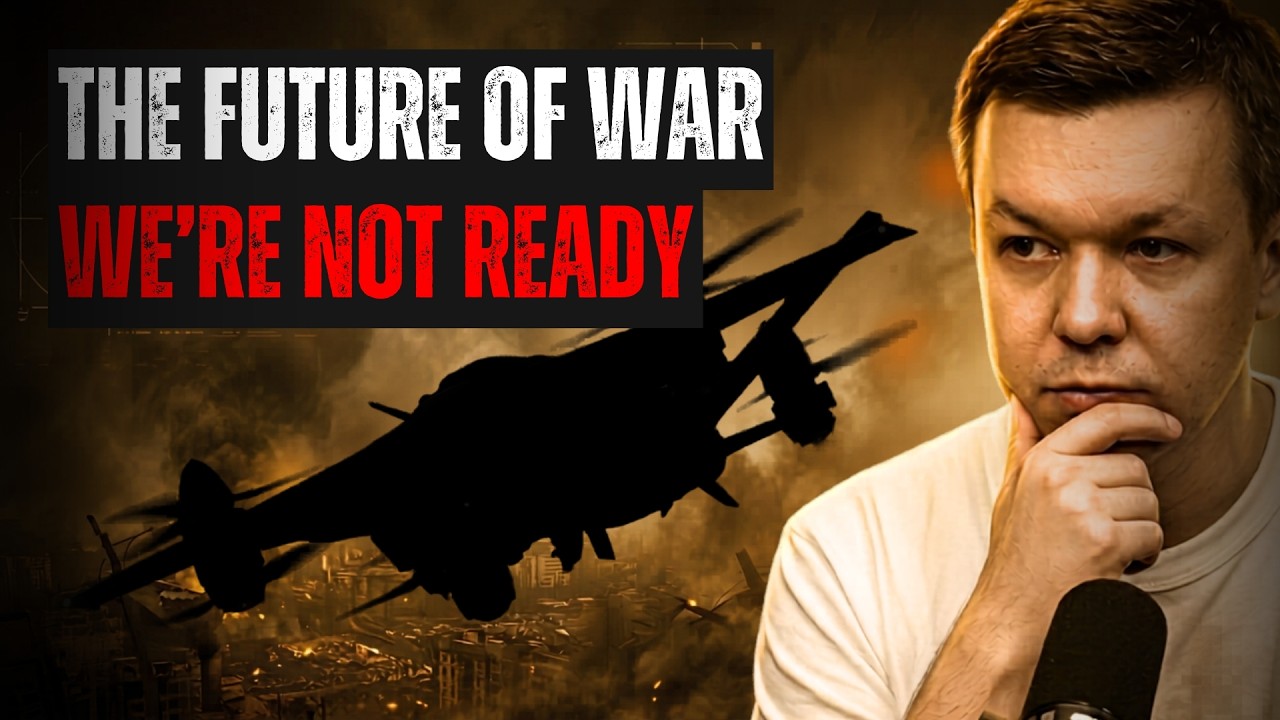
FPV Drones -The Next War Is Already Here — Yaroslav Azhnyuk, The Fourth Law & Noah Smith, Noahpinion
May 18, 2026 · 1:59:29
Yaroslav Azhnyuk (The Fourth Law) and Noah Smith explain how FPV drones now cause 70-80% of frontline casualties, dethroning artillery as the 'god of war.' Azhnyuk's firms produce thermal cameras, autonomy modules, and interceptors; level-one autonomy (terminal guidance) raised one brigade's mission success from 20% to 71% and extended the kill zone from 3 to 10 km. Fiber optic drones resist EW but cost $32/km and limit payload; AI autonomy removes the radio horizon problem. He warns China could build 4 billion FPV drones versus Ukraine's 4 million, and that the West lacks mass manufacturing, rare earth refining, and autonomy tech. Azhnyuk calls for a shift from costly platforms to cheap, software-defined drones, and for learning from Ukraine's battlefield experience.
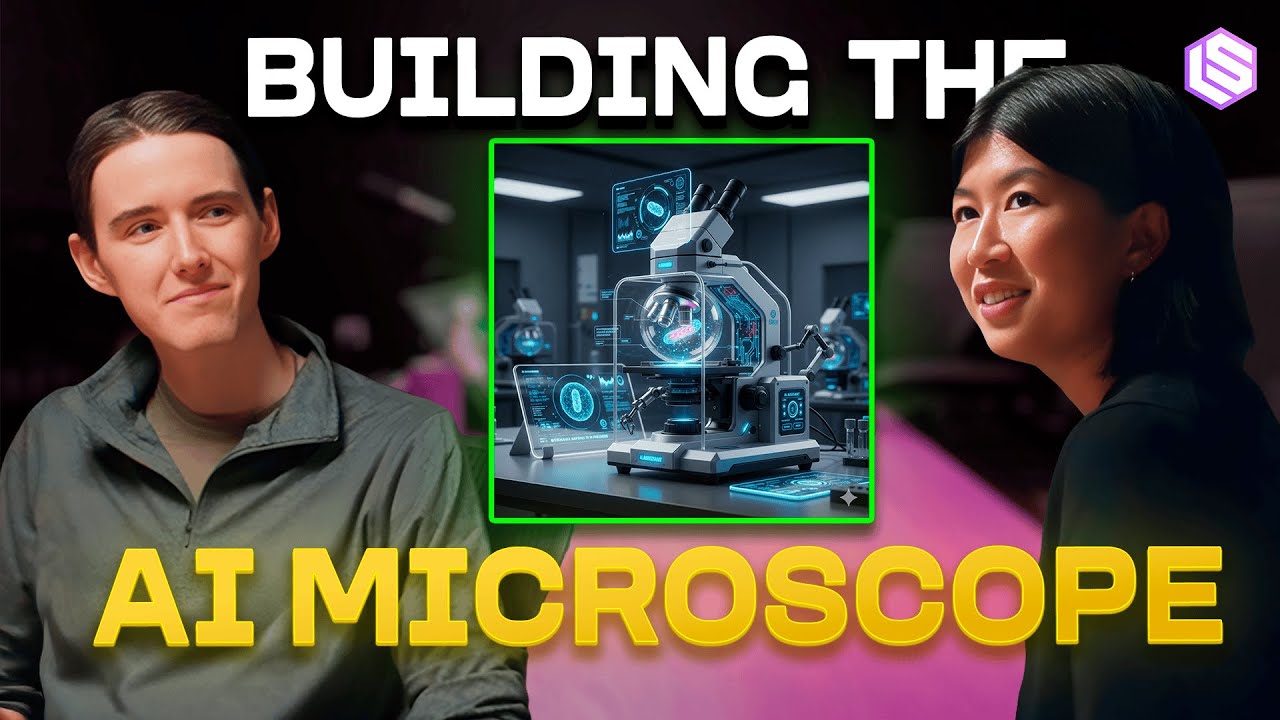
Goodfire AI’s Bet: Interpretability as the Next Frontier of Model Design — Myra Deng & Mark Bissell
Feb 5, 2026 · 1:08:41
Goodfire AI's Mark Bissell and Myra Deng argue that interpretability is the next frontier for model design, using their recent $150M Series B at $1.25B valuation to scale surgical edits of model internals beyond post-hoc poking. They explain how their platform detects behaviors like sycophancy and reward hacking, enabling targeted unlearning without wrecking capabilities. The episode covers real-world deployments from Rakuten's PII guardrails to life science partnerships with Mayo Clinic finding Alzheimer's biomarkers. Mark demonstrates real-time steering of a trillion-parameter Kimi K2 model, while Myra details how SAEs sometimes underperform probes for detection tasks. They envision a future where interpretability guides training so customization isn't brute-force guesswork.

[State of MechInterp] SAEs in Production, Circuit Tracing, AI4Science, "Pragmatic" Interp — Goodfire
Dec 31, 2025 · 21:48
Goodfire's Jack Merullo and Mark Bissell discuss the state of mechanistic interpretability at NeurIPS, arguing interpretability is now a practical tool for deployment in high-stakes industries like healthcare and finance. They introduce paint.goodfire.ai, which lets users paint directly into Stable Diffusion's internal concept map via unsupervised feature discovery. At Rakuten, Goodfire's interpretability-based PII detection proved 500x cheaper than GPT-5 as a judge with higher recall. Merullo presents a memorization vs. reasoning spectrum, showing factual recall sits between rote memorization and logical reasoning. They highlight cross-layer transcoders and circuit tracing for scaling interpretability across all layers. Neil Nanda's pivot to 'pragmatic interpretability' is seen as validation, not retreat, and Goodfire's Pasteur's Quadrant philosophy balances foundational research with applied use cases like novel biomarker discovery in genomics.

⚡️No, Don't Do Palantir for AI - Brendan Falk, Hercules (AUDIO FIXED)
Sep 18, 2025 · 35:08
Brendan Falk, founder of Zeus (now Hercules), explains why he abandoned his vision to become 'Palantir for AI' after six months of enterprise AI transformations. Targeting Global 2000 companies with $5–10M contracts, he found that each use case required custom development, messy data, and high ongoing maintenance, with work scaling poorly across contract sizes. He also faced existential threats from specialized vendors like Decagon and Sierra, who could outspend and out-focus on single use cases. Falk pivoted to Hercules.app, an AI website builder that ships production apps, white-labeling payments and email. He argues the app builder market (Wix, Squarespace, Shopify) will expand with AI, and that brand and ease will sustain higher margins than developer tools like Cursor.

Generating your AI Media Empire - with Youssef Rizk of Wondercraft.ai
Sep 20, 2023 · 1:28:55
Youssef Rizk, co-founder of Wondercraft.ai, explains how his five-month-old startup uses hyperrealistic AI voices to turn blogs, newsletters, and other content into podcasts, arguing that the application layer—not the underlying API—is the real moat. He details Wondercraft's origin from a failed sports-investing startup, the rapid MVP that generated $3K in one day, and the decision to build script generation and audio production tools rather than train its own models. Rizk also announces a new AI dubbing feature for video, discusses the challenges of scaling to 28 languages, and reveals that the company runs on just four people pushing two major features per week. The conversation covers the daily Hacker News Recap podcast—which reached Spotify's top 30 tech podcasts—and Rizk's view that AI-generated content must be clearly disclosed to avoid backlash.
Powered by PodHood