
Oracle
CompanyA company discussed on Latent Space.
6 episodes
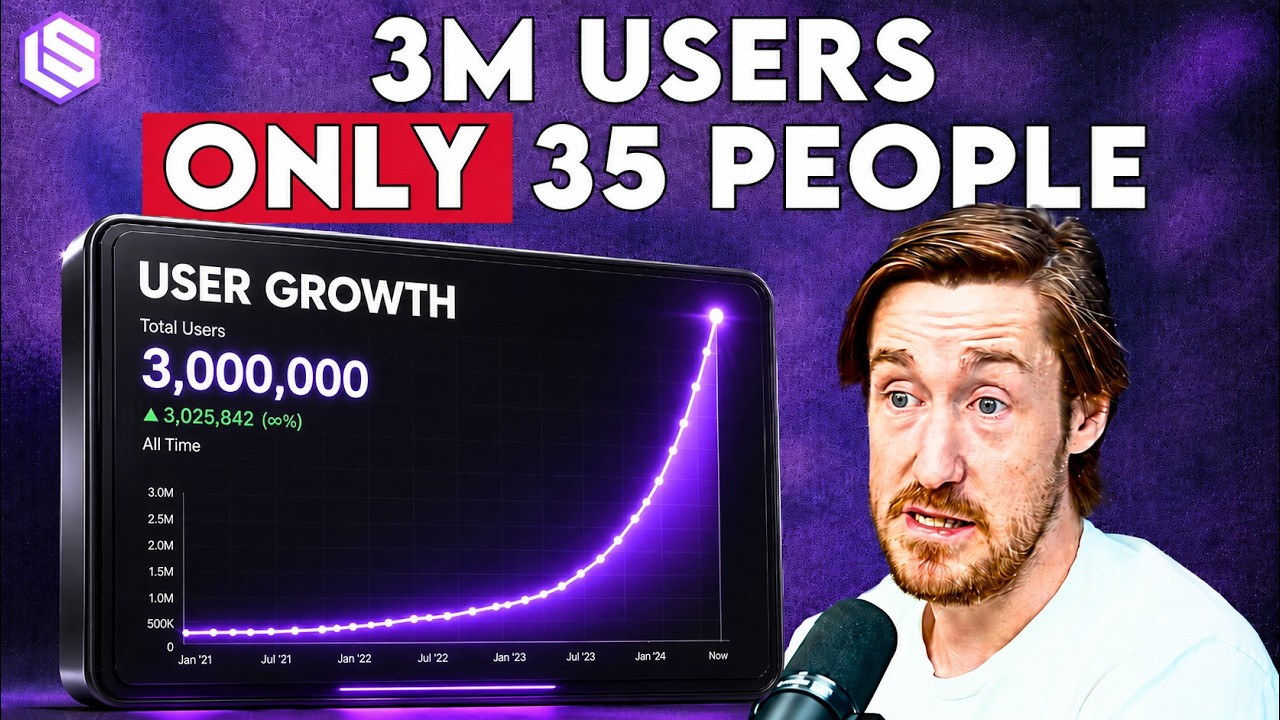
The Agent-Native Cloud: 3M Users, 100K Signups/Wk, Data Centers, & Death PRs — Jake Cooper, Railway
May 20, 2026 · 1:29:54
Jake Cooper, founder of Railway, argues that the next era of software infrastructure requires an agent-native cloud built on own-metal data centers, with primitives for version control, observability, and orchestration at 1000x scale. Railway grew from a slow six-year grind to 3 million users and 100,000 weekly signups with only 35 people, after surviving a $500,000/month loss on its free tier and rebuilding the business. Cooper explains that building its own data centers yields a three-month payback period and 70% margins, while using cloud bursting (AWS, GCP, Oracle) for overflow, and that data center debt is a better tool than venture debt for infra startups. He details how agents need CLIs with many flags, safe production forks, feature flags, and incremental rollouts, and why the pull request is dying in favor of prompt requests. Railway relies on Temporal for orchestration but may build its own workflow engine, and uses an internal tool called Central Station to aggregate customer feedback and incidents. Cooper advocates using agents to generate and review code instead of writing it by hand, and says focus on primitives—not GPUs—is key for now.
⚡️ How to turn Documents into Knowledge: Graphs in Modern AI — Emil Eifrem, CEO Neo4J
Apr 18, 2026 · 48:53
Emil Eifrem, CEO of Neo4j, joins host Shawn Wang to argue that AI systems need more than top-K chunk retrieval—they require graph-shaped context for accuracy, explainability, and developer productivity. GraphRAG combines vector search with graph traversal, starting semantically then expanding through relationships, which he says yields higher accuracy and auditability than opaque vector spaces. Neo4j now powers production AI at companies like Pfizer (over 60 million documents), Novo Nordisk, and 20 of North America’s 20 largest banks, with a mortgage lender seeing a 20% conversion lift. Eifrem describes four data sources for agentic systems: operational databases, cloud warehouses, agentic memory, and context graphs—the latter encoding institutional decision traces. He notes a recent shift where enterprises lead with generic text-to-Cypher instead of specialized functions, and highlights Neo4j's new `create-context-graph` starter kit for 22 industries, built to bootstrap context graphs and agent memory.

Retrieval After RAG: Hybrid Search, Agents, and Database Design — Simon Eskildsen of Turbopuffer
Mar 12, 2026 · 1:00:32
Simon Eskildsen, founder of Turbopuffer, explains how his obsession with the cost of vector search at Readwise led him to build a search engine on object storage and NVMe SSDs, cutting costs by 95% for customers like Cursor. He outlines the three conditions for a major database company—a new workload (AI-driven search), a new architecture (object storage first, no consensus layer), and evolving to support every query plan. Turbopuffer's architecture uses S3's strong consistency and compare-and-swap for metadata, avoiding stateful systems. Eskildsen shares how they won Notion by absorbing latency issues with dark fiber, and discusses the shift from single RAG queries to agents making many concurrent searches. He also describes the "P99 engineer"—obsessive, trade-off minded, able to bend software to first principles. Future plans include expanding full-text search, reaching Common Crawl scale, and eventually adding simpler OLAP queries.

Dylan Patel Explains the AI War While Cooking | In-Context Cooking
Feb 26, 2026 · 55:13
Dylan Patel, CEO of SemiAnalysis, argues hyperscalers like Google, Amazon, and Meta will sacrifice all profits to build AI infrastructure, spending $180–$200 billion in capex this year alone, because the AI adoption explosion—Claude Code driving 4% of GitHub commits in one month, Anthropic adding $2.5 billion monthly revenue—makes it a Pascal's wager: spend or die. He details how Taiwan's semiconductor geopolitics create endgame scenarios, from a KMT win placating China to full invasion, with TSMC's output critical. Patel explains Nvidia's paranoid founder Jensen Huang is responding to vertical integration threats from hyperscalers by diversifying into chips like CPX and Groq, but warns moats are shallow. The real bottleneck in AI progress? Semiconductors themselves: fabs take years to build, and no one can buy enough GPUs through 2028. He also predicts a massive AI backlash from the public and financial markets, as capital consumption outpaces revenue and labor displacement accelerates.

Claude Code for Finance + The Global Memory Shortage: Doug O'Laughlin, SemiAnalysis
Feb 24, 2026 · 2:07:40
Doug O'Laughlin, SemiAnalysis founder, explains his Claude Code awakening in December 2024: Anthropic's Opus 4.5 one-shotted tasks that used to take 24 hours, leading him to predict Claude Code will write 25–50% of all GitHub code by year-end (already 4% of commits in two weeks). He argues this marks the death of Excel and Bloomberg for analysts—'you can just do things'—but warns of a 'hygiene' crisis as junior analysts lose meta-learning. On the semiconductor side, O'Laughlin details a severe memory squeeze: HBM demand consumes 4× the DRAM capacity, DRAM prices could double again, and CXL is reviving as a workaround. He compares AI infrastructure buildout to the railroad boom (25% of U.S. gross fixed capital investment) and says Microsoft faces an innovator's dilemma—renting GPUs to 'barbarians at the gate' while its own office franchise is disrupted by Claude Code. Google's TPU v7 enjoys a temporary TCO advantage, but Nvidia's supply chain dominance (Jensen doing shots with SK and Samsung) will reassert with Rubin. O'Laughlin also reflects on his 2,800-mile Continental Divide Trail hike as essential self-mastery.

Truly Serverless Infra for AI Engineers - with Erik Bernhardsson of Modal
Feb 19, 2024 · 1:08:58
Erik Bernhardsson, creator of Annoy and Luigi, founded Modal to build a 'postmodern data stack' with a self-revisioning runtime that eliminates container cold starts and lets developers attach GPUs with a Python decorator. His serverless platform can fan out to thousands of GPUs within seconds, becoming a natural fit for GenAI workloads like Stable Diffusion and fine-tuning (e.g., RAMP fine-tuning 100 models in parallel). Modal differentiates from Replicate by targeting custom models and workflows, and from Modular by offering a managed cloud service rather than licensed software. Erik argues that buying hardware is inefficient for startups and that infrastructure founders must be willing to spend years on load balancing, page faults, and DNS. He shares how his IOI Gold Medal background shapes Modal's talent culture, hiring competitive programmers for complex scheduling and bin-packing problems.
Powered by PodHood