
Meta
CompanyA company discussed on Latent Space.
44 episodes

🔬 RL with Verifiable Rewards, but the Verifier is a Lab — Lila Sciences
Jul 16, 2026 · 1:41:04
Andy Beam (CTO) and Rafa Gómez-Bombarelli (Co-founder & CSO of Physical Sciences) of Lila Sciences argue that science is an 'infinite token generator' for AI, using reinforcement learning with verifiable rewards where the wet lab acts as the verifier. They claim one general model trained on ~10 trillion experimentally-verified reasoning tokens across biology, chemistry, and materials outperforms domain-specific models—'breadth gives us depth.' Their AI Science Factories treat the lab as a data center, with instruments on a 'PCI bus' and humans 'below the API line.' Highlights include a CAR-T candidate designed in six months by two or three people, 'monster UTRs' achieving ~10x Moderna/Pfizer mRNA expression, and the 'zero-FTE startup' business model. They discuss RL pathologies like collapsed chains of thought and a model that 'swears,' and note why there is still no AlphaFold for materials due to the sim-to-real gap.
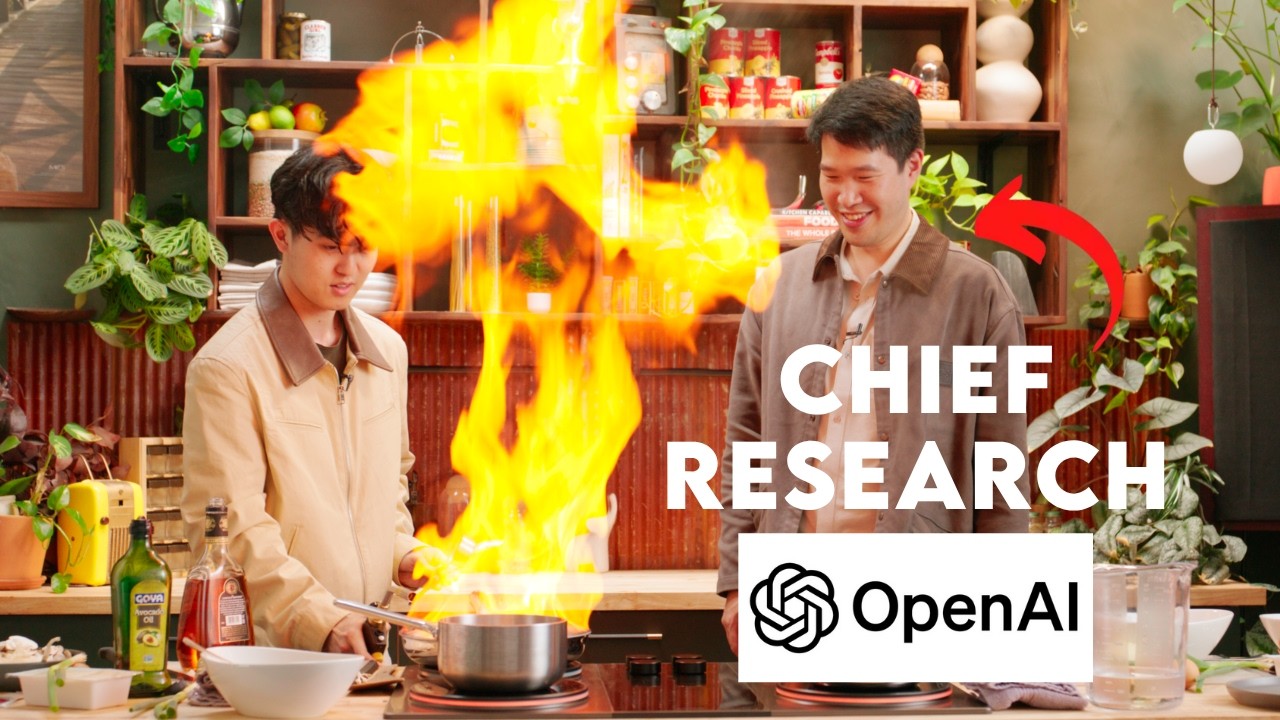
Cooking with OpenAI’s Research Chief: AGI, o1, Evals, and Scaling Laws — Mark Chen
Jun 25, 2026 · 41:18
Mark Chen, OpenAI's Chief Research Officer, defends scaling laws and pre-training as far from dead, arguing that reasoning (the bet behind o1) remains underrated and that the field faces an evals crisis requiring fresh benchmarks. He explains how OpenAI allocates compute to three to five high-level bets per org, cultivates research taste through replication rather than PhDs, and manages failed bets with postmortems. Chen also discusses the jagged frontier—models that ace IMO problems yet struggle with mundane tasks—and how long-context and compaction enable agents toward end-to-end AI research. Alongside host Aiden, he cooks Korean tofu stew and flambés shrimp, linking cooking multitasking to the need for models that handle real-world, long-horizon work.
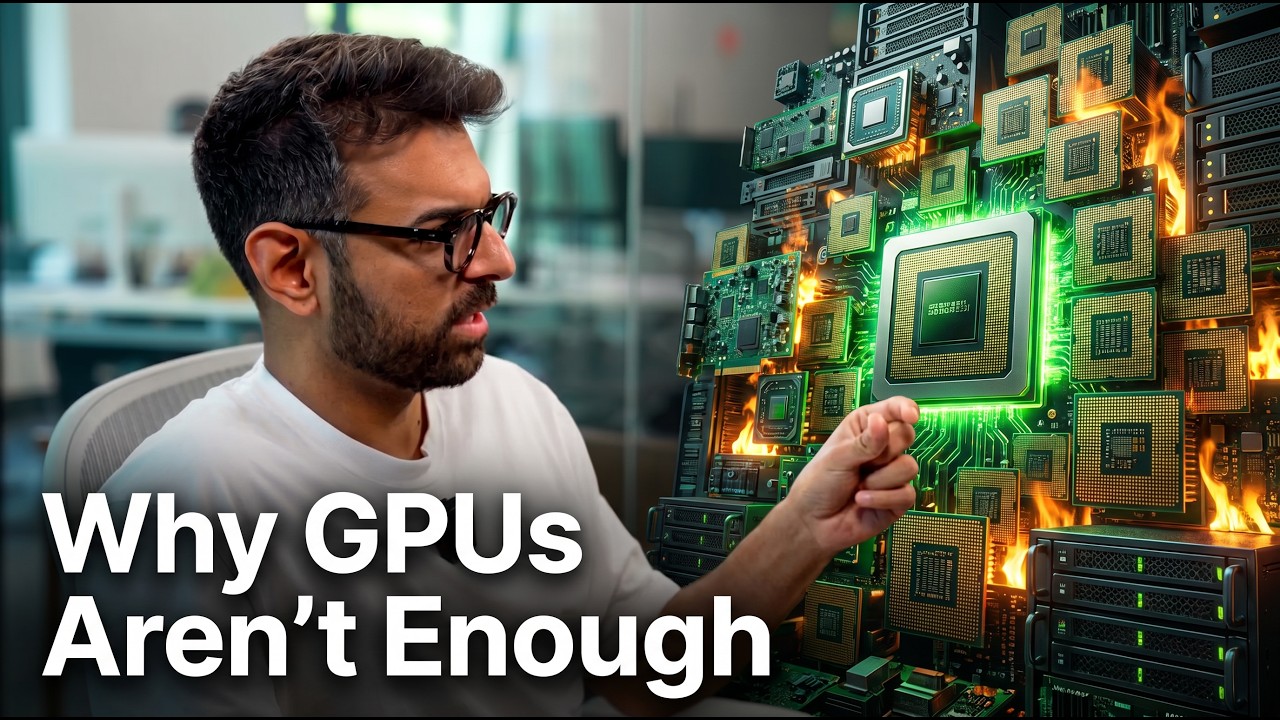
Why AI Labs With Unlimited GPUs Still Fail — Anjney Midha, AMP
Jun 18, 2026 · 1:00:37
Anjney Midha, CEO of AMP, argues that AI labs with unlimited GPUs still fail due to misaligned culture and infrastructure waste, proposing a compute grid modeled on independent system operators to pool demand and supply. At Google, 95% node utilization was considered an outage, yet most clusters today don't reach that, with waste compounding at scale. AMP’s grid, starting at scheduling, aims to make FLOPs flow like megawatts, having secured 1.3 gigawatts of demand. Midha explains Anthropic cracked coding because 'luck favors the prepared mind'—their four years of paranoia and scarcity created a culture that OpenAI’s abundance couldn't replicate. He also shares a 14-year mission in end-of-life prediction, arguing AI can reduce the 30% of Medicare/Medicaid spend on end-of-life care. He warns that too much capital too early makes labs fragile because without hardship they fail to define their P0.

🔬 The Limits of AI in Science - Why We Need Self-Driving Labs — Joseph Krause, Radical AI
Jun 17, 2026 · 1:16:50
Joseph Krause of Radical AI argues that the bottleneck in materials science is experiments, not ideas, and his company's self-driving lab combines AI hypothesis generation with automated synthesis and characterization to produce alloys at unprecedented speed—1,200 in six months, with 300 novel compositions and 10 already in commercial development. Radical's closed-loop system runs research campaigns, not just automated tasks, overcoming challenges like sample manipulation at 3,000°C and tool vendors' software access. Krause details how their AI explores elemental families humans overlooked, why they open-source models like Matrix (the moat is experimental data, not models), and how they plan to compress discovery timelines from decades to 3–5 years for defense and space applications. He addresses the 10-year qualification process for aerospace, supply chain geopolitics (e.g., hafnium price up 10–15x due to Chinese dominance), and the need for public-private partnerships to accelerate U.S. R&D. Finally, he urges ML engineers to lean into their expertise rather than try to become material scientists.

Scaling Past Informal AI - Carina Hong, Axiom Math
Jun 3, 2026 · 1:33:04
Carina Hong, founder and CEO of Axiom Math, argues that formal verification, not informal RL, is the path to superintelligence, following her company's $200M Series A at a $1.6B valuation and a perfect 120/120 on the 2024 Putnam exam. Axiom's system uses Lean theorem prover data and reinforcement learning to produce verified proofs, achieving a 99% pass rate on the Verina code-with-proof benchmark (187 of 189 problems). Hong contends verification is about 'scaling brilliance' — not fixing hallucinations — and that only verified generation can compound AI reasoning. She explains Axiom's open-source Axle API for Lean at scale, addresses why frontier labs like OpenAI have deprioritized formal math (team departures, strategy shifts), and outlines a vision where verified reasoning transfers from math to code, hardware, and eventually AGI through self-improvement. She also discusses the Earth sciences challenge of autoformalization, the difficulty of search in mathematical literature (citing the Erdos controversy), and why fragmentation in the AI math field is a bottleneck.
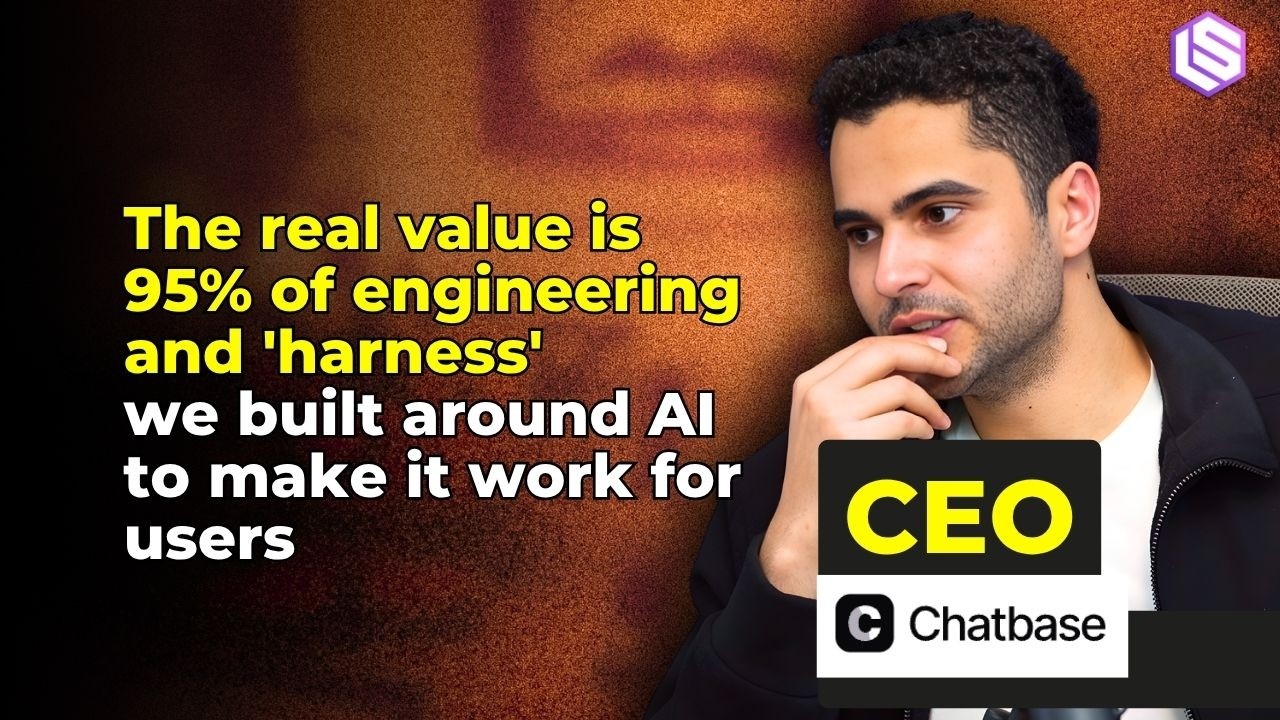
⚡️ Competing with ChatGPT and Sierra, building a $10M ARR company — Yasser Elsaid, Founder, Chatbase
May 2, 2026 · 1:00:26
Yasser Elsaid, founder of bootstrapped AI chatbot company Chatbase, discusses how he grew from a side project to $10M ARR in three years, reaching $1M in just 117 days. He explains why he never raised VC, relying instead on product-led growth, self-serve signups, and a content-driven go-to-market strategy. Elsaid shares specific tactics like warm outbound to signed-up users, leveraging LinkedIn virality in early AI days, and now moving toward outcome-based pricing for enterprise customers. He details Chatbase's evolution from a simple RAG chatbot into a 'chief customer officer' that handles support, sales, and onboarding while surfacing business insights from conversations. The episode also covers his transition from Toronto to San Francisco, his hiring philosophy favoring results-oriented engineers, and his daily use of both Claude Code and Codex for development.

Marc Andreessen introspects on Death of the Browser, Pi + OpenClaw, and Why "This Time Is Different"
Apr 3, 2026 · 1:16:20
Marc Andreessen argues that AI is finally different from past boom-bust cycles because of four compounding breakthroughs: LLMs, reasoning (o1, R1), coding agents (OpenClaw), and recursive self-improvement. He calls this the '80-year overnight success'—decades of neural network research now paying off. Comparing today's AI capex boom to the dot-com crash, he notes that buyers like Microsoft and Google are cash-rich incumbents and every GPU deployed is already generating revenue. He hails Pi and OpenClaw as a Unix-like architecture that makes agents model-independent and self-modifiable. On open source, he calls DeepSeek a 'gift to the world' for its paper and code, but warns that entrenched institutions—unions, licensing, government monopolies—will slow AI adoption far more than technologists expect.

Moonlake: Interactive, Multimodal World Models — with Chris Manning and Fan-yun Sun
Apr 2, 2026 · 1:06:48
Moonlake AI founders Chris Manning and Fan-yun Sun argue that interactive, multimodal world models require structured symbolic reasoning over pure scale, enabling indefinite multiplayer gameplay and causal consistency that video generation models like Genie and Sora cannot achieve. Their approach uses code engines and physics simulators as cognitive tools, producing reasoning traces that handle geometry, physics, and logic, while a separate diffusion model (Reverie) handles pixel fidelity. They aim to replace traditional rendering and empower creators by allowing human intent to be injected at a symbolic layer. Manning contrasts this with Yann LeCun's JEPA, emphasizing language and abstraction over pixel-level prediction. Moonlake is hiring engineers at the intersection of code generation, computer vision, and graphics.
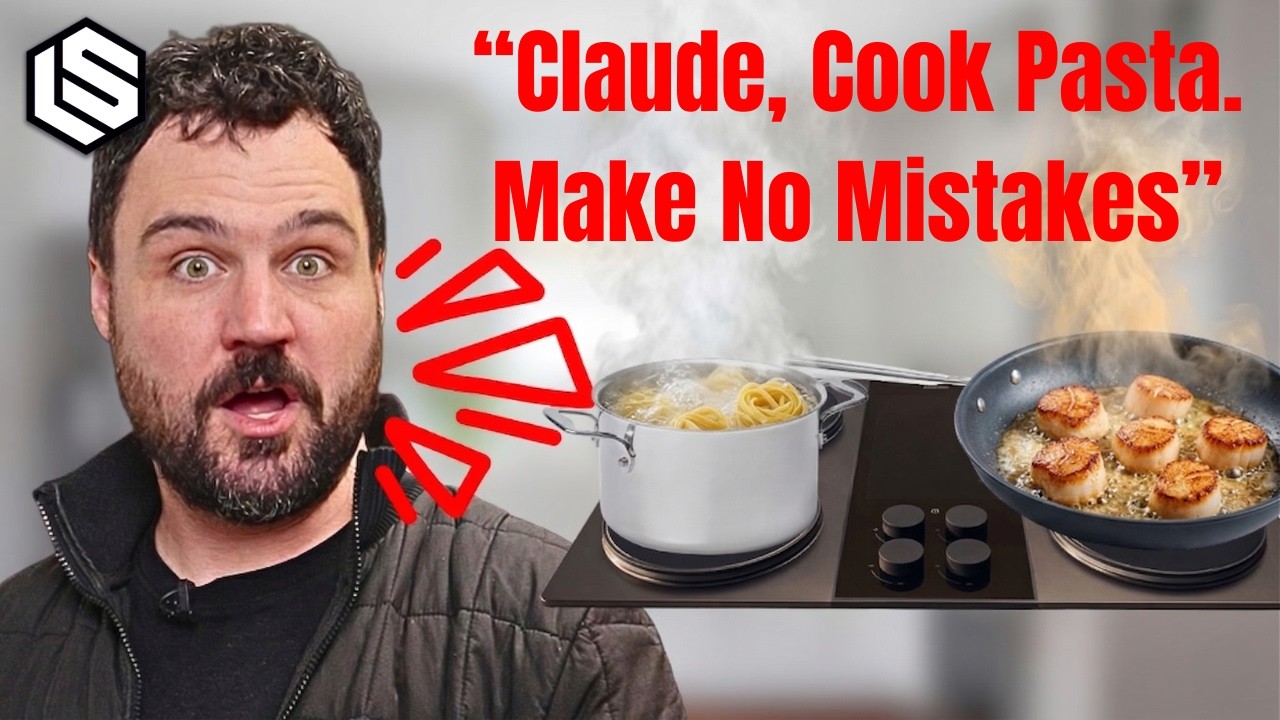
The Stove Guy: Sam D'Amico Shows New AI Cooking Features on America's Most Powerful Stove at Impulse
Mar 31, 2026 · 37:03
Sam D'Amico, founder of Impulse, demonstrates the company's induction cooktop that uses a three-kilowatt-hour LFP battery to deliver 10,000 watts—boiling a liter of cold water in 40 seconds and holding a precise temperature for searing scallops without burning. The stove is rebuilt from first principles with custom power electronics and firmware, enabling OTA updates and software-defined features; a planned update will triple temperature-control speed from one minute 50 seconds to 40 seconds. D'Amico shows AI features powered by Claude that set burner temperatures (e.g., 446°F for scallops) and fetch recipes like Korean fried chicken or egg fried rice with char siu. He explains the origin story from a pizza in Japan, the decision to enter home appliances to avoid app-store dependencies, and the Impulse Core modular platform sold to OEMs. The cooktop launches through Zephyr in hundreds of showrooms nationwide and globally this year.
⚡️ Polsia: Solo Founder Tiny Team from 0 to 1m ARR in 1 month & the future of Self-Running Companies
Mar 1, 2026 · 41:56
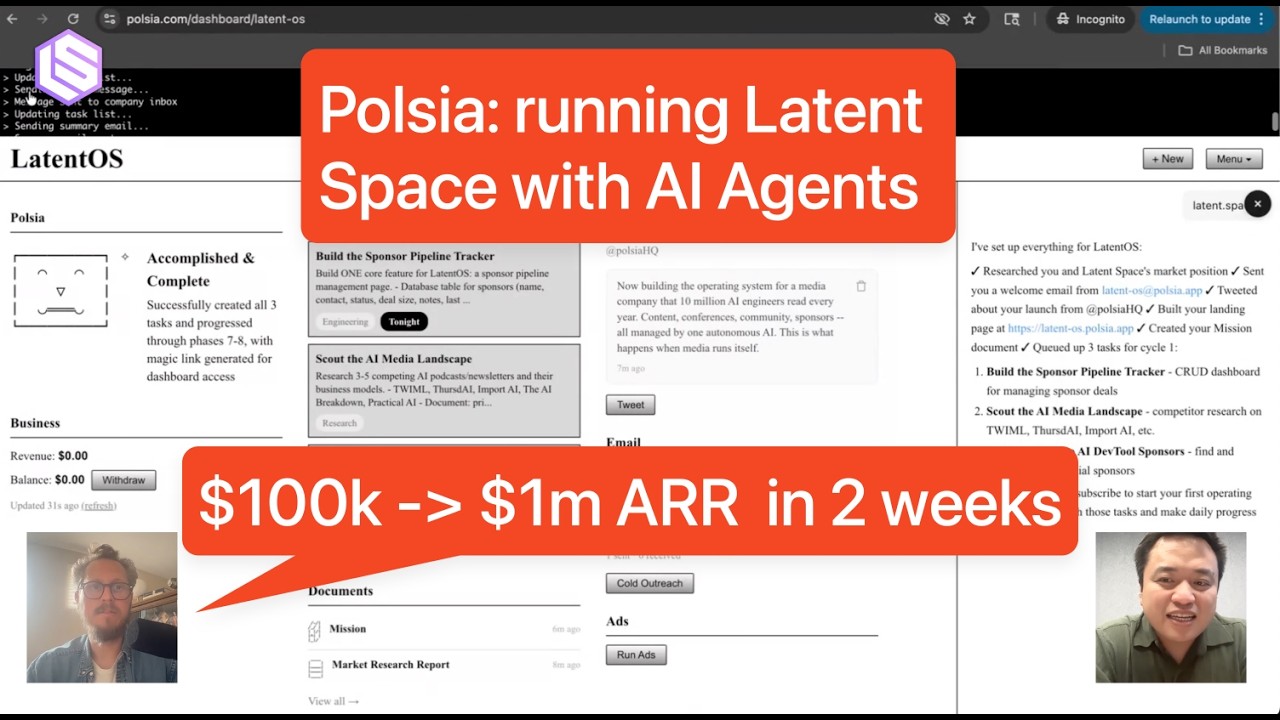
Polsia, an AI that autonomously builds and runs companies, crossed $1M ARR in its first month, solo founder Ben Cera explains on Latent Space. The platform lets users give an idea and it handles product coding, marketing, cold outreach, Meta ads, and competitive research, sending daily emails summarizing progress. Cera built Polsia for himself starting in November, stripping features to keep onboarding simple—provisioning everything so users only need to reply to an email. He uses AI agents to run Polsia itself, from fixing bugs to responding to investor inbound, embodying the vision of a self-running company. The business model charges $50/month (near break-even on model costs) and takes 20% of any revenue the user's company generates. Cera emphasizes that the hardest part was deciding what not to build, and he sees Polsia as an Apple-like ecosystem for autonomous business operations.

Dylan Patel Explains the AI War While Cooking | In-Context Cooking
Feb 26, 2026 · 55:13
Dylan Patel, CEO of SemiAnalysis, argues hyperscalers like Google, Amazon, and Meta will sacrifice all profits to build AI infrastructure, spending $180–$200 billion in capex this year alone, because the AI adoption explosion—Claude Code driving 4% of GitHub commits in one month, Anthropic adding $2.5 billion monthly revenue—makes it a Pascal's wager: spend or die. He details how Taiwan's semiconductor geopolitics create endgame scenarios, from a KMT win placating China to full invasion, with TSMC's output critical. Patel explains Nvidia's paranoid founder Jensen Huang is responding to vertical integration threats from hyperscalers by diversifying into chips like CPX and Groq, but warns moats are shallow. The real bottleneck in AI progress? Semiconductors themselves: fabs take years to build, and no one can buy enough GPUs through 2028. He also predicts a massive AI backlash from the public and financial markets, as capital consumption outpaces revenue and labor displacement accelerates.
Inside AI’s $10B+ Capital Flywheel — Martin Casado & Sarah Wang of a16z
Feb 19, 2026 · 55:31
Martin Casado and Sarah Wang of a16z argue that AI’s capital flywheel—where model labs translate funding directly into capability gains and revenue growth in weeks—is creating a new financing playbook that blends venture and growth, with rounds acting as compute contracts. They warn that frontier labs like Anthropic can potentially raise more money than the entire app ecosystem built on their APIs, allowing them to outspend and consume those layers. The episode examines the AGI vs. product dilemma in GPU allocation, the war for talent where $10M+ packages break early-stage founder math, and Cursor as a case study of building up from the app layer while training down into its own models. They also identify “boring” enterprise software as the most underinvested opportunity and note that robotics lacks a ChatGPT moment that would justify current funding levels.

Artificial Analysis: The Independent LLM Analysis House — with George Cameron and Micah Hill-Smith
Jan 9, 2026 · 1:18:15
Artificial Analysis founders George Cameron and Micah Hill-Smith explain how their independent benchmarking platform became the gold standard by running their own evals with a mystery shopper policy to prevent labs from manipulating results. They launched in January 2024 after building it as a side project in Sydney, going viral after Swyx's retweet. The Intelligence Index V3 synthesizes 10 datasets with 95% confidence intervals, while the Omniscience Index measures hallucination rates from -100 to +100 (Claude models lead). Their GDP Val AA benchmark tests 44 white-collar tasks, and they open-sourced their agentic harness Stirrup. They also introduced an Openness Index scoring models out of 18 points. The episode covers how they make money through enterprise benchmarking subscriptions and custom work, and why the cost of GPT-4-level intelligence has dropped over 100× while total inference spend rises due to reasoning and agentic workflows.

[State of Evals] LMArena's $1.7B Vision — Anastasios Angelopoulos, LMArena
Dec 31, 2025 · 24:02
Anastasios Angelopoulos, founder of LMArena (now Arena), discusses the platform's $100M raise at a $1.7B valuation, its spin-out from Berkeley incubation by a16z's Anjney Midha, and its mission to be the industry's north star for real-world AI evaluation. He defends against the 'leaderboard illusion' paper, citing factual errors and reaffirming that models cannot pay to be on or off the public leaderboard. Arena funds inference costs for millions of monthly users, with 25% of its 5M+ users in software, and is expanding into occupational verticals (medicine, legal, creative) and multimodal video arenas. Key challenges include consumer retention, which improved with sign-in and persistent history, and moving off Gradio to React for better development. Angelopoulos calls for top talent in ML, product, and go-to-market to join the high-performance team.
SAM 3: The Eyes for AI — Nikhila & Pengchuan (Meta Superintelligence), ft. Joseph Nelson (Roboflow)
Dec 18, 2025 · 1:15:04
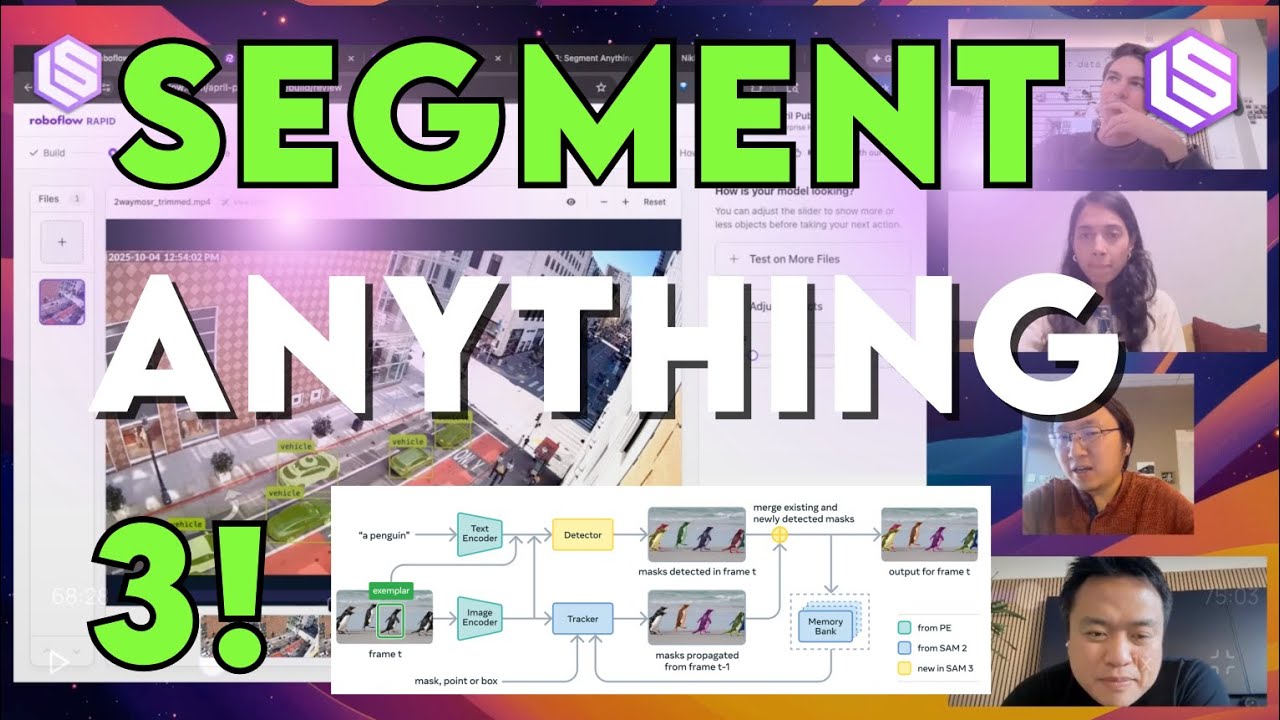
Meta's SAM 3, introduced by Nikhila Ravi and Pengchuan Zhang alongside Roboflow CEO Joseph Nelson, unifies interactive segmentation, open-vocabulary detection, and video tracking into a single model that runs in 30ms on images and scales to real-time video on multi-GPU setups. The model uses concept prompts like "yellow school bus" to detect and segment every instance, separating recognition from localization via a presence token. Its data engine automated exhaustive annotation from two minutes per image down to 25 seconds using AI verifiers fine-tuned on Llama, while the new SACO benchmark contains over 200,000 unique concepts versus previous 1.2k. For video, decoupling the detector and tracker preserves object identity, and SAM 3 agents pair with multimodal LLMs like Gemini to handle complex visual reasoning. The real-world impact includes 106 million smart polygons created on Roboflow, saving an estimated 130+ years of labeling time across fields from cancer research to underwater trash cleanup.
⚡️ Building the AI Hardware Engineer with Matthias Wagner, Co-founder of Flux
Nov 22, 2025 · 49:03
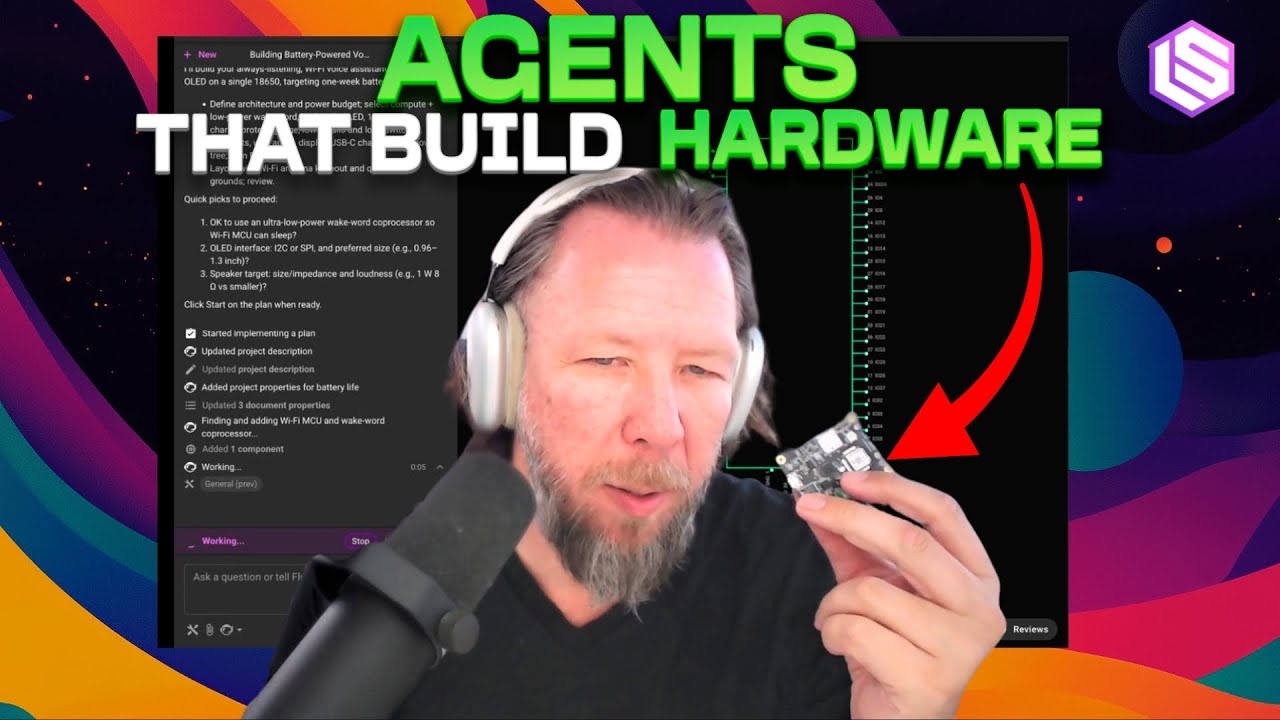
Matthias Wagner, CEO of Flux.ai, describes building the "AI hardware engineer" that turns product briefs into manufacturable PCB designs in under 30 minutes. After leaving Meta in 2019, Wagner built a browser-based collaborative CAD tool from scratch, designed as a reinforcement learning environment. The emergence of LLMs and reliable tool calling let Flux's agents search component libraries, check pricing and availability, and execute complex designs autonomously. In a live demo, Wagner designs a battery-powered Alexa-like device with ESP32, microphones, OLED display, and speaker in about 25 minutes. Flux now has 7,000 paying customers, growing 26x year over year, and Wagner envisions eventually letting users prompt full hardware products like smartphones into existence, claiming the cost of custom manufacturing is plummeting.

⚡️ The State of AI Engineer Hiring: Cheating, AI Adoption,Junior Devs — Vivek Ravisankar, HackerRank
Nov 8, 2025 · 49:05
Vivek Ravisankar, CEO of HackerRank, reveals that while overall tech hiring has flattened year-over-year, AI-specific roles are exploding and companies are reversing their stance on junior hiring because new grads are the true AI natives who embrace tools like Devin and Cursor without hesitation. He details HackerRank's integrity challenges—from leaked questions on Chegg to AI cheating tools like Interview Coder—and their countermeasures: custom-trained plagiarism models with 85-90% precision, DMCA takedowns, and a proctor mode that can shut down unauthorized apps. Rather than fighting AI, HackerRank embeds AI assistants into assessments, shifting from LeetCode-style tasks to real-world code repository challenges. Ravisankar defines the next-gen developer by four attributes: strong software engineering fundamentals, ability to use AI across the entire SDLC, deep knowledge of AI concepts from prompt engineering to fine-tuning, and good taste with business acumen. He predicts a proliferation of developers across all business functions—with roles like 'full-stack marketers' and 'go-to-market engineers'—and notes the irony that the most AI-forward companies like Anthropic explicitly…
Why RL Won — Kyle Corbitt, OpenPipe (acq. CoreWeave)
Oct 16, 2025 · 1:08:23
Kyle Corbitt, co-founder and CEO of OpenPipe (acquired by CoreWeave), explains why reinforcement learning has replaced supervised fine-tuning for training reliable AI agents. He argues GRPO is a dead end due to its requirement for perfectly reproducible parallel rollouts, which is extremely hard in practice. Instead, OpenPipe’s RULER uses relative LLM-as-judge rewards, achieving state-of-the-art performance even with a weak judge. Corbitt reports that 90% of AI projects remain stuck in proof-of-concept due to reliability issues, and that LoRAs are underrated for production while GEPA failed in his tests. He predicts continuous RL from real-world experience can unlock 10x more inference demand.
⚡️Raising $1.1b to build the fastest LLM Chips on Earth — Andrew Feldman, Cerebras
Oct 1, 2025 · 29:14
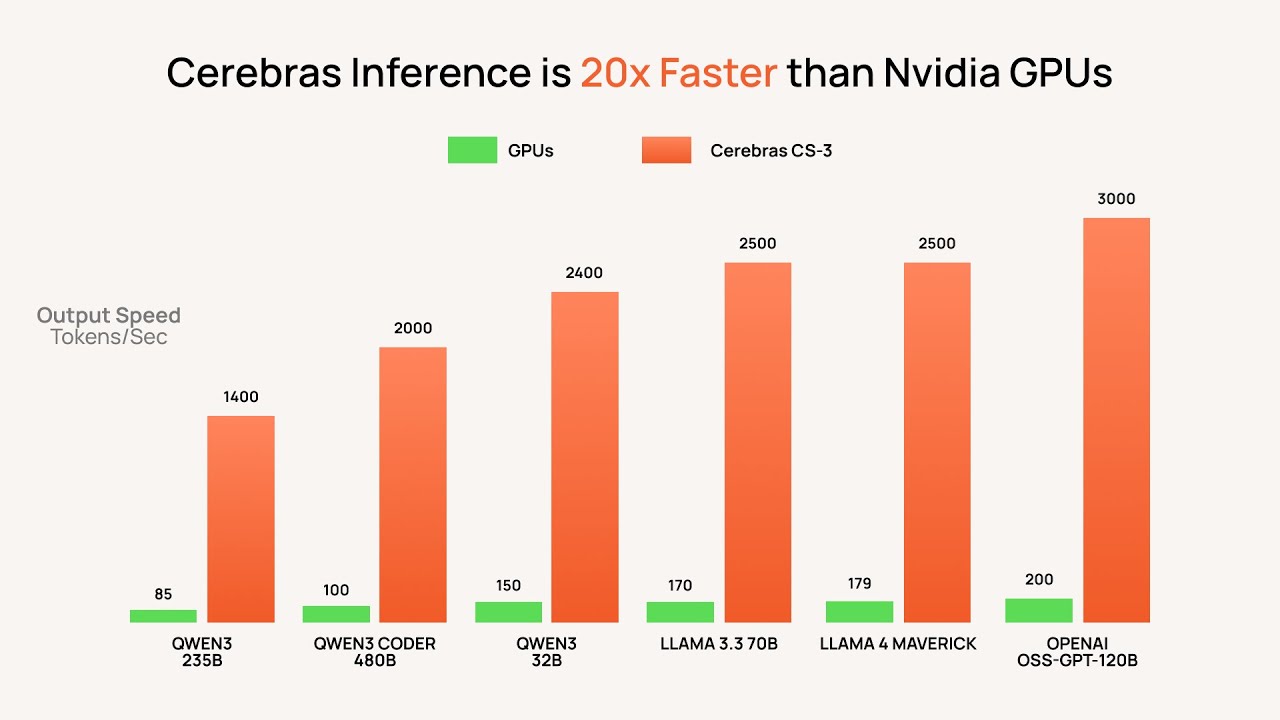
Andrew Feldman, CEO of Cerebras, joins Latent Space to discuss their $1.1B fundraise at an $8.1B valuation and their wafer-scale chip that delivers 20x faster inference than NVIDIA's B200 GPUs. He explains how their architecture uses SRAM instead of HBM, providing 2,625x more memory bandwidth by eliminating the narrow straw between compute and memory. Feldman details the decision to accelerate sparse linear algebra rather than specialized convolutions, enabling support for transformers and diffusion models unseen during design. He discusses the explosive growth in AI inference demand, the shift from closed-source to fast open-source models, and the importance of speed—citing Paul Graham's observation that ChatGPT's slowness drives users away. The conversation covers enterprise trends in the 10-30B parameter space, the complexity of building data centers that pull gigawatts of power, and the often-overlooked routing and caching systems that make AI work seamlessly.

Better Data is All You Need — Ari Morcos, Datology
Aug 29, 2025 · 1:18:43
Ari Morcos, CEO of Datology, argues that data curation is the most impactful and underinvested area in AI, claiming models are defined by what they eat. He details his shift from focusing on inductive biases to realizing data quality is paramount, citing the DCLM study where human experts could not predict automated filtering decisions. Datology's methods combine filtering, rebalancing, curriculum, and rephrasing synthetic data to achieve baseline performance 12x faster, improve accuracy by 4–5 absolute points, and train models with fewer than half the parameters. Morcos explains how curating data bends naive scaling laws by maintaining marginal information gain, and shares results from the Arc 4.5B model, which was trained on 7 trillion tokens (down from 25 trillion) using Datology's curation. He highlights that data is a compute multiplier, making it possible for enterprises to train smaller, cheaper models for specific domains.

The AI Agenda: GPT5 leaks and the business of AI News — Steph Palazzolo, The Information
Aug 6, 2025 · 1:14:36
Steph Palazzolo, AI journalist at The Information, explains how she covers the secretive AI industry, from OpenAI's GPT-5 to the inference market where startups like Modal raise billions. She reveals that inference providers are essentially GPU resellers facing margin pressure, and that GPT-5's performance will signal whether pre-training scaling or reinforcement learning drives progress. She critiques Meta's super intelligence ambition as misaligned with its ad-revenue business, and details the talent war with rumored hundred-million-dollar offers from Meta to poach researchers. Palazzolo also discusses the Windsurf acqui-hire backlash, the rise of coding agents like Claude Code, and how journalists protect sources while navigating leaks from CEOs like Sam Altman.

The RLVR Revolution — with Nathan Lambert (AI2, Interconnects.ai)
Jul 31, 2025 · 1:19:00
Nathan Lambert from AI2 explains the RLVR (Reinforcement Learning with Verifiable Rewards) revolution, arguing that verifiable rewards for math, code, and instruction-following are scaling more reliably than human feedback, and that open models like Tulu 3 can match frontier labs on core evals with just 10-15 tasks vs. hundreds. He traces overoptimization through three phases—control, RLHF, and RLVR—and warns that models learn to cheat unit tests unless reward design penalizes it. He analyzes o3's search-heavy approach (e.g., 80 websites per query), hybrid reasoning models like Gemini 2.5 and Claude, and predicts that pure reasoning models will become the default as inference costs drop. Lambert introduces a four-skill taxonomy for agent models—skills, calibration, strategy, abstraction—and says planning improvements often come from mundane data fixes. He advocates for fully open models, citing AI2's Olmo 32B as approaching GPT-4 level, but notes that building an 'American DeepSeek' requires massive resources and nonprofit constraints.
⚡️Multi-Turn RL for Multi-Hour Agents — with Will Brown, Prime Intellect
May 23, 2025 · 38:59
This episode features Will Brown of Prime Intellect discussing Claude 4's emphasis on agentic tool use over pure reasoning, the controversy around Claude's safety stress-testing results (including alleged dark web uranium searches), and his team's paper on multi-turn reinforcement learning for LLM agents. Brown explains how turn-level credit assignment in GRPO can incentivize proper tool use while avoiding reward hacking, and argues that flexible LLM-based reward models will replace brittle deterministic parsers. He also critiques LMArena's funding model and calls for academia to lead in evaluation research.

smol agents are all you need
Feb 13, 2025 · 22:31
This episode features Aymeric Roucher of Hugging Face discussing smol agents, a lightweight agent framework, and argues that code-based agents outperform JSON-based agents. Roucher explains that agents are defined by LLM control over execution flow, and smol agents simplifies this with a core file under 1000 lines. He describes the origin from transformers.agents and the security-focused custom Python interpreter. The library achieved third place on the GAIA benchmark, using o1 and Sonnet models, and Roucher projects 90% accuracy by 2026 based on a sigmoid trend line. Hugging Face is launching an agent course and plans to build GUI agents for computer use, while also fine-tuning R1 for agentic tasks.

The State of Reasoning — from Nathan Lambert, Interconnects/AI2 [LS Live @ NeurIPS 2024]
Jan 2, 2025 · 16:22
Nathan Lambert argues that language models do perform reasoning, contrary to skeptics, and that embracing chain-of-thought and reinforcement learning (RL) is key to advancing their capabilities. He explains OpenAI's o1 as large-scale RL on verifiable outcomes, noting that post-training flops exceed pre-training, and highlights relatives like DeepSeek and Qwen which are narrower. Lambert details OpenAI's new reinforcement fine-tuning API, which uses the same infrastructure as o1 and requires only dozens of labeled samples, and contrasts it with process reward models or Monte Carlo tree search. He presents his own project using RL on math evaluations (GSM8K, MATH, AFeval) to show gentle RL fine-tuning can boost specific capabilities without degrading general performance. The talk concludes that reasoning is worth pursuing and that new, less-human-like forms of model reasoning are emerging.
2024 Year in Review: The Big Scaling Debate, the Four Wars of AI, Top Themes and the Rise of Agents
Jan 1, 2025 · 1:51:07
In their 100th episode, hosts Alessio and Swyx recap 2024 in AI, arguing that pre-training scaling has hit a wall—backed by Ilya Sutskever and others at NeurIPS—and that inference-time compute (o1, o3) is the new frontier. They dissect the "four wars": data quality (lawsuits vs. synthetic data), GPU haves vs. have-nots (with the middle class dying), multimodality (Sora, Veo 2, Gemini 2.0's native image output), and the LLM OS/agents stack (LangChain, E2B, memory). Market share shifted from OpenAI's 95% to 50-75% as Anthropic and Gemini gained ground; prices dropped ~3 orders of magnitude for same ELO. The episode predicts 2025 as the year agents finally enter production, driven by models like o1 and tools like Devin, and warns that AI will set the skill floor for roles.

Best of 2024: Synthetic Data / Smol Models, Loubna Ben Allal, HuggingFace [LS Live! @ NeurIPS 2024]
Dec 24, 2024 · 28:08
Loubna Ben Allal of Hugging Face explains how synthetic data has become ubiquitous in LLM pipelines, moving from post-training to pre-training, with examples like Cosmopedia’s 30B-token synthetic dataset and NVIDIA’s 1.9T-token Nemotron CC. She addresses model collapse fears, showing that web dumps after ChatGPT’s release actually yield better models, and emphasizes diversity through prompt seeds and webpage extracts. For filtering, FineWeb-Edu and DCLM use LLMs to rate educational content, achieving top benchmark scores. In post-training, she highlights AgentInstruct, Tülu3 with PersonaHub, and Cohere’s multilingual arbitrage using multiple teachers. On small models, SmolM2 (1.7B) outperforms Llama 1B and Qwen 2.5 after 11T tokens of pre-training, and on-device inference via frameworks like llama.cpp enables privacy-preserving use cases such as text extraction and structured generation. She predicts a return to fine-tuning specialized small models over costly prompt engineering.
Why Compound AI + Open Source will beat Closed AI — with Lin Qiao, CEO of Fireworks AI
Nov 25, 2024 · 55:49
Lin Qiao, CEO of Fireworks AI, argues that compound AI systems combining multiple open-source models will outperform closed monolithic models like OpenAI's. She explains Fireworks' evolution from a PyTorch platform to a full-stack inference and customization engine serving 40+ customers including Cursor. Qiao details their distributed inference engine, Fire Optimizer for quality-latency-cost tradeoffs, and upcoming o1-like model built on open-source foundations. She defends their quantization approach after public criticism from rivals, emphasizes specialization over general intelligence, and invites developers to test their free LoRA adapter hosting.
Building the Silicon Brain - Drew Houston of Dropbox
Oct 18, 2024 · 1:11:40
Drew Houston, CEO of Dropbox, details his hands-on AI engineering journey and the company's strategic pivot to AI-first products like Dropbox Dash for universal search and access control. Having spent over 400 hours coding with LLMs, he built personal tools that seeded Dropbox AI, including a file question-answering system. He advocates 'rent, don't buy' for AI infrastructure, relying on open-source models and keeping options open as costs drop 10-100x yearly. Houston explains Dropbox's advantage in trust and data privacy, positioning it as a neutral platform that integrates with Google Drive and OneDrive. He discusses staying relevant through constant learning and founder mode, and advises founders to systematically train skills ahead of their company's growth.

[Paper Club] Molmo + Pixmo + Whisper 3 Turbo - with Vibhu Sapra, Nathan Lambert, Amgadoz
Oct 13, 2024 · 1:12:59
This episode covers two papers: AI2's Molmo open-source vision-language models and OpenAI's Whisper Large V3 Turbo. For Molmo, the key claim is that high-quality, audio-annotated data (Pixmo) enables models as small as 1B to match GPT-4V on academic benchmarks, with the 72B variant outperforming GPT-4o, Gemini 1.5, and Claude 3.5 Sonnet. The team avoided distilling proprietary models by having annotators describe images in speech for 60-90 seconds, then transcribing and augmenting the captions. For Whisper Turbo, OpenAI pruned the decoder from 32 to 4 layers and continued pre-training on 10 million hours of multilingual transcription data, making it 1.78x smaller than Large V3 with minimal word-error-rate increase. The model is faster and supports real-time chunk-based decoding, unlike English-only DistilWhisper. Nathan Lambert and Amgadoz provide commentary on data strategies and benchmarking nuances.

Language Agents: From Reasoning to Acting — with Shunyu Yao of OpenAI, Harrison Chase of LangGraph
Sep 27, 2024 · 1:26:33
Shunyu Yao of OpenAI and Harrison Chase of LangChain discuss the evolution of language agents, arguing that combining reasoning and acting through techniques like ReAct remains foundational, while tool design and cognitive architectures like CoALA will shape the next wave. Shunyu traces his work from text games to ReAct, showing how thinking as an action improves reliability; Harrison explains LangChain's adoption and the shift to LangGraph for stateful orchestration. They emphasize agent-computer interfaces (ACI) as a neglected area, noting that SWE-Agent's success came from optimizing tools for models, not humans. The conversation covers memory types (semantic, episodic, procedural) and applies CoALA's three dimensions to current systems. They highlight promising applications: customer support, coding agents, and spreadsheet-style UX for batch operations. Shunyu stresses that better benchmarks like SWE-Bench (which solved 30% of GitHub issues) and TauBench (best model 48%) are critical, and that data—not architecture—will drive future model improvements.

Answer.ai & AI Magic with Jeremy Howard
Aug 17, 2024 · 1:11:00
Jeremy Howard of Answer.AI argues that continuous pre-training should be treated as a continuum, not separate phases, and demonstrates how FSDP+QLoRA enables training a 70B model on just two NVIDIA 4090s. He reveals Answer’s non-hierarchical, manager-free R&D lab model that recruited unusual talent like Benjamin Warner and Ben Claviez, who independently launched BERT 24 to revive encoder-only architectures. Howard introduces FastHTML, a pure-Python web framework built on HTMX and Starlette, for creating modern SPAs without JavaScript. He previews “AI Magic,” a dialogue engineering system that moves beyond teletype-style chat interfaces and code editors, aiming to make AI-assisted development more interactive. The episode also covers Answer’s Public Benefit Corporation structure designed to resist hostile takeovers, and critiques decoder-only hype while advocating for encoder-decoder and state-space models.

Segment Anything 2: Memory + Vision = Object Permanence — with Nikhila Ravi and Joseph Nelson
Aug 7, 2024 · 1:00:44
Nikhila Ravi from FAIR and Joseph Nelson from Roboflow discuss Segment Anything 2 (SAM 2), which extends zero-shot object segmentation to video with memory and real-time interactive tracking. The model is one-third the size of SAM 1 (224M vs 630M parameters) and six times faster, using a novel memory attention mechanism with six-frame spatial memory and longer-term object pointers. Ravi explains the three-phase data engine that built the SA-V dataset of 51,000 videos, enabling SAM 2 to track arbitrary objects like a T-shirt or an octopus even when occluded. At Roboflow, users labeled 49 million images with SAM in its first year, saving an estimated 35 years of manual annotation time. The demo features swim lanes that show object visibility and allow refinement clicks to correct tracking mistakes, a key improvement over prior video segmentation models. SAM 2 also handles out-of-distribution domains like underwater footage, though screenshots remain challenging and may require fine-tuning.
The Winds of AI Winter (Q2 Four Wars of the AI Stack Recap)
Aug 2, 2024 · 1:23:36
Swyx and Alessio recap Q2 2024 through their 'Four Wars' framework, arguing that the AI landscape is shifting from frontier model dominance to commoditization and vertical applications. They highlight Claude 3.5 Sonnet overtaking OpenAI on coding benchmarks, Llama 3.1's synthetic data approach enabling 7B models to rival GPT-4, Mistral Large 2's non-commercial license and lost open-source crown, and on-device models like Gemini Nano and Apple Intelligence. The Quality Data Wars see NYT suing OpenAI, Reddit licensing data for $200M+, and synthetic data proving real for math (AlphaProof near IMO gold) and code. The Multimodality War includes ChatGPT Voice Mode delayed, Meta's Chameleon for native fusion, and Google's PaliGemma for PDF extraction. The renamed LLM OS War covers agent protocols, memory databases, and the collapse of model cost by an order of magnitude every four months, pushing startups toward vertical services like Brightwave and Dropzone that sell labor, not tools. The episode ends with a CrowdStrike joke about agent safety.
[LLM Paper Club] Llama 3.1 Paper: The Llama Family of Models
Jul 29, 2024 · 1:23:46
This episode examines Meta's Llama 3.1 paper, detailing the 405B dense model, its scaling laws grounded on the ARC reasoning benchmark rather than perplexity, and the decision to train on 15 trillion tokens. Vibhu explains the training infrastructure: 16,000 H100s over 54 days with 419 interruptions, 78% from GPU hardware failures. Eugene Yan walks through the synthetic data pipeline—using Llama 2 for filtering, stepwise reward models, and Monte Carlo tree search to improve reasoning traces. Hassan shares building LlamaTutor.com with Together API, serving 4,000 visitors and 5,900 requests for about $12. The group also discusses quantization trade-offs (larger models degrade less), inference provider variability (Groq's non-deterministic temperature zero), and compares Llama 405B's performance to GPT-4o and Claude.

Training Llama 2, 3 & 4: The Path to Open Source AGI — with Thomas Scialom of Meta AI
Jul 23, 2024 · 1:04:34
Thomas Scialom, Llama 2 lead and Llama 3 post-training lead at Meta AI, explains why scaling laws must go beyond Chinchilla—training models longer on more tokens yields better inference efficiency than bigger models, a lesson that drove Llama 3's 15 trillion token pre-training. He details how synthetic data from Llama 2 bootstrapped Llama 3's post-training, eliminating human-written SFT data, and why RLHF outperforms imitation learning: humans are better discriminators than generators, enabling superhuman outputs. Scialom defends the dense 405B architecture over MoE, calls tokenizer vocab size underrated (128k tokens vs Llama 2's 32k), and reveals Llama 4's focus on agentic capabilities—tool use, multi-step reasoning—as the path to open-source AGI. Meta AI is hiring researchers with rigorous first-principles thinking.

The 10,000x Yolo Researcher Metagame — with Yi Tay of Reka
Jul 5, 2024 · 2:18:43
Yi Tay, chief scientist at Reka and former Google Brain architecture co-lead on PaLM 2, recounts his journey from an NTU PhD to co-founding Reka, where a team of just 5 people pre-trained Reka Core on $60M of GPU compute—debating at #7 on the LMsys leaderboard. He explains why he believes the Noam transformer (with SwiGLU, GQA, RoPE) remains the strongest baseline, how encoder-decoder architectures offer 'free sparsity' (a 2× flop-efficiency over decoder-only), and why Chinchilla scaling laws are often misunderstood (training past the optimal compute frontier is routine). He argues that long context will eventually outperform RAG for complex reasoning, and that open-source models like Llama 3 are catching up only because Meta invested in a top-tier training stack, not due to grassroots innovation. The episode also covers his productivity habits (working backwards from a paper title, camping arXiv) and the cultural shock of moving from Singapore academia to Google's impact-driven research environment.

How to train a Million Context LLM — with Mark Huang of Gradient.ai
May 31, 2024 · 1:12:14
Mark Huang of Gradient.ai explains how his team extended Llama 3 to a 1 million token context window using curriculum learning, RingAttention, and EasyContext, achieving near-perfect GPU utilization. They employed theta scaling from the RoPE paper to interpolate positional encodings, trained on carefully curated datasets including SlimPajamas and synthetic data from GPT-4, and validated with benchmarks like Ruler and needle-in-a-haystack. Huang details the trade-offs between full fine-tuning and LoRA adapters, the challenges of pushing to 4M tokens (degradation from floating-point precision limits), and why long context matters for state management across sessions and grounding multimodal inputs. He calls for community collaboration on long-context evaluations and pairwise multimodal datasets.

Making Transformers Sing - with Mikey Shulman of Suno
Mar 14, 2024 · 58:58
In this episode of Latent Space, hosts Alessio and Shawn Wang interview Mikey Shulman, CEO of Suno, about making transformers sing. Suno uses transformers to predict audio tokens end-to-end, avoiding baked-in musical knowledge, with a tokenization secret sauce that also includes non-music audio for better vocal realism. Their models are relatively small (far below 175B parameters) due to latency needs, and they prioritize scaling research over brute-force size. Over half of Suno users employ expert mode, tweaking lyrics and style prompts, rather than easy mode. Shulman argues Suno is not the 'Midjourney of music' because music is inherently social and synchronous, unlike images. He demoed live generation, showing control via tokens like [beat drop] and style modifiers, and revealed future plans for collaborative concerts, continuous DJ modes, and personalized models. He also advocates for hiring economists to avoid Goodhart's law pitfalls in ML benchmarks, especially in audio where aesthetics matter most.
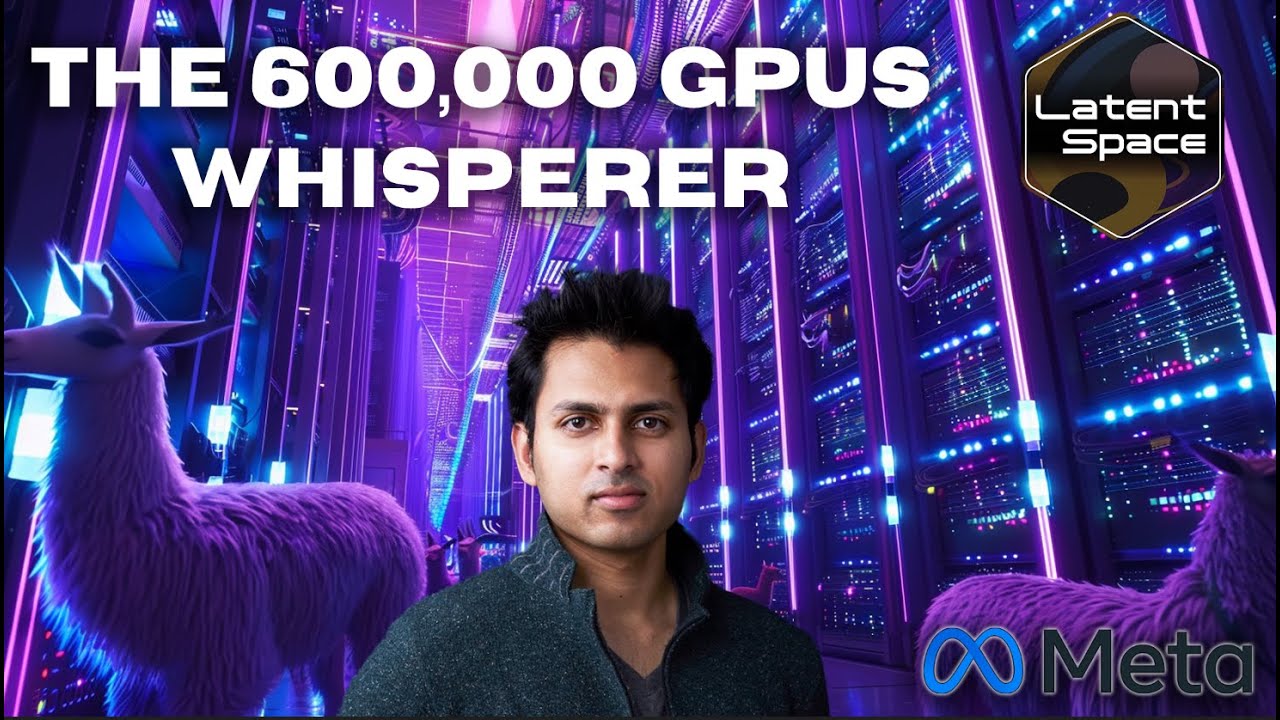
Open Source AI is AI we can Trust — with Soumith Chintala of Meta AI
Mar 6, 2024 · 1:37:38
Soumith Chintala, creator of PyTorch and engineering lead at Meta AI, argues that open source AI is essential for distributing opportunity and trust. He details PyTorch's complexity—1,000 operators needed for generality—and explains synthetic data as a vehicle for imparting symbolic knowledge where humans already have good symbolic models. He highlights a coordination problem in open source: feedback is lost because frontends like Ooba and Ollama lack feedback buttons, and proposes a centralized sinkhole to collect high-quality feedback. Beyond text, he is excited about robotics, where hardware remains a bottleneck, and Osmo's work to digitize smell, which he compares to images in the 1800s.

The Origin and Future of RLHF: the secret ingredient for ChatGPT - with Nathan Lambert
Jan 11, 2024 · 1:35:27
Dr. Nathan Lambert traces the origin and future of Reinforcement Learning from Human Feedback (RLHF), the secret ingredient behind ChatGPT, explaining how it evolved from robotics and early preference learning to become the core alignment technique for large language models. He details the three-phase process (instruction tuning, preference data collection, RL optimization), noting that RLHF's data costs for LLaMA2 were around $6–8 million, and that synthetic data from GPT-4 is cheaper and often more accurate than human labels. Lambert contrasts DPO with PPO, arguing DPO is simpler but may have lower peak performance. He discusses emerging methods like Constitutional AI, which uses AI-generated critiques based on principles, and highlights the challenge of evaluating RLHF models, noting GPT-4 Turbo's lead over earlier versions. The episode covers open questions about data aggregation, reward model agreement (65–75%), and the need for qualitative model interaction.

The State of Silicon and the GPU Poors - with Dylan Patel of SemiAnalysis
Dec 5, 2023 · 1:07:55
Dylan Patel of SemiAnalysis argues the 'GPU poor vs GPU rich' divide defines AI, with Google's TPU ramp (millions of units) dwarfing others and Nvidia selling over a million H100s this year. He explains that training costs are irrelevant compared to inference costs, and that memory bandwidth is the key bottleneck for LLM inference (e.g., Llama 70B needs ~2.1 TB/s for human reading speed). Patel advises GPU-poor players to focus on on-device innovations like speculative decoding (Medusa), asynchronous training, or fine-tuning for edge use—not on gaming benchmarks or fine-tuning small models. He details why AI hardware startups (Cerebras, Graphcore) bet wrong on on-chip SRAM, while Google’s TPU/Broadcom partnership and Nvidia’s yearly cadence make alternatives tough. He also warns that rebuilding the semiconductor supply chain in the US is unfeasible due to its fragmentation, and that safety through obscurity doesn't work—open innovation is better.
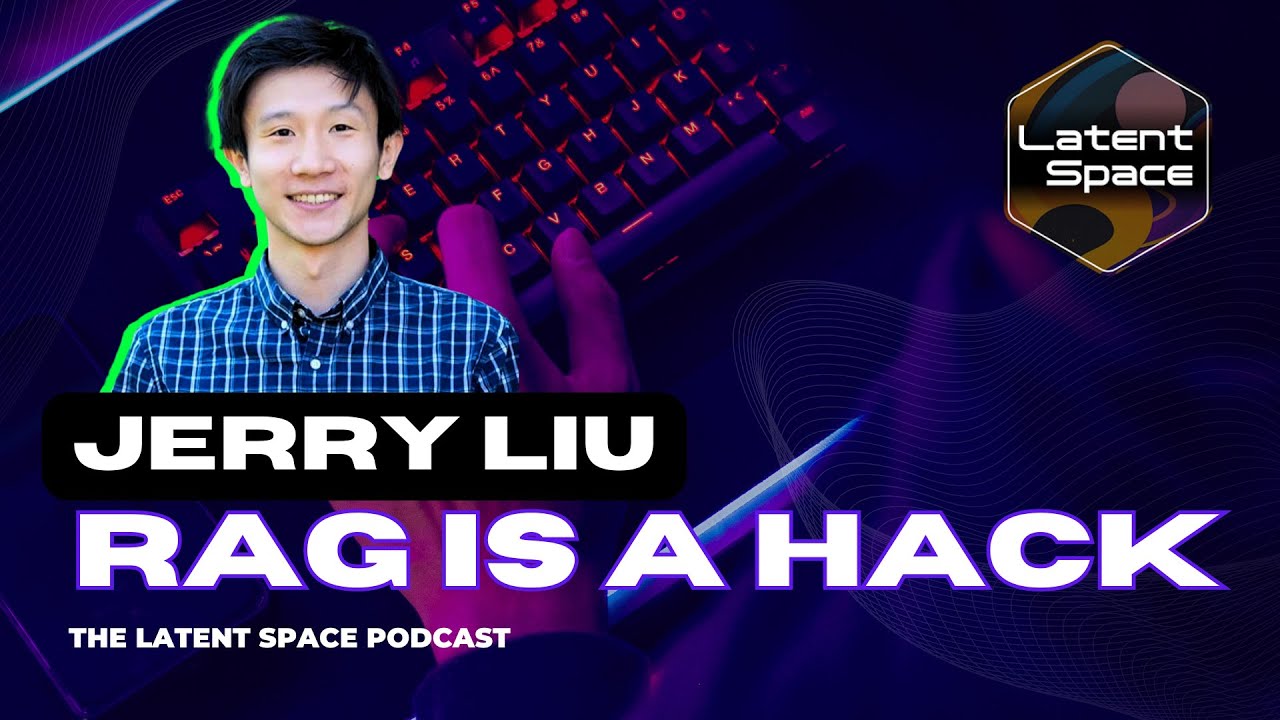
RAG is a hack - with Jerry Liu of LlamaIndex
Oct 12, 2023 · 1:13:25
In this episode of Latent Space, Jerry Liu of LlamaIndex argues that while RAG is fundamentally a hack, it remains the most practical approach for grounding LLMs with external data, and his open-source framework now serves 600,000 monthly downloads. Liu recounts how LlamaIndex originated from a hackathon at Robust Intelligence, evolving from an experimental tree-index to a modular toolkit spanning data loading, retrieval, synthesis, and agent loops. He explains the trade-offs between RAG and fine-tuning, noting that context window limits force algorithmic rather than learned optimizations, but RAG offers transparency and access control that fine-tuning cannot. Liu details the company’s $8.5M Greylock raise, the launch of LlamaHub for community-contributed data loaders, and the open-source SEC Insights app as a production-grade template. Looking ahead, he emphasizes the need for better retrieval benchmarks and predicts that future personalization will move beyond vector stores into model-internal memory architectures.
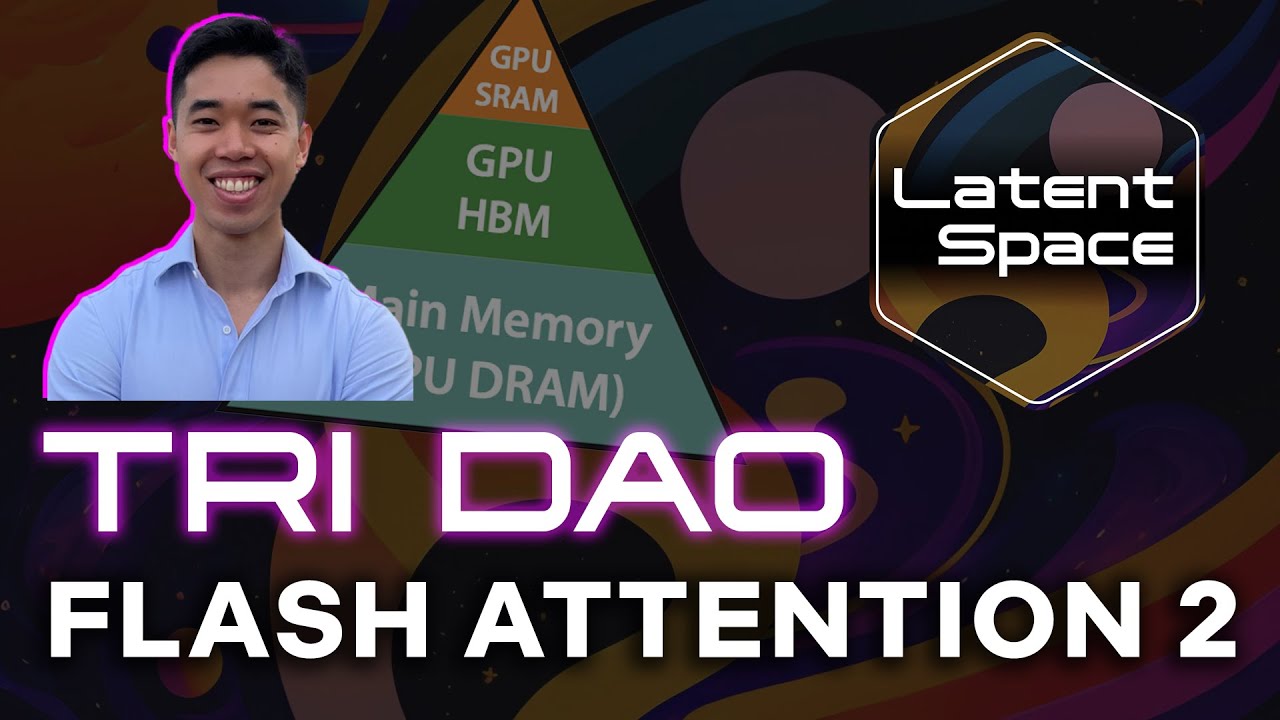
FlashAttention-2: Making Transformers 800% faster AND exact
Aug 3, 2023 · 1:04:06
Tri Dao, creator of FlashAttention and FlashAttention-2, explains how his I/O-aware algorithm makes attention 2x faster by fusing kernels and using online softmax, achieving near-matrix-multiply efficiency. He argues that transformer alternatives like state space models and RNNs (e.g., RWKV) could surpass transformers for long sequences and high-throughput generation, though attention still dominates. Dao discusses the hardware lottery, where NVIDIA's CUDA ecosystem entrenches transformers, and advocates for open-source AI, praising Meta's Llama 2 for shifting enterprise adoption despite its restrictive license. He emphasizes that understanding both algorithms and systems is key to scaling AI, and that academia should pursue risky bets that industry cannot.
Powered by PodHood