
Decagon
CompanyA company discussed on Latent Space.
5 episodes

The Future of AI Infra: from Kubernetes to Agent Sandboxes — Akshat Bubna, Modal CTO
Jul 8, 2026 · 59:10
Modal CTO Akshat Bubna explains how the cloud platform evolved from a serverless runtime to an AI cloud built for elastic inference, agent sandboxes, and post-training workloads. He argues that Kubernetes was never designed for bursty GPU-heavy AI workloads, so Modal built a decorator-based infrastructure that co-locates compute requirements with code. The company added GPUs a year before ChatGPT and now powers inference for custom models at Suno, Runway, and robotics firms, using GPU snapshotting to slash cold starts. Modal's new Auto Endpoints incorporate open-source DeFlash speculative decoding for frontier-level performance. For reinforcement learning rollouts, Modal provides up to 100,000 sandboxes simultaneously. The platform spans 17 cloud providers, features private IPv6 networking via eBPF, and supports serverless multi-node training with RDMA. Bubna also reveals Modal's shift from developer experience to agent experience, noting that agents benefit from the same minimalist SDK and observability tools that humans use.
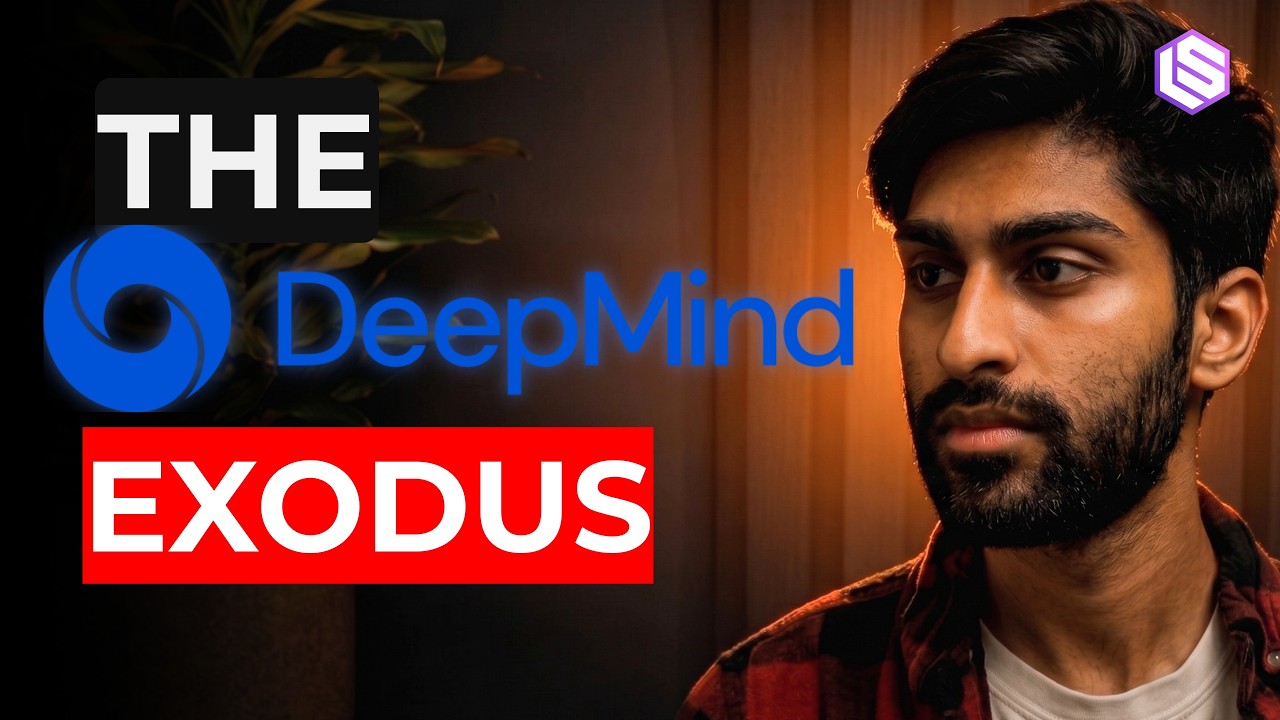
⚡️Every product of the future will be a living system — Ronak Malde, Trajectory.ai
Jun 21, 2026 · 33:58
Ronak Malde, CEO of Trajectory.ai, recounts his journey from building AI coding agents at Windsurf (acquired by Google DeepMind in a deal involving Demis Hassabis and Sergey Brin) to launching a platform for continual learning in enterprise AI. He argues that every future product must be a 'living system' that learns from real-world user interactions, not static models. The episode details Trajectory's technical innovations, including Self-Distillation Policy Optimization (SDPO) for learning from corrections, continuous LoRA for parallel training, and open-sourcing a training stack with SkyRL. It covers partnerships with Harvey and NVIDIA to train NeMoTron 3 Super for legal workflows, improving metrics like issue spotting and citation accuracy while cutting costs. Malde explains data curation strategies that capture nuanced user edits beyond binary signals, and outlines Trajectory's roadmap from AI-native companies like Clay and Decagon to Fortune 500 enterprises. He also reveals that the idea for Trajectory emerged after giving up his acquisition equity to pursue this vision.

⚡️Context Graphs: according to the authors — Jaya Gupta, Ashu Garg, Foundation Capital
Feb 4, 2026 · 33:44
Jaya Gupta and Ashu Garg of Foundation Capital introduce Context Graphs—the institutional memory of the 'why' behind business decisions, captured through decision traces of exceptions, overrides, and precedents that AI models often miss. They argue these graphs will become the defensible moat for the next generation of applied AI companies and Systems of Agents, citing early implementations at Player Zero, Olive, and Tesserae. The hosts distinguish Context Graphs from mere metadata or data meshes, emphasizing they emerge organically from automating specific workflows rather than as universal enterprise schemas. They predict that by 2026, hundreds of Context Graphs will be in production, a standard enabling stack will emerge, and the industry will shift from debating definitions to extracting value from the captured decision traces.

⚡️No, Don't Do Palantir for AI - Brendan Falk, Hercules (AUDIO FIXED)
Sep 18, 2025 · 35:08
Brendan Falk, founder of Zeus (now Hercules), explains why he abandoned his vision to become 'Palantir for AI' after six months of enterprise AI transformations. Targeting Global 2000 companies with $5–10M contracts, he found that each use case required custom development, messy data, and high ongoing maintenance, with work scaling poorly across contract sizes. He also faced existential threats from specialized vendors like Decagon and Sierra, who could outspend and out-focus on single use cases. Falk pivoted to Hercules.app, an AI website builder that ships production apps, white-labeling payments and email. He argues the app builder market (Wix, Squarespace, Shopify) will expand with AI, and that brand and ease will sustain higher margins than developer tools like Cursor.

The State of AI Startups in 2024 [LS Live @ NeurIPS]
Dec 21, 2024 · 26:35
Sarah Guo and Pranav Reddy argue that 2024 has become a far friendlier ecosystem for AI startups, with the model landscape shifting from OpenAI's near-monopoly to a competitive field where Google's Gemini now leads LMSys Arena and open-source models like Llama 8B score ten points higher on MMLU than Mistral 7B a year ago. They note that OpenAI's API cost has dropped 80-85% in 18 months, and total OpenAI API share fell from ~90% to ~60% as customers switch. The funding environment is rational, not a bubble, with foundation-model labs raising $30-40B but most startups seeing sane valuations; one portfolio company grew from zero to twenty million in PLG-style spending. Key startup themes include first-wave service automation (Sierra, Decagon, Harvey, EvenUp), better search and new friends (Perplexity, Glean, Character, Replica), and democratized creativity (Midjourney, HeyGen). They argue the 'GPT wrapper' narrative is false—applications capture value—and that incumbents face innovator's dilemma because AI changes business models (outcomes-based pricing) and data needs (reasoning traces rarely saved). The speed of change and new markets (legal, healthcare, defense) structurally favor…
Powered by PodHood