
BioHub
CompanyA company discussed on Latent Space.
2 episodes
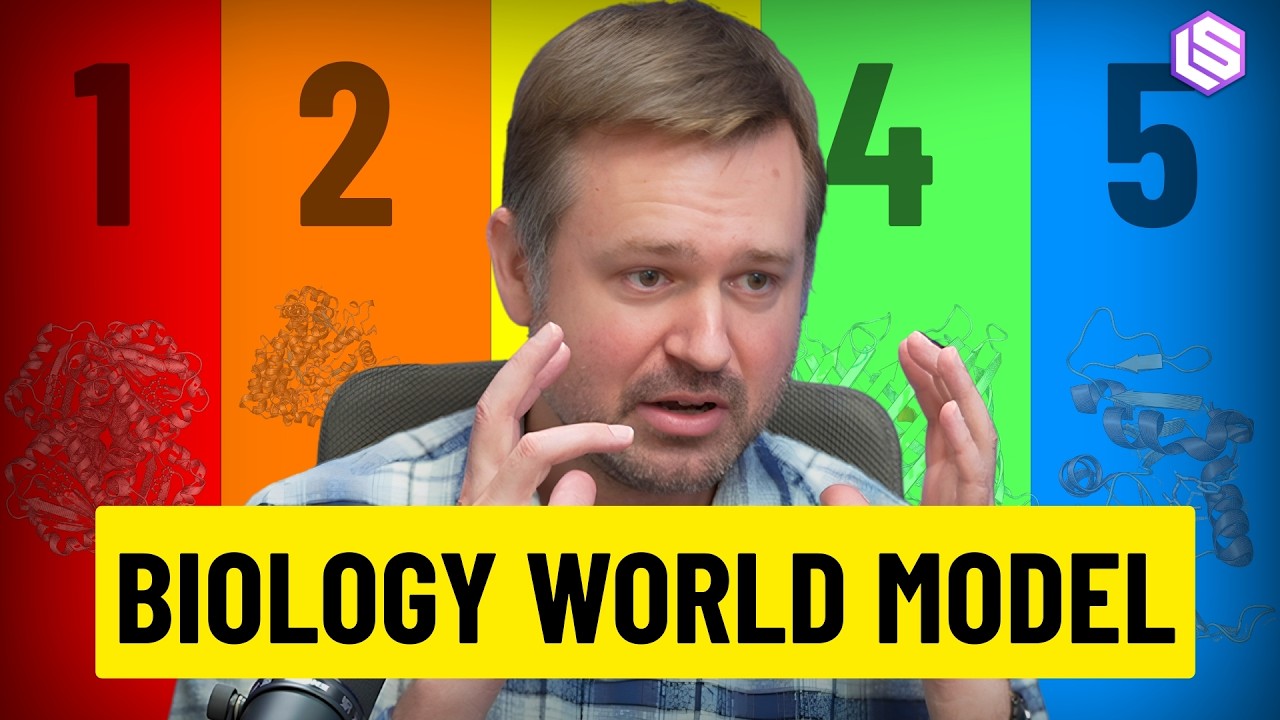
🔬 The Bitter Lesson is Coming for Proteins - Alex Rives, BioHub
May 27, 2026 · 1:10:12
Alex Rives, head of science at BioHub, argues that scaling language models on protein sequences—the 'bitter lesson' for biology—yields emergent biological understanding, culminating in the open-source ESMC model and ESMFold 2. ESMC, trained on 6.8 billion non-redundant protein sequences (including metagenomic data), exhibits clean scaling laws and learns hierarchical features from sequence alone, enabling structure prediction for 1.1 billion proteins. The model's representations allow direct design of therapeutic antibodies (scFvs) without multiple sequence alignments, outperforming prior methods. Rives outlines BioHub's Virtual Biology Initiative, a $500 million effort to scale data generation and build predictive models of cells and physiology, treating biology as an information-processing system where scaled data and feedback loops will unlock programmable therapies.

Priscilla Chan and Mark Zuckerberg: Frontier AI + Virtual Biology To Solve All Diseases
Nov 6, 2025 · 53:34
Priscilla Chan and Mark Zuckerberg, co-founders of CZI's Biohub, explain their ten-year shift from broad philanthropy to a focused mission of building frontier AI and virtual biology to cure all diseases. They argue that tool-building — from 12-foot microscopes to the 125-million-cell CELLxGENE atlas — is the essential, underfunded work that enables scientific breakthroughs. The couple details how their Biohub model combines frontier biology (e.g., spatial imaging, cellular engineering) with frontier AI (models like rBio and VariantFormer) to create a hierarchical virtual cell, eventually expanding to a virtual immune system. They emphasize that data generation must precede modeling, citing the decade-long Human Cell Atlas as foundational, and note that AI timelines may accelerate their 100-year goal significantly sooner. The episode closes with a call for biologists and engineers to collaborate, use their open models, and help generate data that grounds these next-generation tools.
Powered by PodHood