
AWS
CompanyA company discussed on Latent Space.
8 episodes

Podcast Crossover: AIE, AGI, frontier lab strategy with @matthew_berman and @swyxtv
Jul 10, 2026 · 28:03
Shawn 'Swyx' Wang, founder of the AI Engineer conference, tells Matthew Berman how he seized the industry shift by buying ai.engineer and partnering with a veteran conference organizer, crediting Andrej Karpathy's early endorsement. He argues Etched's ASICs are a natural next-gen bet for transformer inference, not an NVIDIA disruptor, and that Fable 5's slowness and cost signal the end of the LLM scaling era—making model efficiency the next problem. Swyx interprets OpenAI's reported 5% equity offer to the US government as a pragmatic multi-turn negotiation, likening it to Singapore's Temasek model, but warns against premature utility regulation. He pegs his own P(doom) at ~5% over 50 years, rejecting near-term doomerism as egotistical. For founders, he advocates building 'agent labs' that solve specific customer problems (e.g., for lawyers, dentists) rather than betting on model routing, which he dismisses as a marketing line that fails to exploit a single model's full stack as deeply as frontier labs do.
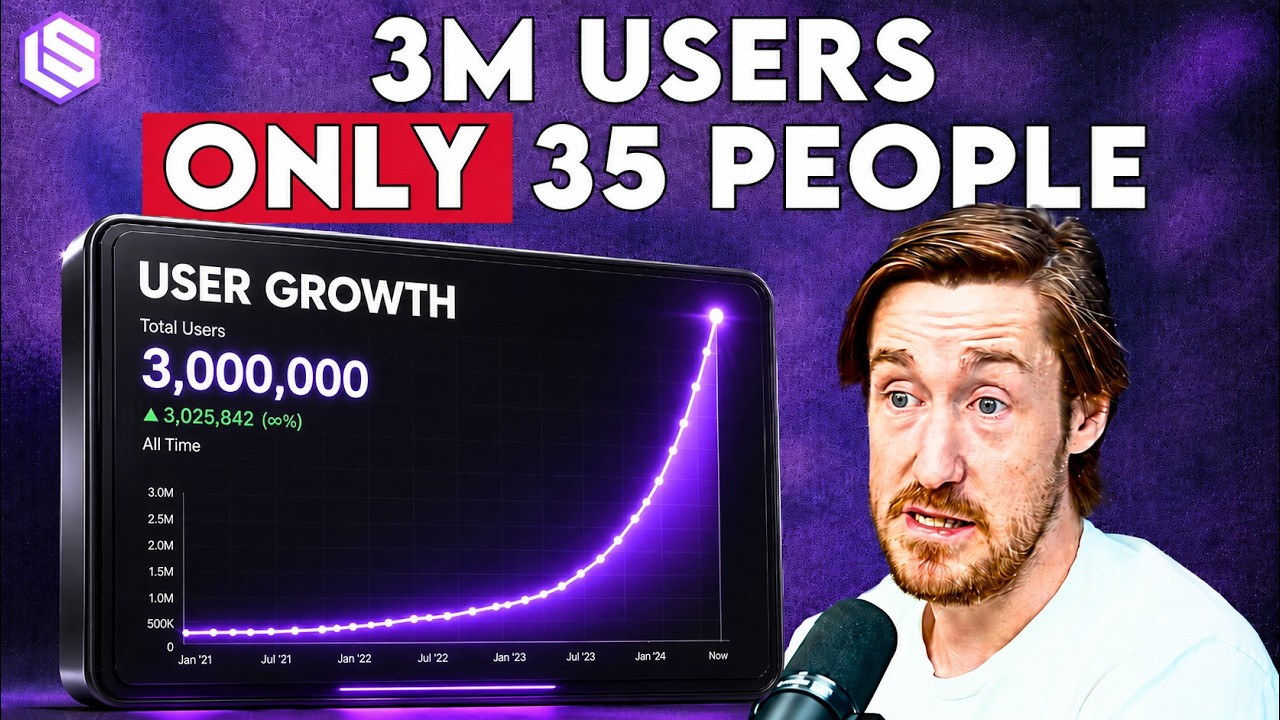
The Agent-Native Cloud: 3M Users, 100K Signups/Wk, Data Centers, & Death PRs — Jake Cooper, Railway
May 20, 2026 · 1:29:54
Jake Cooper, founder of Railway, argues that the next era of software infrastructure requires an agent-native cloud built on own-metal data centers, with primitives for version control, observability, and orchestration at 1000x scale. Railway grew from a slow six-year grind to 3 million users and 100,000 weekly signups with only 35 people, after surviving a $500,000/month loss on its free tier and rebuilding the business. Cooper explains that building its own data centers yields a three-month payback period and 70% margins, while using cloud bursting (AWS, GCP, Oracle) for overflow, and that data center debt is a better tool than venture debt for infra startups. He details how agents need CLIs with many flags, safe production forks, feature flags, and incremental rollouts, and why the pull request is dying in favor of prompt requests. Railway relies on Temporal for orchestration but may build its own workflow engine, and uses an internal tool called Central Station to aggregate customer feedback and incidents. Cooper advocates using agents to generate and review code instead of writing it by hand, and says focus on primitives—not GPUs—is key for now.
Notion’s Sarah Sachs & Simon Last on Custom Agents, Evals, and the Future of Work
Apr 15, 2026 · 1:25:37
Sarah Sachs and Simon Last of Notion explain how Custom Agents were rebuilt four to five times since 2022, with early attempts failing due to lack of tool-calling standards and short context windows. They shifted from few-shot prompting to tool definitions and progressive disclosure, now supporting over 100 tools. Their eval system includes frontier evals that pass only 30% to gauge model progress, and they employ Model Behavior Engineers to write evals and triage failures. The episode covers their views on MCP versus CLI, meeting notes as data capture, and the software factory concept of agents collaborating to develop codebases. They also discuss Notion's culture of low-ego, high-velocity rebuilding and the philosophy that every surface must work for both humans and agents.

The antidote to AI fatigue — Answer.ai Solveit
Oct 2, 2025 · 55:26
Jeremy Howard, Eric Ries, and Johno Whitaker join host Alessio to present Answer.ai's Solveit platform, arguing that human-in-the-loop, step-by-step AI collaboration outperforms fully autonomous agents for complex coding and writing tasks. The 12-person team built their own integrated development and deployment system, eschewing cloud vendors. Solveit provides each user a persistent Linux Docker container with a Jupyter-like interface where the AI can see all steps, enabling immediate error correction and iterative improvement. Johno demonstrates building a perfume scent search engine in under an hour; Eric shows how he uses Solveit to manage writing his book 'Incorruptible', incorporating test reader comments and fact-checking sections. Jeremy reveals they turned Andrej Karpathy's GPT tokenizer video into a polished blog post. The Solveit course launches October 20th at solve.it.com, teaching this philosophy beyond just the tool.

⚡️No, Don't Do Palantir for AI - Brendan Falk, Hercules (AUDIO FIXED)
Sep 18, 2025 · 35:08
Brendan Falk, founder of Zeus (now Hercules), explains why he abandoned his vision to become 'Palantir for AI' after six months of enterprise AI transformations. Targeting Global 2000 companies with $5–10M contracts, he found that each use case required custom development, messy data, and high ongoing maintenance, with work scaling poorly across contract sizes. He also faced existential threats from specialized vendors like Decagon and Sierra, who could outspend and out-focus on single use cases. Falk pivoted to Hercules.app, an AI website builder that ships production apps, white-labeling payments and email. He argues the app builder market (Wix, Squarespace, Shopify) will expand with AI, and that brand and ease will sustain higher margins than developer tools like Cursor.

[AIEWF Preview] Containing Agent Chaos — Solomon Hykes
Jun 3, 2025 · 27:14
Solomon Hykes, creator of Docker and founder of Dagger, argues that the industry needs an open standard for AI coding agent environments to avoid repeating the fragmentation seen before Docker. Dagger, a workflow engine originally built for post-development automation (CI/CD), is now being pulled by its community into the agentic space to solve environment isolation, portability, and observability for concurrent agent teams. Hykes insists containers are the right base layer but require a new, agent-native UX—unlike legacy Dockerfile or Compose—that is decoupled from any IDE, model, or cloud provider. He critiques current vertical monoliths (e.g., proprietary IDE-hosted agent environments) and advocates for a Lego-like modular approach where the environment is the standard linchpin. Dagger integrates with existing stacks rather than replacing them, and Hykes previews fresh, unreleased content for his upcoming keynote at AI Engineer World's Fair.

SF Compute: Commoditizing Compute
Apr 11, 2025 · 1:12:02
Evan Conrad, co-founder of SF Compute, argues that GPUs behave like a real estate business, not a traditional cloud, because price-sensitive customers value every incremental GPU and will switch for a 10% margin. CoreWeave succeeded by selling locked-in long-term contracts to low-credit-risk customers like Microsoft and OpenAI, ignoring short-term demand. He predicts hyperscalers and providers like Together and DigitalOcean will lose money on GPU clusters because software margins cannot match the hardware costs. SF Compute started as an AI lab forced to sublease its cluster monthly to avoid bankruptcy, then evolved into a market where anyone can buy H100s by the hour via dynamic pricing—often below $1/hour for short bursts. Utilization stays near 100% as prices adjust. Future plans include cash-settled futures to reduce financial risk across the industry, while the brand deliberately stays anti-hype and calm.
Truly Serverless Infra for AI Engineers - with Erik Bernhardsson of Modal
Feb 19, 2024 · 1:08:58
Erik Bernhardsson, creator of Annoy and Luigi, founded Modal to build a 'postmodern data stack' with a self-revisioning runtime that eliminates container cold starts and lets developers attach GPUs with a Python decorator. His serverless platform can fan out to thousands of GPUs within seconds, becoming a natural fit for GenAI workloads like Stable Diffusion and fine-tuning (e.g., RAMP fine-tuning 100 models in parallel). Modal differentiates from Replicate by targeting custom models and workflows, and from Modular by offering a managed cloud service rather than licensed software. Erik argues that buying hardware is inefficient for startups and that infrastructure founders must be willing to spend years on load balancing, page faults, and DNS. He shares how his IOI Gold Medal background shapes Modal's talent culture, hiring competitive programmers for complex scheduling and bin-packing problems.
Powered by PodHood